How to Do Sightseeing in Budapest Using Public Transportation?


Budapest, Hungary’s vibrant capital, is a treasure trove of history, architecture, and culture. From the grandeur of Buda Castle to the thermal baths of Széchenyi, it’s a city that begs to be explored. While walking or taking a taxi might seem tempting, Budapest’s public transportation system—affordable, reliable, and extensive—offers the best way to see it all. Whether you’re marveling at the Parliament Building or sipping coffee by the Danube, here’s how to navigate Budapest’s top sights using buses, trams, metros, and more.

Why Public Transportation?

Budapest’s transit network, operated by BKK (Budapesti Közlekedési Központ), is a tourist’s dream. It’s cheap (a single ticket costs ~450 HUF, or $1.20 USD as of March 2025), eco-friendly, and connects every major landmark. With four metro lines, trams gliding along the Danube, and buses reaching quieter corners, you’ll save time and money while soaking in the city’s charm. Plus, it’s an authentic way to travel like a local.

Getting Started: Tickets and Passes

Before hopping on, grab a ticket or pass. Single tickets (valid for one uninterrupted trip) are available at metro stations, BKK ticket machines, or via the BudapestGO app—download it for real-time schedules too. For sightseeing, consider these options:

  • 24-hour Travelcard: ~2,500 HUF, unlimited rides for a day.
  • 72-hour Travelcard: ~5,500 HUF, perfect for a weekend trip.

Validate tickets on board (trams/buses) or at metro gates. Hang onto them—inspectors do random checks!
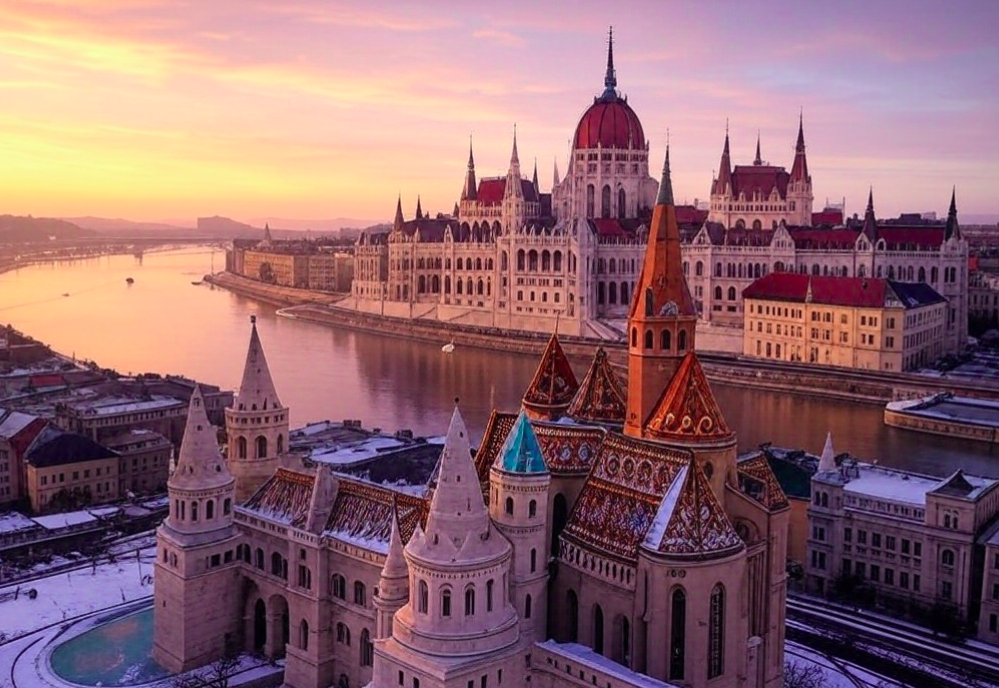
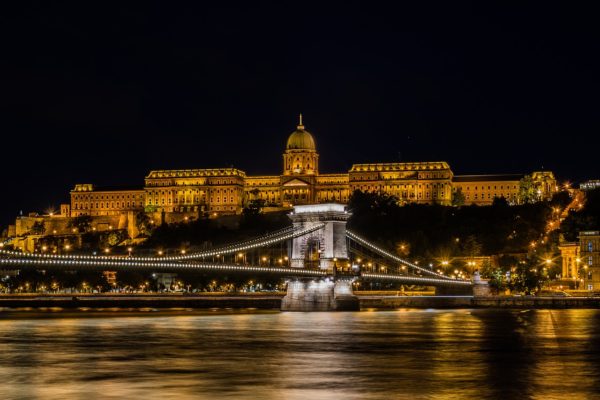
AI Generated picture of Budapest.. the reality is much nicer!

Sightseeing Itinerary: Day 1 – Buda Side

Start your adventure on the Buda side, the hilly, historic half of the city.

Buda Castle and Fisherman’s Bastion

  • How to Get There: Take Metro Line M2 (red) to Széll Kálmán tér, then hop on the Castle Bus (Várbusz)—a free shuttle (with a valid ticket) to Buda Castle. Alternatively, ride the iconic Castle Hill Funicular from Clark Ádám tér (near Chain Bridge) for ~4,000 HUF round-trip.
  • What to See: Explore the castle’s courtyards and the Hungarian National Gallery, then stroll to Fisherman’s Bastion for panoramic views of Pest and the Danube.

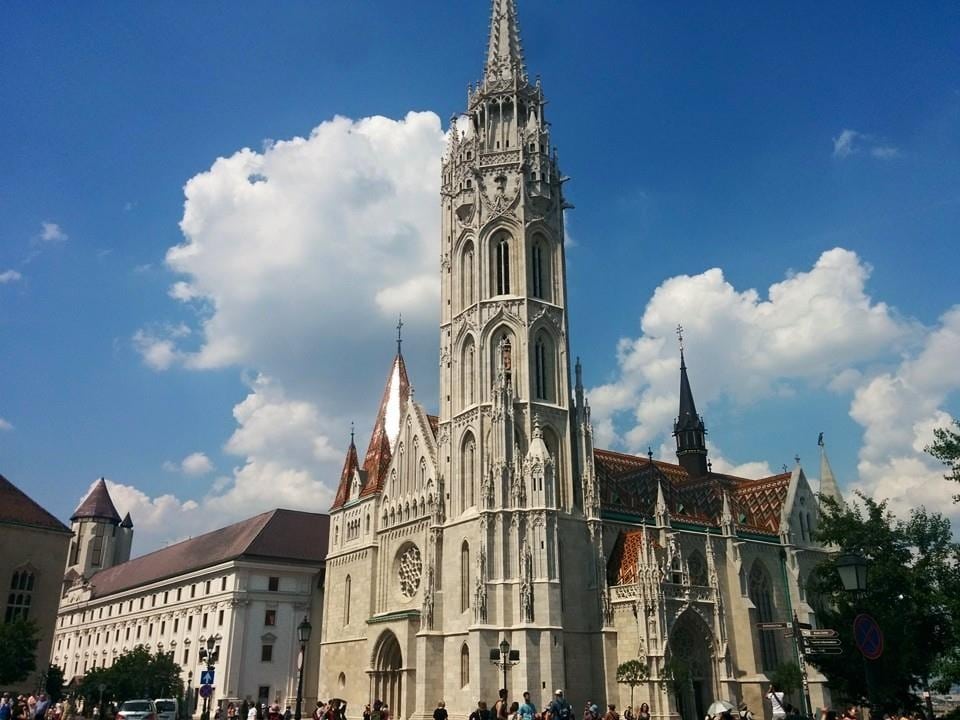
Matthias Church

  • How to Get There: It’s a short walk from Fisherman’s Bastion—no extra transit needed.
  • What to See: Admire this Gothic masterpiece with its colorful tiled roof and intricate interiors.

Gellért Hill and Citadel

  • How to Get There: From Buda Castle, take bus 27 from Szentháromság tér to Búsuló Juhász, then walk 10 minutes uphill.
  • What to See: The Citadel offers stunning vistas, and the Liberty Statue is a photo must. Descend via trails for a scenic return.

Wrap up with a tram ride on Tram 19 or 41 along the Buda embankment—pure riverside bliss.

Sightseeing Itinerary: Day 2 – Pest Side

Cross to Pest for bustling streets and grand architecture.

Hungarian Parliament Building

  • How to Get There: Take Metro Line M2 to Kossuth Lajos tér.
  • What to See: This neo-Gothic marvel is Budapest’s crown jewel. Book a guided tour to see the Holy Crown of Hungary inside.

St. Stephen’s Basilica

  • How to Get There: From the Parliament, ride Tram 2 (a scenic route along the Danube) to Széchenyi István tér, then walk 5 minutes. You can also walk between the two locations easily, and then enjoy the beautiful Liberty Square during your walk.
  • What to See: Climb the dome for 360-degree views or enjoy the serene interior. Entry is free, but donations are appreciated.

Heroes’ Square and City Park

  • How to Get There: Take Metro Line M1 (yellow)—Europe’s oldest electrified metro—to Hősök tere.
  • What to See: Admire the Millennium Monument, then wander into City Park for Vajdahunyad Castle and the Széchenyi Thermal Bath (more on that next).

Széchenyi Thermal Bath

  • How to Get There: From Heroes’ Square, it’s a 10-minute walk, or take bus 20E to Széchenyi fürdő.
  • What to See: Soak in Budapest’s largest thermal spa. Entry starts at ~12,000 HUF—bring a towel and flip-flops!

Sightseeing Itinerary: Day 3 – Danube Highlights

Focus on the river and its iconic crossings.

Chain Bridge

  • How to Get There: From Pest, take Tram 2 to Széchenyi István tér. From Buda, use bus 16 from Szentháromság tér.
  • What to See: Walk across this historic suspension bridge, linking Buda and Pest since 1849. Snap photos with lion statues guarding each end.

Danube Promenade and Shoes on the Danube

  • How to Get There: From Chain Bridge, stroll along the Pest side or take Tram 2 to Vigadó tér.
  • What to See: The promenade offers river views, while the Shoes on the Danube memorial—60 pairs of bronze shoes—honors Holocaust victims.

Margaret Island

  • How to Get There: Take Tram 4/6 from Pest to Margitsziget, or bus 26 from Árpád híd metro station (M3).
  • What to See: This green oasis has gardens, ruins, and a musical fountain. Rent a bike or relax by the water.

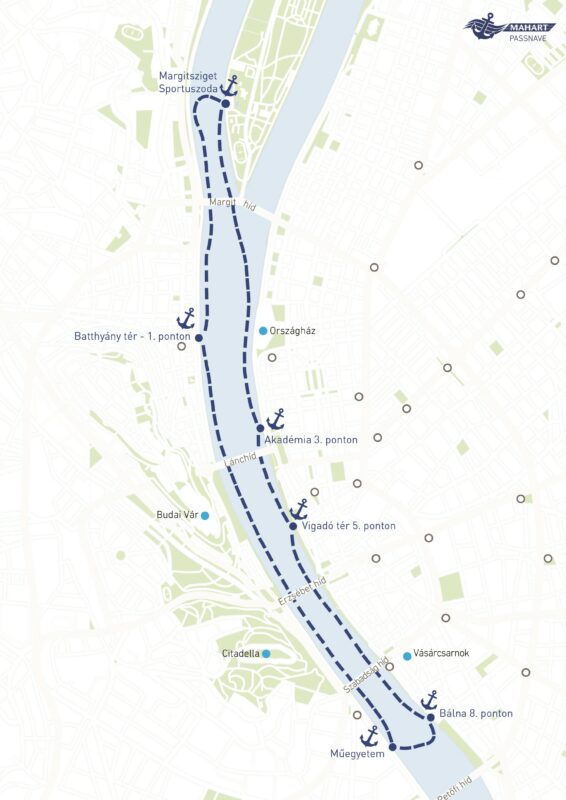
Discovering Budapest via Public Transportation Boat (no longer available)

For a unique perspective, explore Budapest by public transportation boat along the Danube. Operated by BKK, these boats offer a scenic, budget-friendly alternative to tourist cruises. These boats are no longer available (since 2023).

  • Availability: Boats run from mid-March to late October, weather permitting. Services like D11 (Újpest to Haller utca) and D12 (Római fürdő to Haller utca) operate weekdays, with limited weekend runs (e.g., D13). In 2023, high maintenance costs paused services, but as of 2025, they’re back seasonally—check BudapestGO for updates.
  • Payment: Use standard BKK tickets or passes (e.g., 24-hour Travelcard, 2,500 HUF). Single tickets (450 HUF) work too, validated onboard. Boats are free with the Budapest Card on weekdays. Cash or card payments aren’t accepted onboard—buy tickets in advance via the app or at BKK kiosks.
  • What to See: Departing from piers like Boráros tér or Batthyány tér, you’ll glide past the Parliament Building’s illuminated spires, Buda Castle perched atop its hill, and the Chain Bridge’s elegant arches. Look for Gellért Hill’s Citadel and Margaret Island’s greenery. The zigzagging route offers unobstructed views of Pest’s vibrant skyline and Buda’s historic charm—perfect for photos.
Tips for a Smooth Ride

  • Timing: Metros run every 2-5 minutes during peak hours (5 AM–11:30 PM), trams and buses every 10-15 minutes. Check BudapestGO for night bus options after midnight.
  • Crowds: Avoid rush hours (7-9 AM, 4-6 PM) for a comfier ride.
  • Accessibility: Most metros (except M1) and newer trams/buses are wheelchair-friendly—look for blue symbols.
  • Language: Signs are in Hungarian, but key stops have English announcements.

Why It Works

Budapest’s compact size makes public transit ideal. The metro’s four lines—M1 (yellow), M2 (red), M3 (blue), and M4 (green)—form the backbone, while trams like Tram 2 offer postcard-worthy views along the Danube. Buses fill gaps, reaching hilly Buda or outer Pest. A 72-hour pass (~$15 USD) covers it all, leaving you free to hop on and off without breaking the bank.

Beyond the Sights

Public transit isn’t just practical—it’s part of the experience. Ride the vintage M1 metro for a history lesson, or watch locals bustle on Tram 4/6, one of Europe’s busiest lines. Pair your journey with a kürtőskalács (chimney cake) from a street vendor near a stop, and you’re living Budapest life.

Final Thoughts

Sightseeing in Budapest by public transportation is efficient, affordable, and fun. From Buda’s castles to Pest’s baths, every landmark is a ride away. So, grab a travelcard, download BudapestGO, and let the city unfold before you—no car required. Have a favorite Budapest spot? Share it—I’d love to hear your picks!
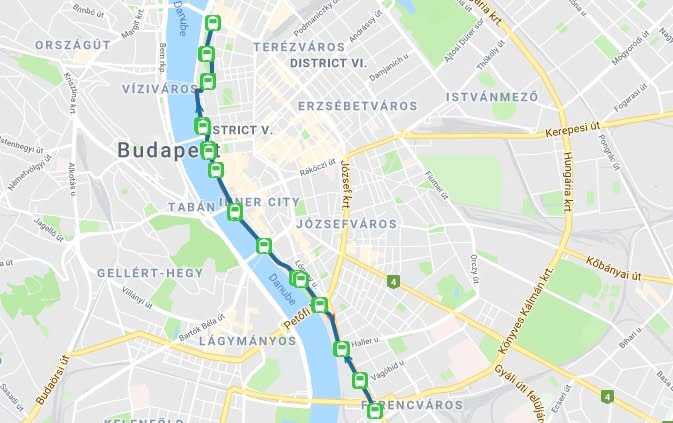
A fantastic tram-ride in Budapest

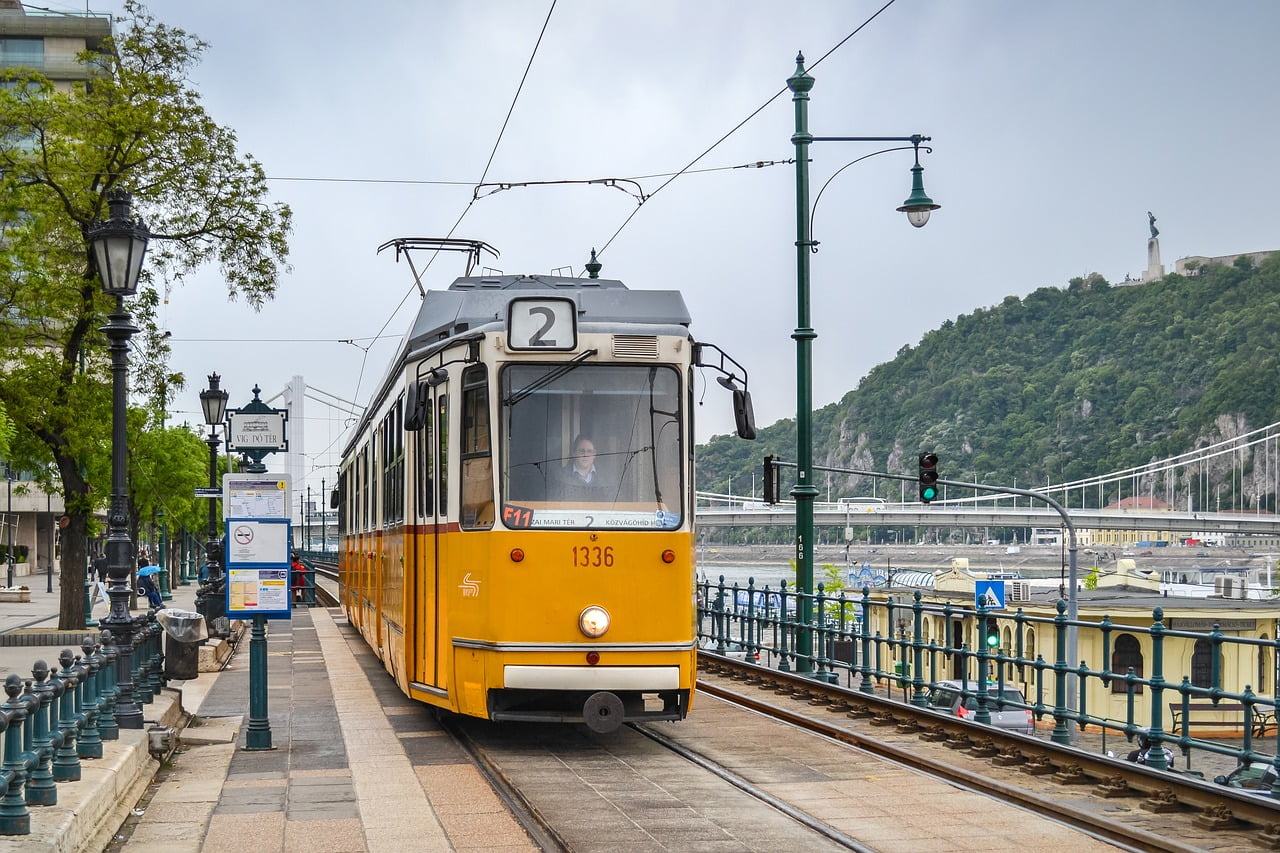
You can buy tickets to hop-on-hop-off buses in Budapest. You can pay a private guide to show you around. Or, you can buy a single ticket for the public transportation and enjoy a ride with tram 2 in Budapest.

tram 2 budapest
The route of tram 2 in Budapest

Let us get started right away. The best way to start the tour is by heading for the Margaret Bridge. The bridge is located a bit north of the Hungarian Parliament. You can, of course, start by jumping on the tram from the Rakoczi Bridge (or the Petöfi Bridge, or the Liberty bridge instead), but as you join us on this trip, we will start from the Margaret Bridge (name of the stop is Jaszai Mari tér).

Let’s get started with the panoramic tram ride in Budapest

As you board tram line 2 in Budapest, do not forget to validate your ticket first. The people inspecting tickets are not known to be tourist-friendly. As a consequence, lots of people have ended up paying unnecessary fines, even if they didn’t intend to do anything wrong at all. Again, validate your ticket. You can not buy a ticket on the tram, so you need to bring a ticket with you (you can buy from vending machines, from small kiosks, and in all metro stations).

Tram line 2 in Budapest - Source: Pixabay
Tram line 2 in Budapest – Source: Pixabay

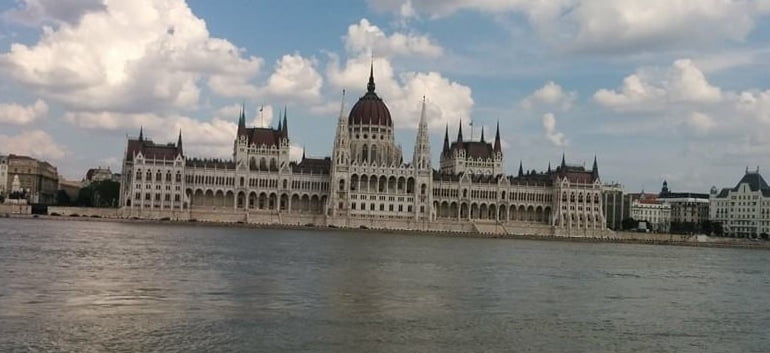
You do not need to travel for a long time with tram 2 before you see this magnificent building ahead of you! The Hungarian Parliament is the building, and it is one of the most beautiful of them all in Budapest.

Hungarian Parliament
The Hungarian Parliament

Depending on who tells you about the building, you will hear that it was constructed sometime between 1884 and 1903, and it was designed by Imre Steindl. It is very inspired by the British Parliament building, but it ended up even nicer than its source of inspiration!

There has been a lot of construction work on the Hungarian Parliament building, but it is now mostly finished. As a result, it is shining on all sides (earlier it has been almost black due to dirt). The building is fantastic all times of the day, but it is at its most amazing after sunset with the big lights turned on!

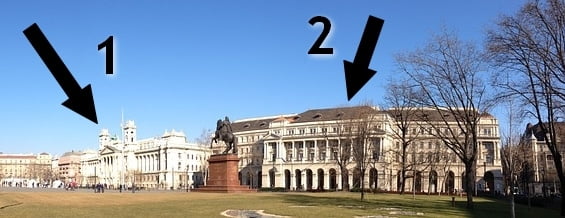
As the tram drives next to the Parliament you will see two other beautiful buildings. These were all part of a design competition at the end of the 19th century, but they both lost the competition to the present Parliament building. Instead of throwing away the drawings, they decided to build both the buildings as well. The first building you see is the home of the Ethnographic museum while the second building belongs to the Ministry of Agriculture.

Museum of Ethnography and Ministry of Agriculture in Budapest
Museum of Ethnography and Ministry of Agriculture in Budapest – Source: Pixabay

Once you leave the Parliament and the other buildings behind you, the tram will take you along the River Danube again. You will be met by a stunning view in all directions as the tram moves on towards the Chain Bridge, the most famous of all bridges in Budapest. But, before we pass by the Chain Bridge, let us take a look across the Danube to enjoy the view of several beauties.

A nice Danube Panorama to the right

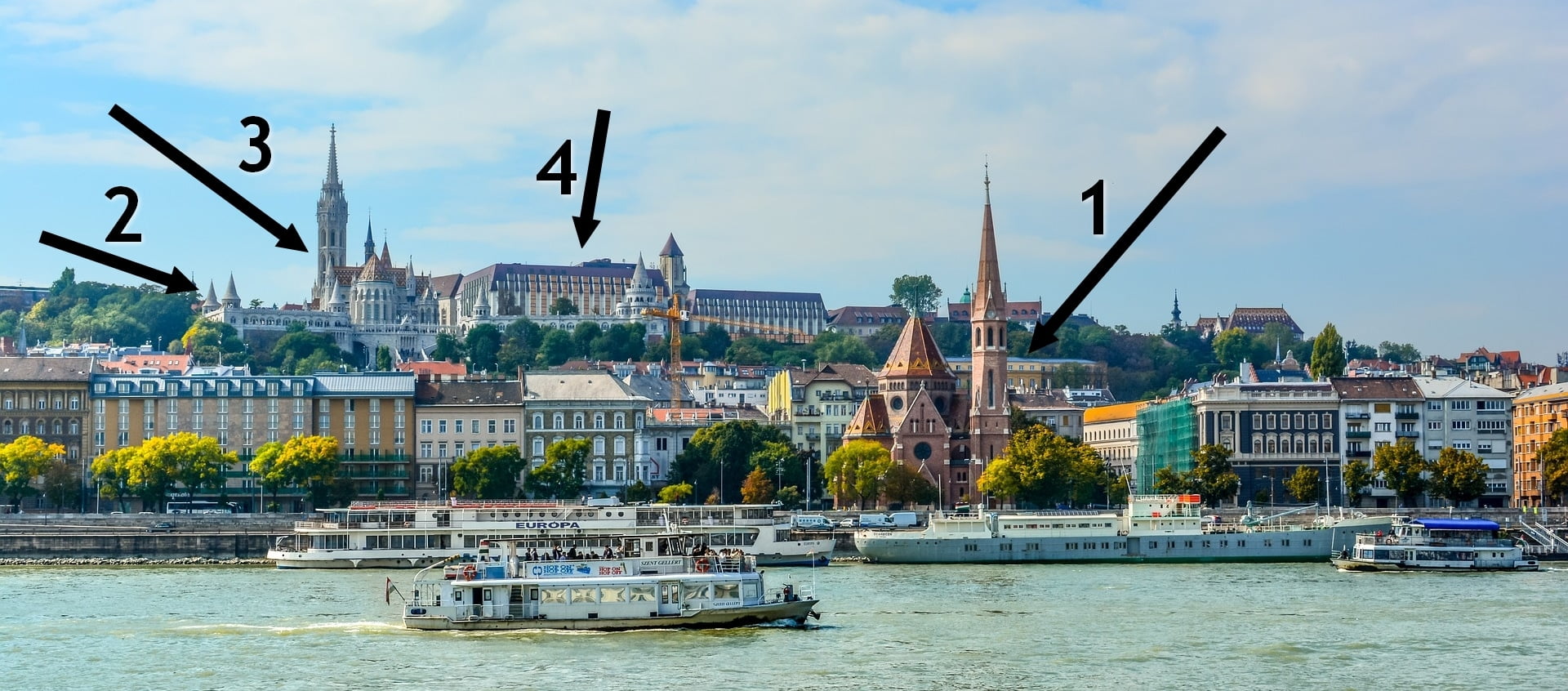
As we look to the right we will see four different structures that should be highlighted. Take a look at the picture beneath to see which those buildings are.

Panorama towards the Buda side from tram line 2 - Source: Pixabay
Panorama towards the Buda side from tram line 2 – Source: Pixabay

Down by the Danube on the Buda side you can see the Szilágyi Dezső Square Reformed Church. It was built between 1893 and 1895, and it is well known for its special shape, and the beautiful Zsolnay tiles on the roof.

As you look further up you can see three interesting structures next to one another. The one marked as number two on the picture is the Fishermen’s Bastion. This was built at the start of the 20th century, designed by the Miklos Ybl. While working on the Fishermen’s Bastion, he was also leading the work of renovating the Matthias Church (number 3), a church that was originally built in the 13th century. This church is the favorite church of many who visit Budapest, not only because of its interior, but because of the fantastic Zsolnay tiles on the roof, and that you can visit the tower and enjoy one of the best views in Budapest from the top.

The Matthias Church seen up-front.
The Matthias Church from up-front. The Hilton Hotel is to the left of the church.

Number four on the picture is the Hilton Hotel. This is a debated building, as many feel as if it shouldn’t be there. It is, however, a very special building due to the fact that it was constructed onto the remains of a Dominican monastery from the 15th century. As you enter the hotel, you can still see the ruins of the original building, making this one of the most special Hilton hotels in the world.

The beautiful Chain Bridge and the Castle

The tram ride from the Parliament to the Chain Bridge doesn’t take more than 1-2 minutes, so you will not have a long time to study the buildings we have just described. Soon you will get into a little tunnel taking you to the other side of the Chain Bridge. But, do not forget to take a closer look at the bridge before you drive beneath it. This was the first permanent bridge constructed between Buda and Pest. It was finished in 1849, and it has been one of the most famous landmarks in Budapest ever since. It was destroyed in 1945 (Second World War), but was quickly fixed and was ready for use again in 1949.

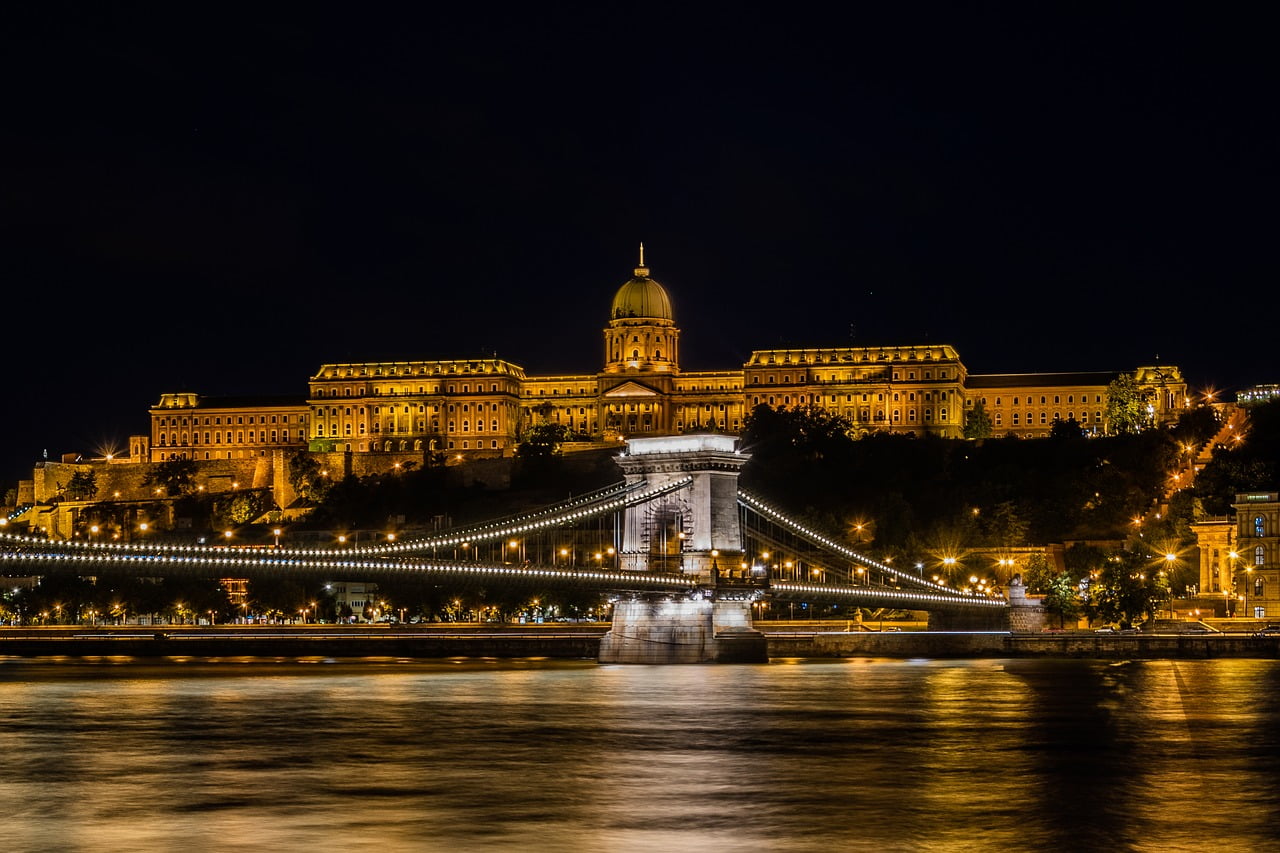
Chain Bridge and the Castle
The Chain Bridge and the Castle – Source: Pixabay

Now it is time to look to the Buda side again. On the top of the hill on the other side, you can see the Buda Castle. It was originally constructed in the 13th century. It has served several kings and flourished especially during the reign of King Matthias in the 15th century. During the Second World War, it was heavily damaged, but most of the damages were fixed during the Communist reign. Today the Castle is the home of the National Gallery, Budapest Historical Museum, and the National Library. In addition, it is a very popular venue for festivals and other popular events.

The Elisabeth Bridge and the Gellert Hill

In front of us, we can now see a white bridge, better known as the Elisabeth bridge. It was originally constructed in 1903, and it was the largest suspension bridge in the world as it was finished.  Just like the Chain Bridge, it was destroyed during the Second World War. The citizens of Budapest had to wait for more than 20 years for this bridge to be reconstructed.

On the Buda side of the bridge, we can see a statue portraying Bishop Gellert. He was on his way to Jerusalem as a pilgrim in the 11th century, when Hungary’s first king (Stephan), convinced him to stay. Gellert stayed in Hungary, but after the death of King Stephen, he was taken captive by rebellions trying to get rid of Christianity, and he was thrown down the hill in a barrel (and died).

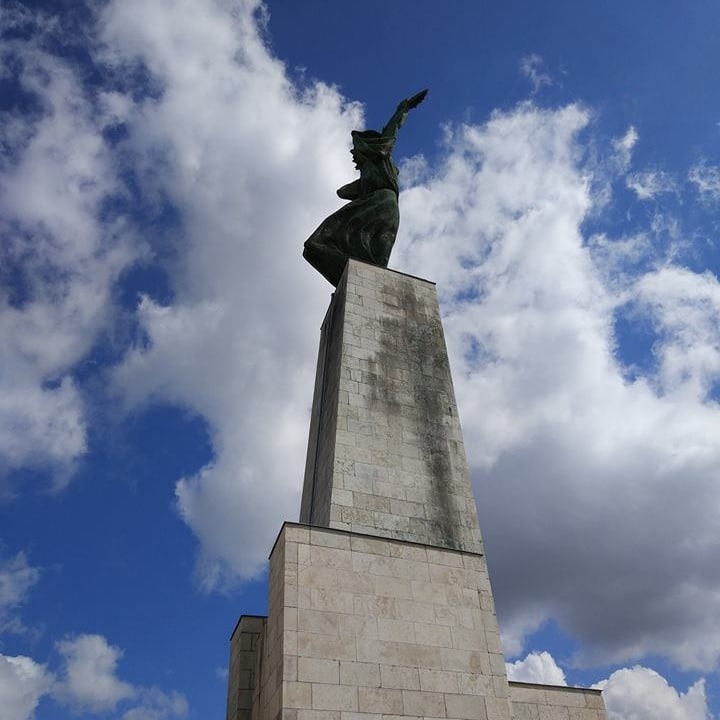
On the top of the hill, you can see the Citadel and the liberty statue. This hill has been used for thousands of years, but the citadel (fortress) was built between 1850-1854. The statue portraying a lady with a palm branch in her hands was built after the Second World War in honor of the Communist soldiers who liberated Budapest (the construction was ordered by the Soviets, so the Hungarian didn’t have the chance of saying no to the job). The Gellert Hill is maybe the nicest place in Budapest if you want to take stunning panorama shots of the city, both during daytime and by night.

The Liberty Statue at the Gellért hill

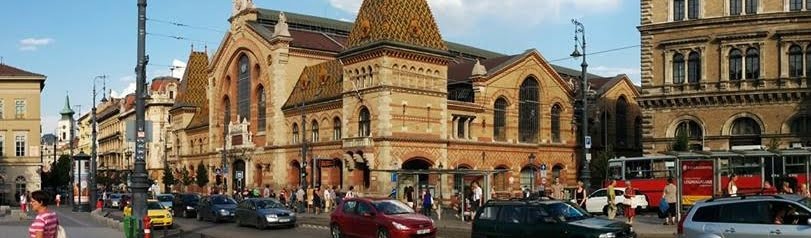
You will now quickly reach the green bridge, the Liberty Bridge. This was the third bridge built between Buda and Pest and it was finished by the end of the 19th century. Since the tram will drive into a tunnel to get beneath the bridge you cannot actually see the building, but on the Pest side next to the tram line, you can now find the famous Market Hall, a must-see place while in Budapest.

You cannot see it from the tram, but it is there - The Great Market Hall.
You cannot see it from the tram, but it is there – The Great Market Hall.

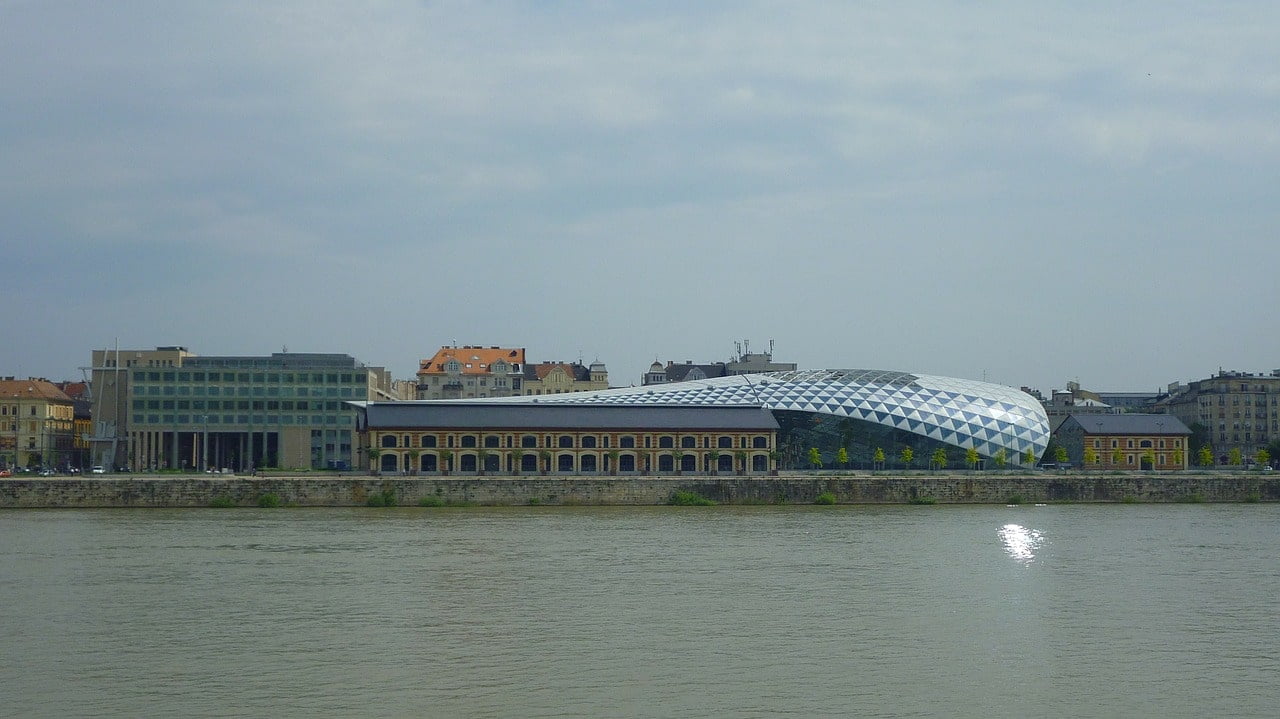
As the tram moves on, you can see the Gellert hotel on the Buda side, and almost next to it, the Technical University. But, just as interesting is the building on the Pest side built in the shape of a whale. This is often referred to by locals as the whale (Bálna), and it is a cultural center with some nice shops, and several restaurants and bars. It is a nice place to sit down and have something to eat and drink while enjoying the view of the Danube and the city.

The Whale shaped building in Budapest
Here you can see the whale-shaped building, the Bálna – Source: Pixabay

The end of the tram ride is approaching, but there are still a few more things worth noticing. First, we will pass beneath the Petőfi bridge (named after a famous Hungarian poet who lived in the 19th century). On the Pest side, you can now see a whole lot of newly built buildings. It is a modern area with new flats and quite a lot of offices. But, do not be fooled, and do not leave the tram yet. You will soon reach the final stop, and Budapest has some goodies left for you, just take a look at the picture.

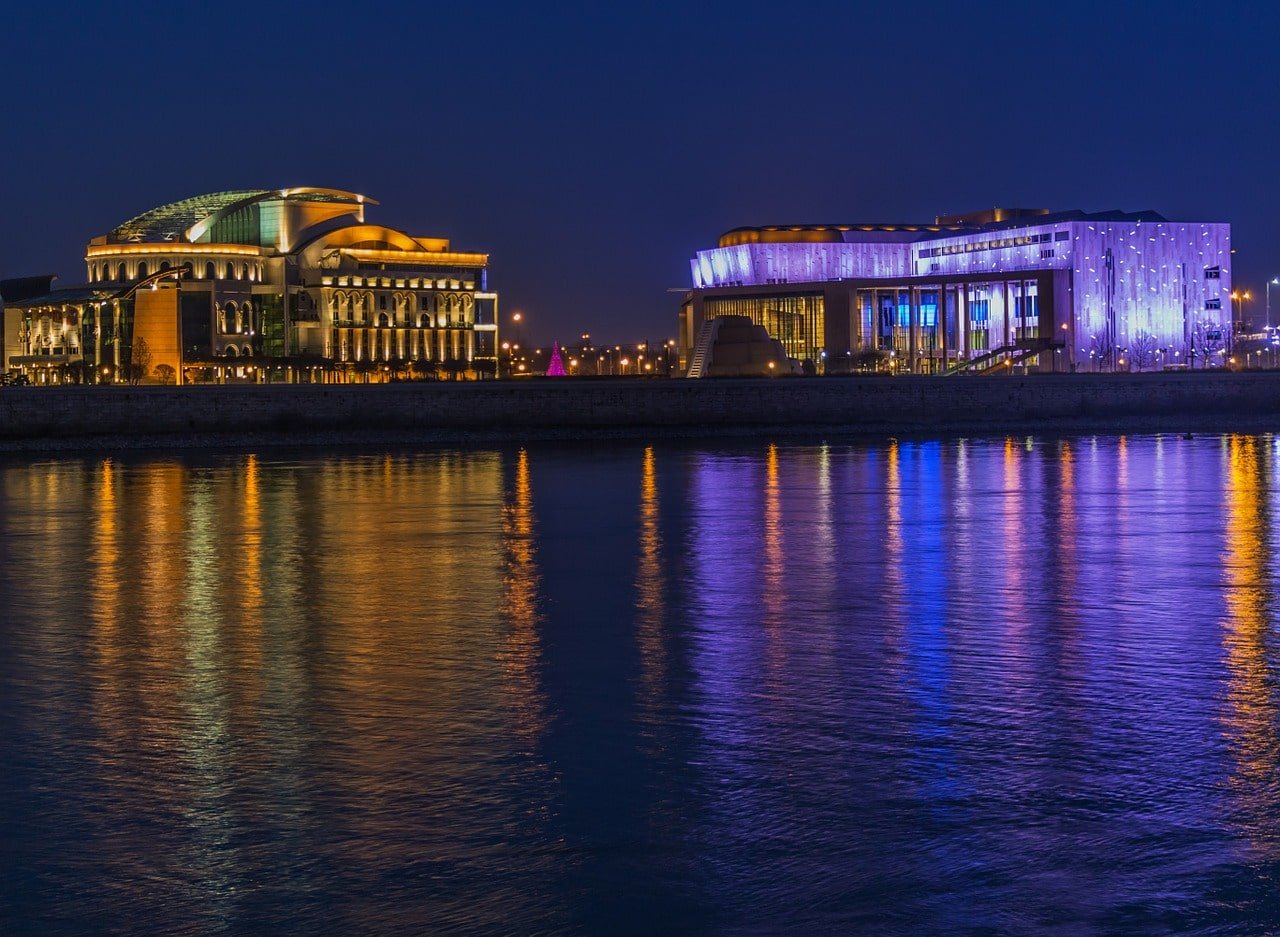
The National Theater in Budapest and the Palace of Arts
The National Theater and the Palace of Arts – Source: Pixabay

As the tram ride ends, you will end up next to the Palace of Arts (to the right) and the National Theater (to the left). These are some magnificent buildings that were built quite recently (between 2000 and 2005). They are extraordinary buildings, but most people would say that they are most impressive by night, just look at the picture above again.

Now that the tram ride has ended

The tram ride has now ended, and you have just enjoyed a very cheap panoramic tour of Budapest. But, you are far away from the city center by now, so you should probably just remain on the tram and enjoy the ride back to the city center. You will then have one more chance to pick up on those attractions you didn’t really have the time to see during the first ride.

Do not forget that this is a ride you should do both during daytime and nighttime. As you can see, lots of the pictures are portraying Budapest by night, and the city is even more beautiful then. If you want to save even more money, you could do this tram ride instead of a River Cruise on the Danube. Most cruises travel between the Margaret Bridge (where the tram ride started) and the Rakoczi Bridge (where the tram trip ended), so you will see exactly the same. It might be better and easier to spot everything from the Danube, but if you are on a budget, this is a fantastic tram ride that will let you discover Budapest on your own without spending more than 1 Euro.

Doesn’t this sound like a treat when you come to Budapest? Have you tried it? Have you got any questions? We would love to hear your comments, thoughts, and questions.