Free Activities in Budapest: How to Enjoy the City Without Emptying Your Wallet

Let’s be honest: nobody likes the feeling of being a “walking wallet.” You know that sensation when you enter a new city and it feels like every breath you take carries a €5 surcharge? Fortunately, Budapest is not that city.

In fact, Budapest is one of those rare European capitals that is remarkably kind to your bank account. It’s a place where many of the best experiences—the ones you’ll actually remember ten years from now—cost absolutely nothing. Walking, world-class views, fresh water, and a palpable historical atmosphere do most of the heavy lifting here.

This guide isn’t just for people on a shoestring budget; it’s for the smart traveler. Because whether you have €10 or €10,000 in your pocket, paying for something that is free (and better) just feels wrong. Here is how to conquer Budapest without the “tourist tax.”


1. Completely Free Things to Do in Budapest

If you want to experience the soul of the city, you don’t need a ticket. You just need a pair of shoes and a bit of curiosity.

Drink the Tap Water (Seriously)

Let’s start with the most basic human need: hydration. In many tourist hubs, you’ll see travelers lugging around 2-liter plastic bottles of “artisan spring water” they bought for €3 at a kiosk. Don’t be that person. Budapest’s tap water is safe, clean, and tastes great. It literally flows from the walls of your hotel or apartment for free. Paying for bottled water in Budapest is like paying someone to let you breathe the air. If you see a public fountain with a sign that doesn’t say “Nem ivóvíz” (not drinking water), go for it. Save that money for a high-quality local beer later.

Walk Along the Danube

If Budapest were a movie, the Danube would be the lead actor. Walking along the riverbank is arguably the single best free activity in the city. The path is flat, scenic, and offers postcard-level views at every turn.

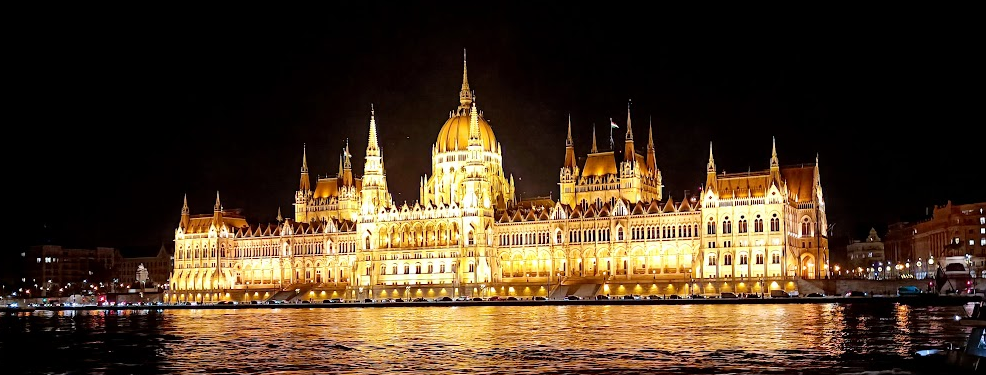
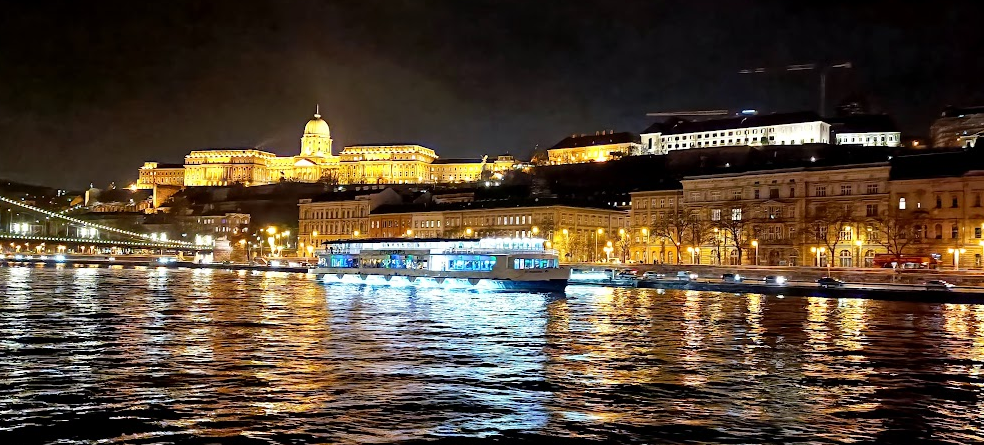
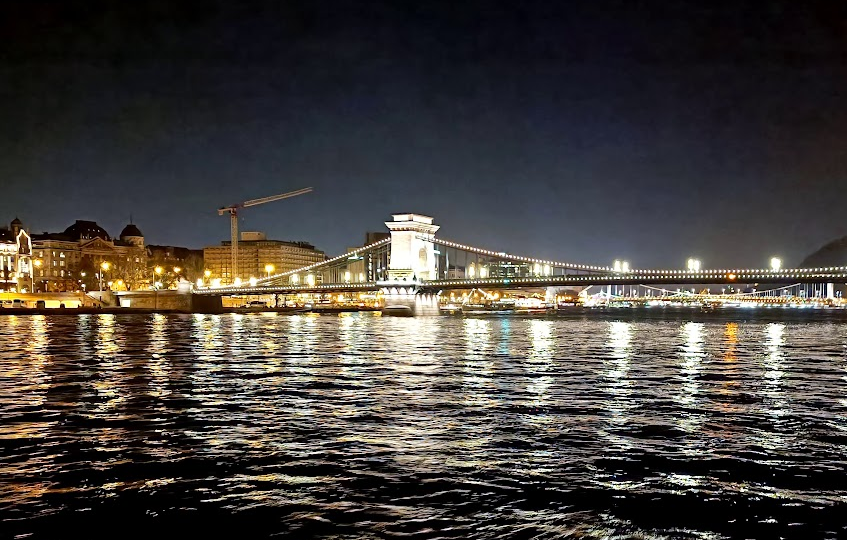
As you stroll, you’ll see the Parliament building (which looks like a giant Gothic wedding cake), the iconic Chain Bridge, and the Buda Castle perched across the water. It’s the kind of walk where your phone battery will likely die from taking too many photos long before your legs get tired.

See Budapest Illuminated at Night

Budapest by day is beautiful, but Budapest at night is a free open-air light show. Around sunset, the city flips a switch, and the Parliament, the bridges, and the Castle are bathed in golden light.

You will see dozens of flyers for “Illuminated Night Tours” or “Glow Walks.” While those guides are lovely people, they are showing you things that are perfectly visible for €0 just by using your eyes. Grab a coat, head to the river, and enjoy the glitter.

Walk Up Gellért Hill

If you want the “I’m the king of the world” view, you have to work for it. Walking up Gellért Hill is free, slightly sweaty, and completely worth it.

Halfway up, as you’re huffing and puffing, you might briefly question your life choices or wonder why you didn’t just stay in a cafe. But once you reach the Citadel and see the entire city splayed out below you—the Danube snaking between the two sides of the city—that mild regret vanishes. Pro tip: Go for sunset. It’s the best show in town, and there’s no cover charge.


2. Museums: How Budapest Compares to Other Cities

When it comes to culture, every city has its own “vibe” regarding entrance fees.

Take Madrid, for example. Even world-famous institutions like the Prado have very specific, limited free hours, requiring you to time your visit like a military operation to save a few Euros.

London is the gold standard for budget culture lovers. Many of the biggest museums in London, including the British Museum, are free every day, allowing you to see world-class artifacts without ever opening your wallet.

So, where does Budapest fit in?

The honest reality check: Budapest museums are generally not free every day. However, they are far from “expensive” by Western standards, and there are real opportunities to visit for free if you are savvy.

How to Get Into Budapest Museums for Free

  • National Holidays: On Hungarian national holidays (March 15, August 20, and October 23), most major museums—including the Hungarian National Museum and the Museum of Fine Arts—offer free entry to everyone.
  • EU Citizens: If you are an EU citizen under the age of 26 (or a parent accompanying a child under 18), many museums offer free entry on the third or fourth Saturday/Sunday of the month. Always check the specific museum’s website for the current “Free Sunday” schedule.
  • Commemorative Days: Occasionally, museums open their doors for free on days like the “Night of the Museums” in June (though this often requires a small-fee wristband for all-access).

3. The Magic of Christmas Markets (The Free Sensory Experience)

If you happen to visit during the winter months, you’re in for a treat that costs exactly zero forints to experience. The Budapest Christmas markets at Vörösmarty Square and by the St. Stephen’s Basilica are legendary. You can spend hours walking through the stalls, soaking in the scent of roasted chestnuts and cinnamon, and admiring the elaborate light projections on the Basilica’s facade.

The atmosphere is absolutely free to consume, and it’s arguably some of the best festive spirit in Europe. It remains completely free… right up until you decide that you must have that handmade wooden ornament or a mug of steaming mulled wine! But even if you don’t spend a dime, the holiday illumination alone is worth the walk.


4. Not Free, but Smarter: Food & Drink Strategies

You have to eat, but you don’t have to pay “tourist prices” for the privilege.

Skip Organized Wine & Pálinka Tastings

You’ll see many ads for “Authentic Hungarian Tasting Experiences.” These often involve paying €30-€40 for three small pours of wine, a scripted story you could read on Wikipedia, and a rushed atmosphere.

The Smarter Option: Go to a local supermarket or a wine shop like Bortársaság. Buy a couple of bottles of high-quality Tokaji or Villányi wine for €10 each. Head back to your accommodation or find a nice spot on Margaret Island. You’ll drink more, pay significantly less, and you can enjoy it at your own pace without a guide staring at you waiting for his tip.

Cheese, Bread, and the Market Strategy

Instead of eating every meal in a restaurant with a laminated menu in six languages, head to the Great Market Hall or a local Csemege (delicatessen).

Buy some local smoked cheeses, fresh crusty bread, and Hungarian sausages (Kolbász). This becomes a self-guided, gourmet tasting experience for about half the price of a mediocre tourist lunch. Plus, people-watching in the market is altijd free.


5. The Danube Cruise… Without the Fancy Stuff

The Danube cruise is the “must-do” activity in Budapest. Many companies will try to sell you a “Premium Buffet Dinner & Operetta Show Cruise” for €60+.

Unless you are celebrating a 50th wedding anniversary and really love lukewarm buffet goulash, skip the expensive extras. You can get the exact same river views on a simple sightseeing cruise for a fraction of the price. Or better yet, use the public transport ferry (if available during your visit) for the price of a single ticket. Eat and drink on land later—the food will be better.


6. Walk Instead of Paying for Transport

Budapest is an incredibly walkable city. Most major attractions are clustered in a way that makes public transport optional, not mandatory.

As we’ve discussed in our guide for normal human legs, walking reveals the “hidden” Budapest—the crumbling courtyards, the street art, and the tiny bakeries—that you miss when you’re underground in a metro carriage or zipping by in a taxi.

Save the transport money for a soak in the thermal baths (which is one of the few things definitely worth paying for).


7. Extra Free & Cheap Tips

  • Margaret Island: This is the city’s green lung. It’s free to enter, features a “musical fountain” that puts on a show every hour, and is the perfect place for a cheap picnic.
  • Ruin Bars: Entering a Ruin Bar like Szimpla Kert costs nothing. You can walk through, admire the crazy decor (it’s basically a free art installation made of junk), and leave without buying a drink if you’re just there for the vibes.
  • Religious Architecture: While St. Stephen’s Basilica now has an entry fee for tourists, many smaller, equally beautiful churches are free to enter for a quiet moment of reflection.

Conclusion: Free Doesn’t Mean Boring

Budapest is a city that rewards curiosity, not just big budgets. Some of the most profound moments you’ll have—watching the sun dip behind the Matthias Church or feeling the mist of the Danube on your face—don’t come with a barcode or a ticket stub.

Money is better spent on meaningful memories, a great meal, or a relaxing spa day than on “convenience” items like bottled water or overpriced guided “illuminated” walks. Budapest is an open book; you just have to be willing to walk the pages yourself.

A Journey Through Budapest: Top Attractions and Experiences on a Danube River Cruise

Budapest, often dubbed the “Pearl of the Danube,” offers one of Europe’s most enchanting river cruise experiences. A typical Danube River cruise in Budapest lasts between 60 and 150 minutes, providing a front-row seat to the city’s iconic landmarks, historical treasures, and stunning architecture. As you glide along the river, which splits the city into Buda and Pest, you’ll witness a blend of natural beauty and cultural heritage that makes Budapest a must-visit destination. Whether you’re taking in the sights during the day or under the twinkling lights of an evening cruise, here’s a guide to the most frequently seen attractions and the exciting add-on experiences that can elevate your journey.

1. The Hungarian Parliament Building

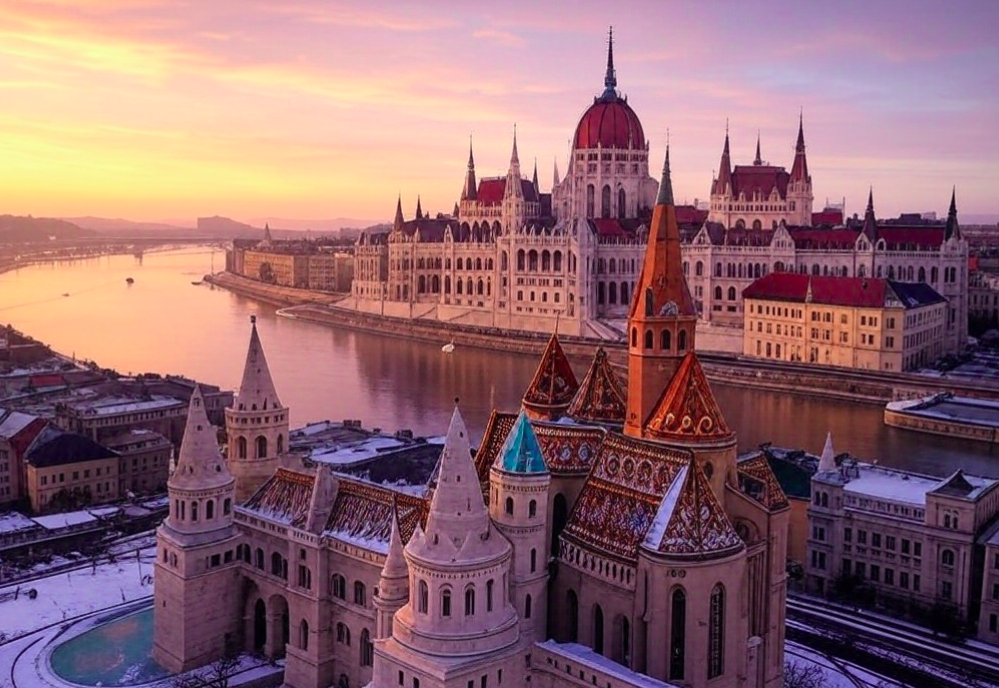
One of the first sights to capture your attention is the Hungarian Parliament Building, a masterpiece of Gothic Revival architecture. Located on the Pest side of the river, this iconic structure is one of the largest parliament buildings in the world. Its intricate facade, adorned with spires and statues, and the prominent central dome are even more striking when illuminated at night—a feature many evening cruises emphasize. As you pass by, guides often share stories of its construction in the late 19th century and its role as the heart of Hungarian politics.

2. Buda Castle and Castle Hill

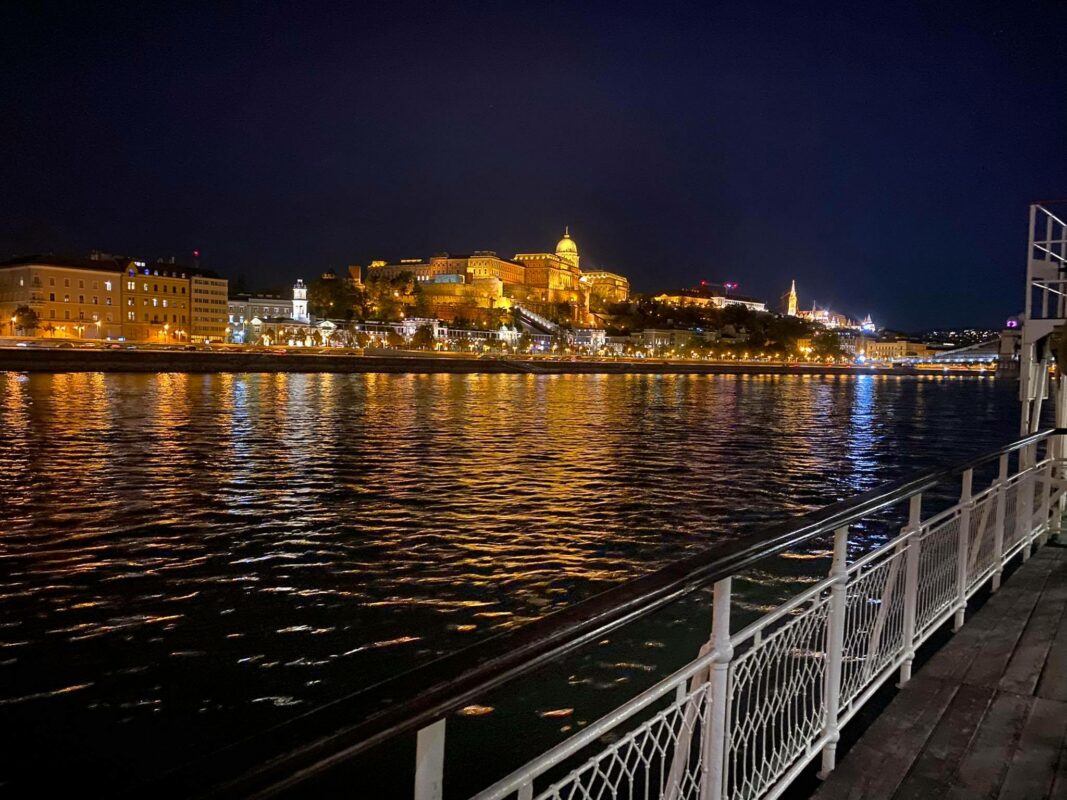
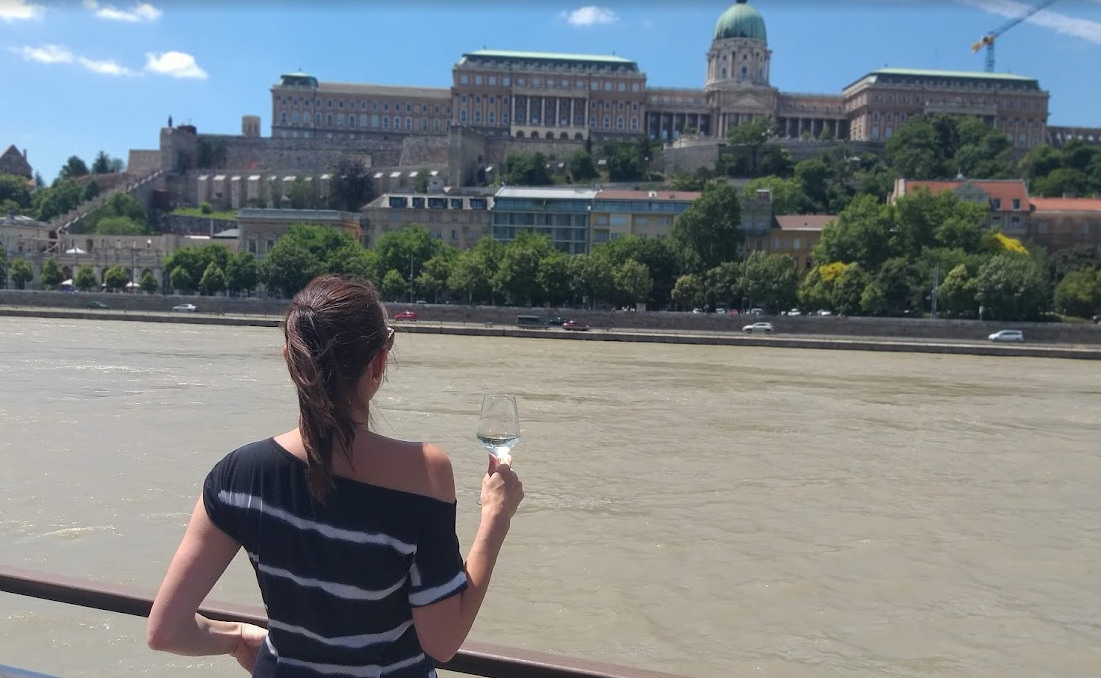
On the Buda side, the majestic Buda Castle dominates the skyline atop Castle Hill. This UNESCO World Heritage Site, a sprawling complex with roots dating back to the 13th century, houses the Hungarian National Gallery and the Budapest History Museum. From the river, you’ll get a panoramic view of its baroque architecture and the surrounding cobblestone streets of the Castle District. Many cruises highlight the nearby Fisherman’s Bastion, a neo-Romanesque terrace with seven turrets offering sweeping views of the city, though it’s best appreciated up close after your cruise.

castle in background

3. The Chain Bridge

No Budapest river cruise is complete without passing under the iconic Chain Bridge, the city’s first permanent bridge connecting Buda and Pest. Opened in 1849, this suspension bridge is a symbol of Budapest’s unity and resilience. Its stone lions, designed by sculptor János Marschalkó, guard each end, and the intricate ironwork is a marvel of 19th-century engineering. Cruises often slow down here, allowing you to take in the bridge’s grandeur and snap photos with the backdrop of the city’s skyline.

4. Margaret Island

As you cruise further, you’ll spot Margaret Island, a lush, green oasis in the middle of the Danube. This 2.5-kilometer-long island is a favorite recreational spot for locals, featuring gardens, medieval ruins, and thermal baths. While most cruises don’t stop here, the sight of its tree-lined shores offers a refreshing contrast to the urban landscape. Guides often mention its history as a royal hunting ground and its current role as a peaceful retreat for walking, cycling, or enjoying a picnic.

5. The Shoes on the Danube Bank Memorial

A poignant moment on many cruises comes when passing the Shoes on the Danube Bank memorial on the Pest side. This somber tribute, consisting of 60 pairs of iron shoes, honors the Jews who were killed by fascist Arrow Cross militiamen during World War II. Victims were forced to remove their shoes before being shot into the river. The memorial’s location along the riverbank makes it a striking sight from the water, often accompanied by a moment of reflection as guides recount its history.

6. Gellért Hill and the Citadel

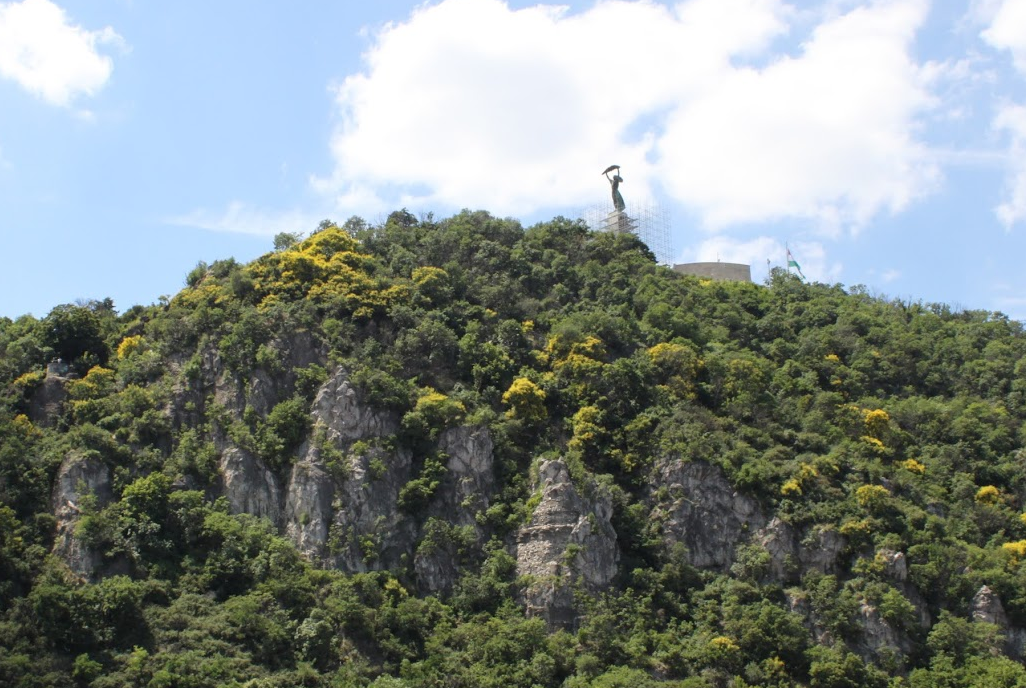
Rising above the Buda side, Gellért Hill offers a dramatic backdrop with its Citadel and the Liberty Statue perched at the summit. The Citadel, built in the 1850s by the Habsburgs, offers a glimpse into Budapest’s military past, while the Liberty Statue, a 14-meter-tall figure holding a palm leaf, symbolizes freedom and is visible from much of the city. Cruises often point out the hill’s thermal springs, including the famous Gellért Spa at its base, known for its Art Nouveau architecture and healing waters.

gellert hill

7. The Bridges of Budapest

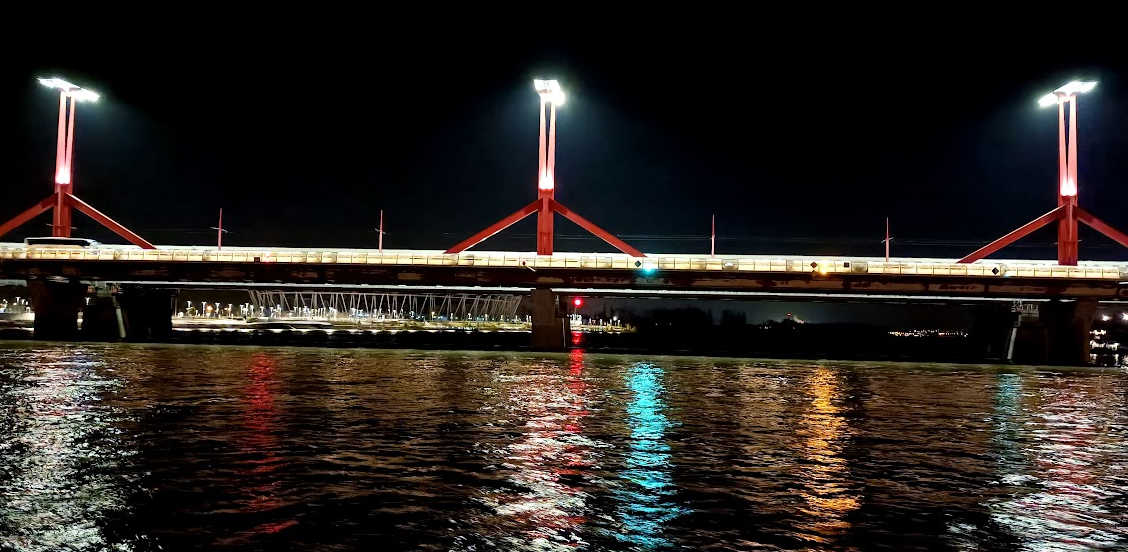
Beyond the Chain Bridge, you’ll pass under several other notable bridges that span the Danube. The green-painted Liberty Bridge, with its Art Nouveau design, connects the Gellért Spa to the bustling Pest side. Further along, the Elisabeth Bridge, a modern white suspension bridge, stands out for its sleek design and historical significance—it was rebuilt after World War II destruction. Each bridge has its own story, often shared by onboard guides, adding depth to the visual spectacle.

8. The Riverside Architecture of Pest

The Pest embankment is lined with architectural gems that catch the eye as you cruise. Beyond the Parliament, you’ll see grand buildings like the neo-Renaissance Gresham Palace, now a luxury hotel, and the Hungarian Academy of Sciences, a neo-Renaissance structure from the 1860s. The vibrant Pest skyline, with its mix of historic and modern buildings, contrasts beautifully with the hilly, more residential Buda side, showcasing Budapest’s dual character.

9. The Danube Promenade

The cruise often highlights the Danube Promenade on the Pest side, a scenic walkway stretching from the Chain Bridge to the Elisabeth Bridge. From the water, you’ll see pedestrians strolling past luxury hotels, cafes, and sculptures, with the river reflecting the city’s lights at night. This area is a hub of activity and a great spot to explore on foot after your cruise, often recommended by guides for its proximity to attractions like Váci Street, Budapest’s main shopping area.

10. Nighttime Illuminations (on Evening Cruises)

If you opt for an evening cruise, which many operators offer, the city transforms into a dazzling display of lights. The Parliament, Buda Castle, and the Chain Bridge are illuminated, casting golden reflections on the water. Evening cruises, typically lasting 60 to 90 minutes, often include a glass of Hungarian wine or a light meal, enhancing the magical atmosphere. The illuminated skyline is a highlight for many travelers, making Budapest one of Europe’s most photogenic cities after dark.

Enhancing Your Cruise Experience

For those looking to elevate their Budapest river cruise, many operators offer a variety of add-on experiences that combine the scenic journey with local flavors and entertainment. You can opt for a wine-dinner program, savoring Hungarian wines paired with a gourmet meal as you glide past the illuminated landmarks. Cocktail programs are also popular, featuring signature drinks while you enjoy the views. For a more casual dining experience, some cruises offer a dinner buffet showcasing Hungarian cuisine. If you’re interested in cultural immersion, consider a folklore trip with traditional music and dance performances, or choose a cruise with live music for a lively atmosphere. To explore these options and book your perfect trip, visit https://www.hungarybudapestguide.com/activities/danube-cruise/ for more details on these enriching add-ons.

Conclusion

A Danube River cruise in Budapest is a perfect way to experience the city’s rich history, architectural splendor, and natural beauty in a short time. From the grandeur of the Hungarian Parliament to the serene greenery of Margaret Island, each attraction tells a story of Budapest’s past and present. Whether you choose a daytime journey, an evening sail under the city’s twinkling lights, or enhance your trip with a wine-dinner program or live music, this cruise promises unforgettable views and a deeper appreciation for one of Europe’s most captivating capitals.

What Happened to the Public Transportation Boat in Budapest?

For years, Budapest offered a hidden gem for both locals and tourists: a public transportation boat that was not only affordable but also seamlessly integrated into the city’s public transit system. With just a standard transportation pass, you could hop aboard and glide along the Danube River, soaking in breathtaking views of some of the city’s most iconic landmarks. From the majestic Buda Castle perched atop its hill to the verdant slopes of Gellért Hill, the neo-Gothic splendor of the Hungarian Parliament, and the timeless elegance of the Chain Bridge, this boat ride was a budget-friendly way to experience Budapest’s beauty from a unique vantage point. It was the kind of service that made you wonder why every riverside city didn’t offer something similar.

But that’s all in the past now (since 2023). The beloved public transportation boat, once a staple for sightseeing on a dime, is no longer available. Its disappearance has left a gap in Budapest’s otherwise excellent public transit network, much to the disappointment of those who cherished its charm and convenience.

What’s left today?

Today, the only remaining public transportation boat operates far from the city’s bustling center. This lone survivor runs on the southern fringes of Budapest, connecting Csepel-Királyerdő and Molnár-sziget in the Soroksar area. While it serves a practical purpose for locals in that region, it’s a far cry from the scenic route that once captivated visitors. The journey offers little in the way of attractions, with none of the historic or cultural landmarks that draw millions to Budapest each year. For tourists, it’s neither convenient nor compelling—located too far from the city core to be part of a sightseeing itinerary.

So, what’s the consequence of this change? If you’re hoping to enjoy a leisurely cruise along the Danube and take in Budapest’s stunning riverside panorama, you’re now left with one option: the pricier sightseeing cruises offered by private companies. These tours, while undeniably enjoyable, come with a heftier price tag that can feel steep compared to the old public boat’s unbeatable value. What was once an accessible, spontaneous adventure included in your transit pass has morphed into a premium experience, putting it out of reach for budget-conscious travelers.

The loss of the public transportation boat is a quiet blow to Budapest’s reputation as a city that blends affordability with charm. For those still eager to explore the city’s sights without breaking the bank, public transportation remains a viable option—just not by water. Buses, trams, and the metro can still get you close to the major attractions, even if they lack the romance of a river cruise.

If you’d like to learn more about how to make the most of Budapest’s public transportation for sightseeing, check out this helpful guide: How to Do Sightseeing in Budapest Using Public Transportation. It’s a great resource for navigating the city’s streets and discovering its treasures, even without that cherished boat ride.

How to Do Sightseeing in Budapest Using Public Transportation?


Budapest, Hungary’s vibrant capital, is a treasure trove of history, architecture, and culture. From the grandeur of Buda Castle to the thermal baths of Széchenyi, it’s a city that begs to be explored. While walking or taking a taxi might seem tempting, Budapest’s public transportation system—affordable, reliable, and extensive—offers the best way to see it all. Whether you’re marveling at the Parliament Building or sipping coffee by the Danube, here’s how to navigate Budapest’s top sights using buses, trams, metros, and more.

Why Public Transportation?

Budapest’s transit network, operated by BKK (Budapesti Közlekedési Központ), is a tourist’s dream. It’s cheap (a single ticket costs ~450 HUF, or $1.20 USD as of March 2025), eco-friendly, and connects every major landmark. With four metro lines, trams gliding along the Danube, and buses reaching quieter corners, you’ll save time and money while soaking in the city’s charm. Plus, it’s an authentic way to travel like a local.

Getting Started: Tickets and Passes

Before hopping on, grab a ticket or pass. Single tickets (valid for one uninterrupted trip) are available at metro stations, BKK ticket machines, or via the BudapestGO app—download it for real-time schedules too. For sightseeing, consider these options:

  • 24-hour Travelcard: ~2,500 HUF, unlimited rides for a day.
  • 72-hour Travelcard: ~5,500 HUF, perfect for a weekend trip.

Validate tickets on board (trams/buses) or at metro gates. Hang onto them—inspectors do random checks!

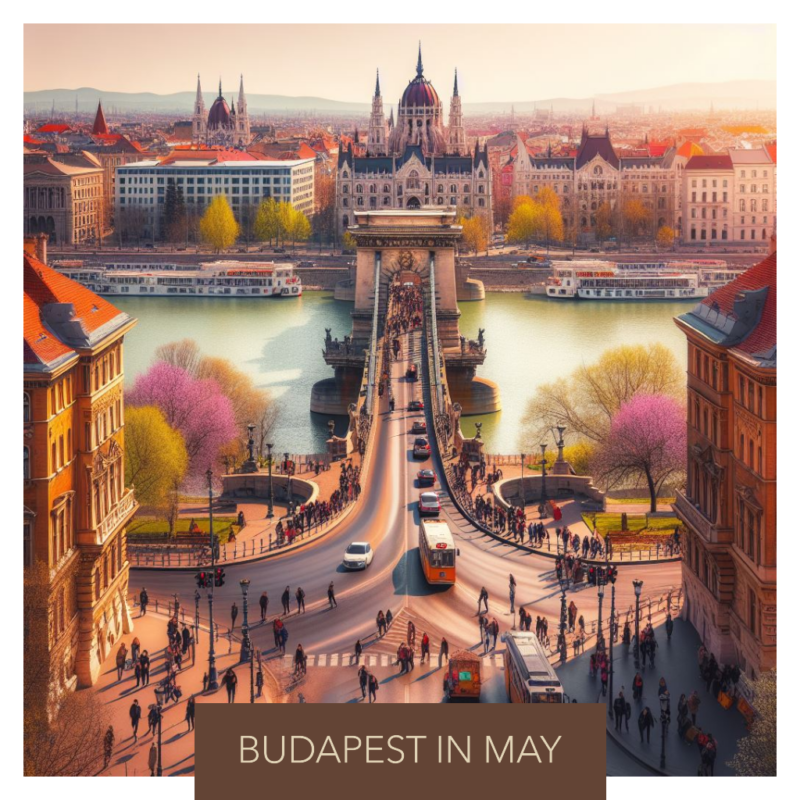
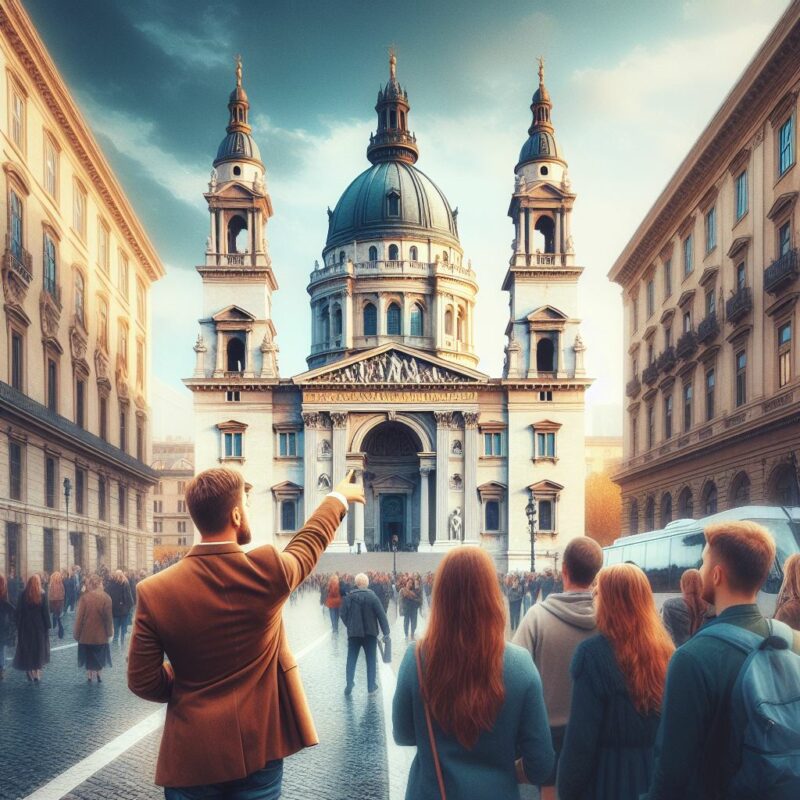
AI Generated picture of Budapest.. the reality is much nicer!

Sightseeing Itinerary: Day 1 – Buda Side

Start your adventure on the Buda side, the hilly, historic half of the city.

Buda Castle and Fisherman’s Bastion

  • How to Get There: Take Metro Line M2 (red) to Széll Kálmán tér, then hop on the Castle Bus (Várbusz)—a free shuttle (with a valid ticket) to Buda Castle. Alternatively, ride the iconic Castle Hill Funicular from Clark Ádám tér (near Chain Bridge) for ~4,000 HUF round-trip.
  • What to See: Explore the castle’s courtyards and the Hungarian National Gallery, then stroll to Fisherman’s Bastion for panoramic views of Pest and the Danube.

Matthias Church

  • How to Get There: It’s a short walk from Fisherman’s Bastion—no extra transit needed.
  • What to See: Admire this Gothic masterpiece with its colorful tiled roof and intricate interiors.

Gellért Hill and Citadel

  • How to Get There: From Buda Castle, take bus 27 from Szentháromság tér to Búsuló Juhász, then walk 10 minutes uphill.
  • What to See: The Citadel offers stunning vistas, and the Liberty Statue is a photo must. Descend via trails for a scenic return.

Wrap up with a tram ride on Tram 19 or 41 along the Buda embankment—pure riverside bliss.

Sightseeing Itinerary: Day 2 – Pest Side

Cross to Pest for bustling streets and grand architecture.

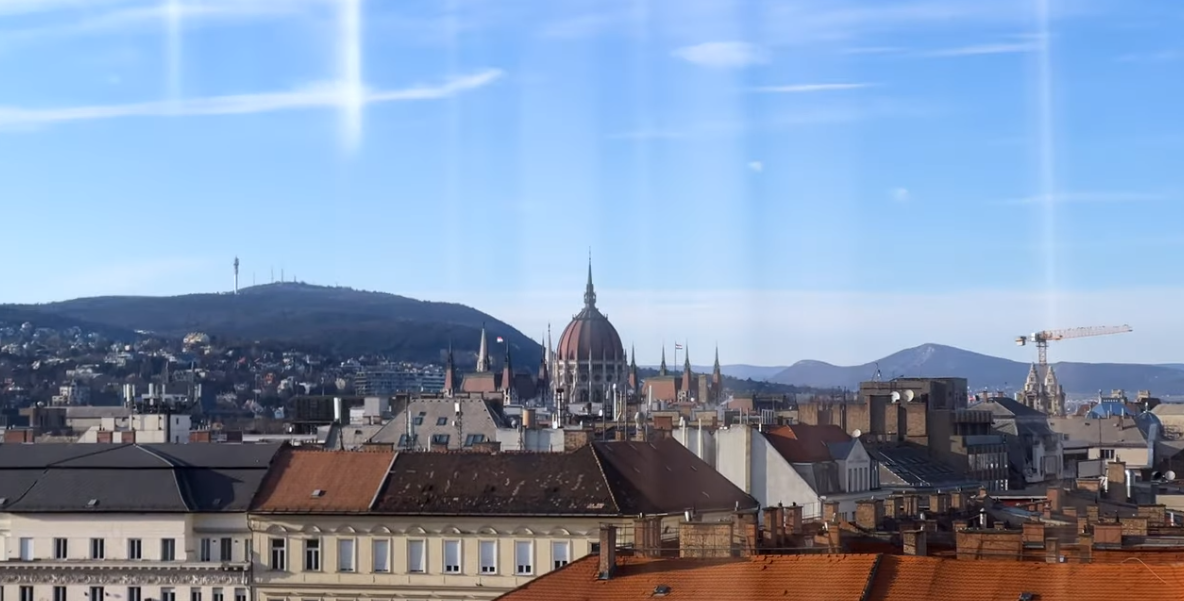
Hungarian Parliament Building

  • How to Get There: Take Metro Line M2 to Kossuth Lajos tér.
  • What to See: This neo-Gothic marvel is Budapest’s crown jewel. Book a guided tour to see the Holy Crown of Hungary inside.

St. Stephen’s Basilica

  • How to Get There: From the Parliament, ride Tram 2 (a scenic route along the Danube) to Széchenyi István tér, then walk 5 minutes. You can also walk between the two locations easily, and then enjoy the beautiful Liberty Square during your walk.
  • What to See: Climb the dome for 360-degree views or enjoy the serene interior. Entry is free, but donations are appreciated.

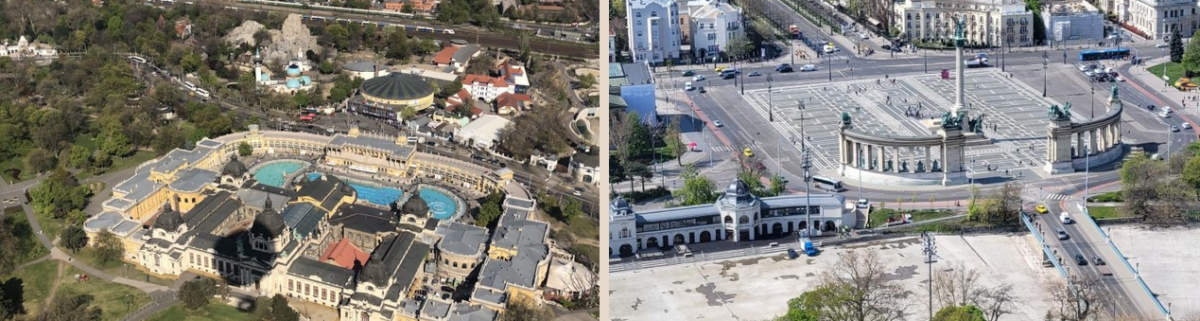
Heroes’ Square and City Park

  • How to Get There: Take Metro Line M1 (yellow)—Europe’s oldest electrified metro—to Hősök tere.
  • What to See: Admire the Millennium Monument, then wander into City Park for Vajdahunyad Castle and the Széchenyi Thermal Bath (more on that next).

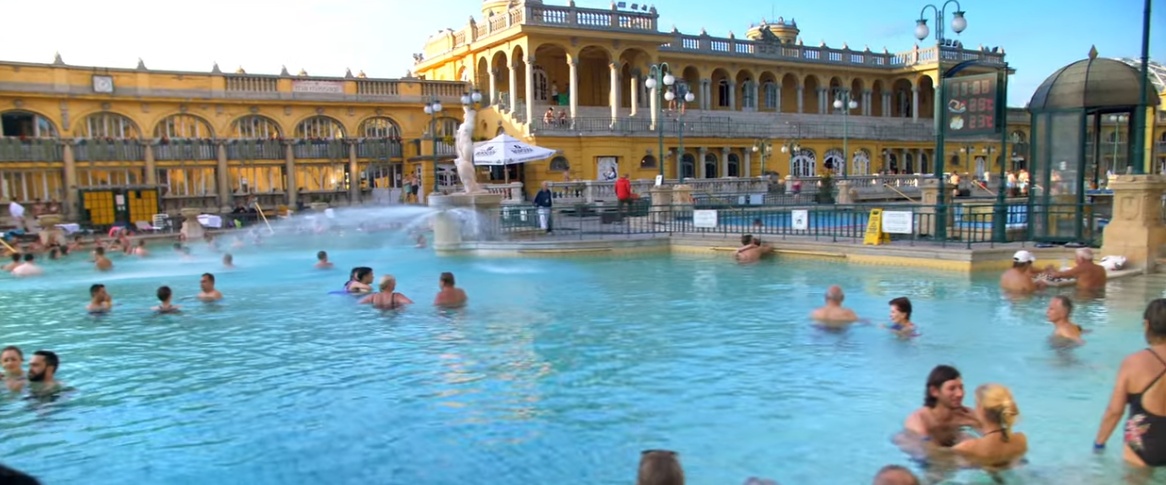
Széchenyi Thermal Bath

  • How to Get There: From Heroes’ Square, it’s a 10-minute walk, or take bus 20E to Széchenyi fürdő.
  • What to See: Soak in Budapest’s largest thermal spa. Entry starts at ~12,000 HUF—bring a towel and flip-flops!

Sightseeing Itinerary: Day 3 – Danube Highlights

Focus on the river and its iconic crossings.

Chain Bridge

  • How to Get There: From Pest, take Tram 2 to Széchenyi István tér. From Buda, use bus 16 from Szentháromság tér.
  • What to See: Walk across this historic suspension bridge, linking Buda and Pest since 1849. Snap photos with lion statues guarding each end.

Danube Promenade and Shoes on the Danube

  • How to Get There: From Chain Bridge, stroll along the Pest side or take Tram 2 to Vigadó tér.
  • What to See: The promenade offers river views, while the Shoes on the Danube memorial—60 pairs of bronze shoes—honors Holocaust victims.

Margaret Island

  • How to Get There: Take Tram 4/6 from Pest to Margitsziget, or bus 26 from Árpád híd metro station (M3).
  • What to See: This green oasis has gardens, ruins, and a musical fountain. Rent a bike or relax by the water.

Discovering Budapest via Public Transportation Boat (no longer available)

For a unique perspective, explore Budapest by public transportation boat along the Danube. Operated by BKK, these boats offer a scenic, budget-friendly alternative to tourist cruises. These boats are no longer available (since 2023).

  • Availability: Boats run from mid-March to late October, weather permitting. Services like D11 (Újpest to Haller utca) and D12 (Római fürdő to Haller utca) operate weekdays, with limited weekend runs (e.g., D13). In 2023, high maintenance costs paused services, but as of 2025, they’re back seasonally—check BudapestGO for updates.
  • Payment: Use standard BKK tickets or passes (e.g., 24-hour Travelcard, 2,500 HUF). Single tickets (450 HUF) work too, validated onboard. Boats are free with the Budapest Card on weekdays. Cash or card payments aren’t accepted onboard—buy tickets in advance via the app or at BKK kiosks.
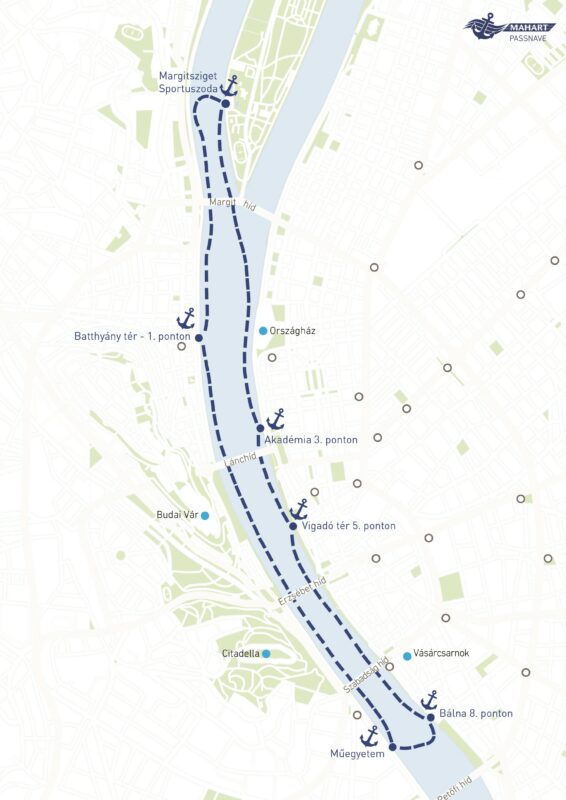
  • What to See: Departing from piers like Boráros tér or Batthyány tér, you’ll glide past the Parliament Building’s illuminated spires, Buda Castle perched atop its hill, and the Chain Bridge’s elegant arches. Look for Gellért Hill’s Citadel and Margaret Island’s greenery. The zigzagging route offers unobstructed views of Pest’s vibrant skyline and Buda’s historic charm—perfect for photos.

Tips for a Smooth Ride

  • Timing: Metros run every 2-5 minutes during peak hours (5 AM–11:30 PM), trams and buses every 10-15 minutes. Check BudapestGO for night bus options after midnight.
  • Crowds: Avoid rush hours (7-9 AM, 4-6 PM) for a comfier ride.
  • Accessibility: Most metros (except M1) and newer trams/buses are wheelchair-friendly—look for blue symbols.
  • Language: Signs are in Hungarian, but key stops have English announcements.

Why It Works

Budapest’s compact size makes public transit ideal. The metro’s four lines—M1 (yellow), M2 (red), M3 (blue), and M4 (green)—form the backbone, while trams like Tram 2 offer postcard-worthy views along the Danube. Buses fill gaps, reaching hilly Buda or outer Pest. A 72-hour pass (~$15 USD) covers it all, leaving you free to hop on and off without breaking the bank.

Beyond the Sights

Public transit isn’t just practical—it’s part of the experience. Ride the vintage M1 metro for a history lesson, or watch locals bustle on Tram 4/6, one of Europe’s busiest lines. Pair your journey with a kürtőskalács (chimney cake) from a street vendor near a stop, and you’re living Budapest life.

Final Thoughts

Sightseeing in Budapest by public transportation is efficient, affordable, and fun. From Buda’s castles to Pest’s baths, every landmark is a ride away. So, grab a travelcard, download BudapestGO, and let the city unfold before you—no car required. Have a favorite Budapest spot? Share it—I’d love to hear your picks!

Boat trips on the Danube in Budapest are available again!

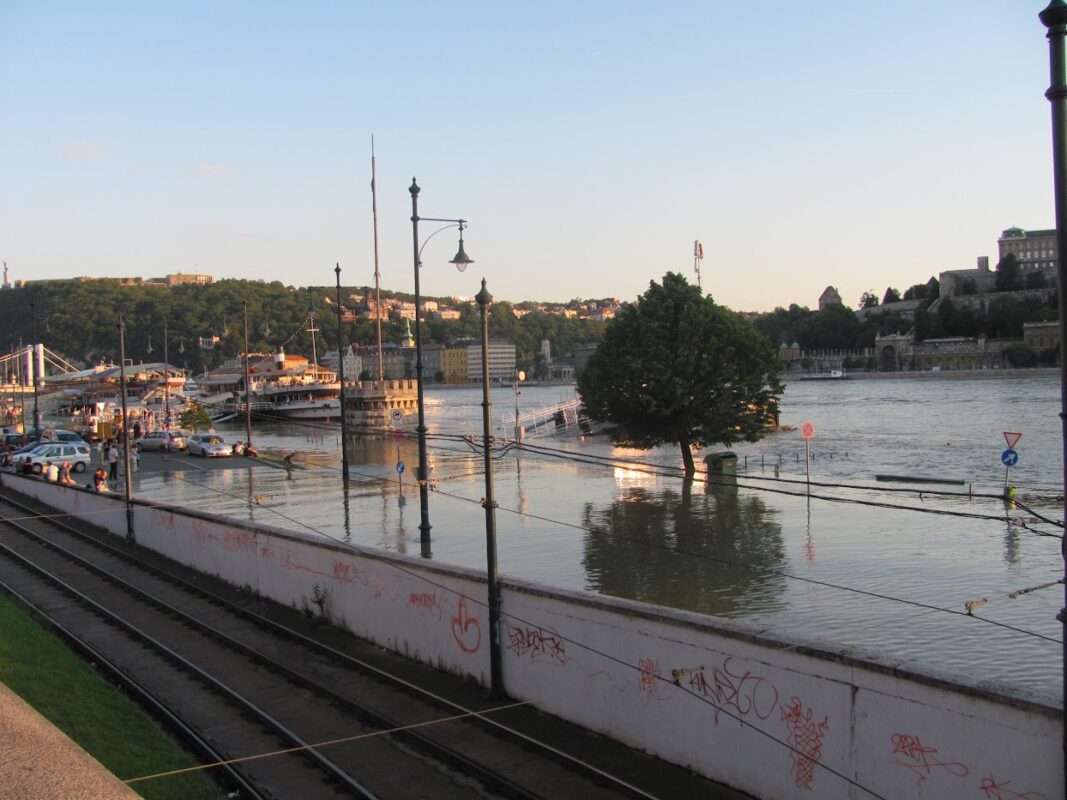
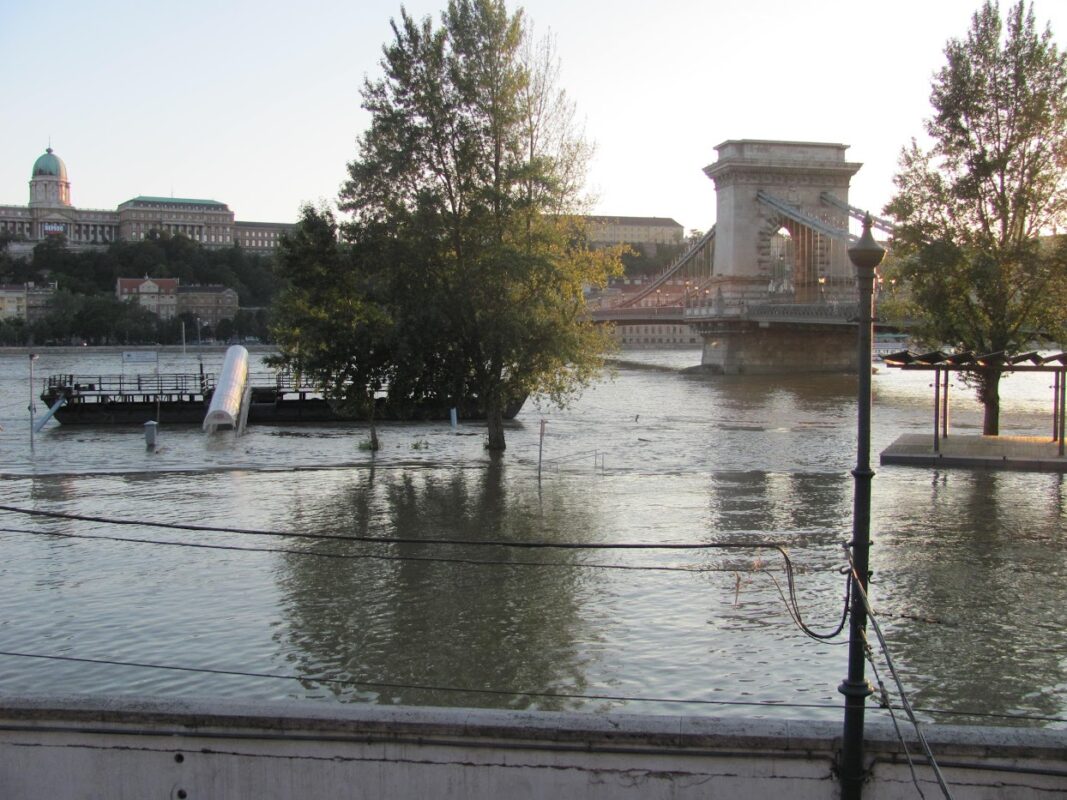
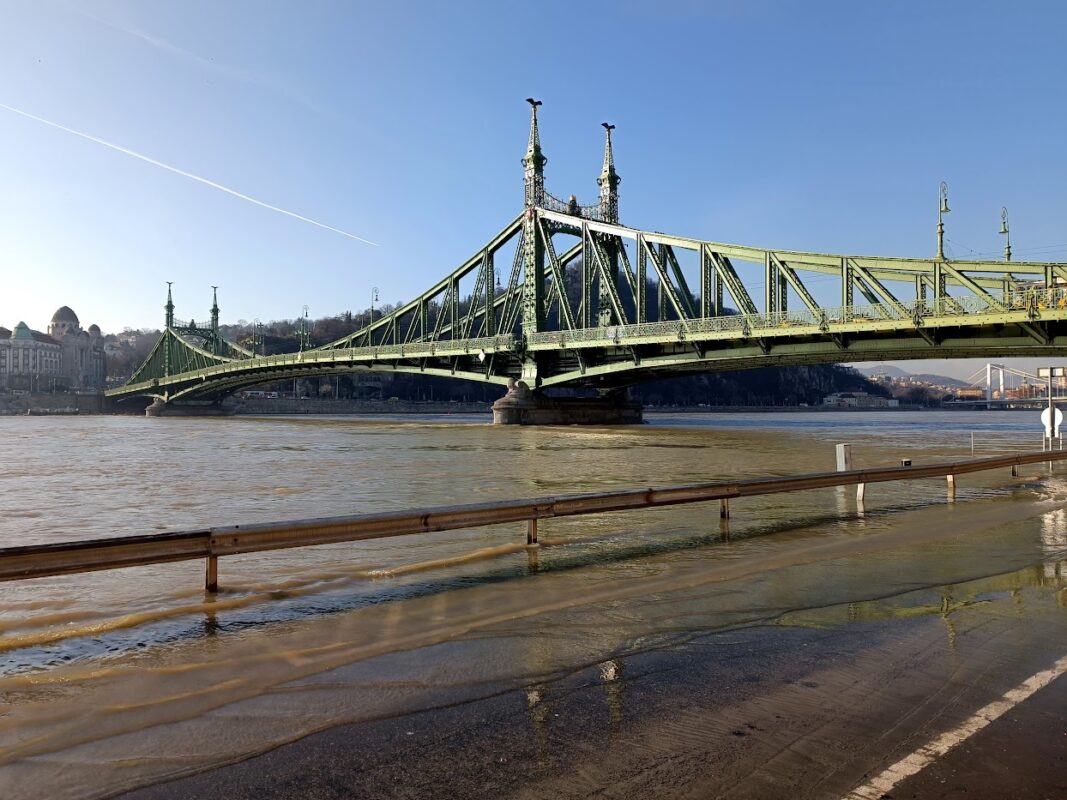
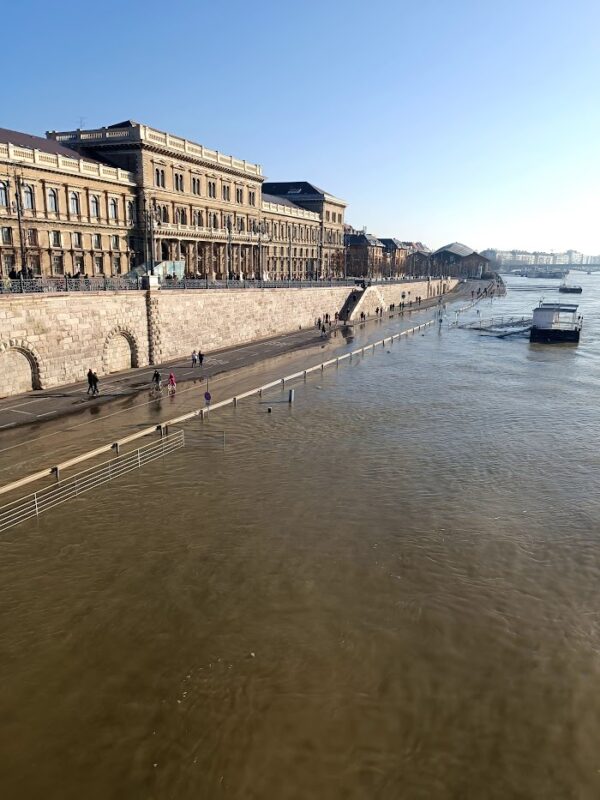
Have you been to Budapest recently, or are you planning to come in the near future? Then you have probably paid attention to the news about the Danube (and other rivers in Europe) flooding and create big trouble. The Danube caused lots of trouble in Hungary as well, and even though Budapest protected itself in a great way, it still effected many people. For example, there haven’t been any boat trips on the Danube in the last week because of the strong current and high water (making it hard for boats to cross under the bridges).

But, the good news is that the peak was reached this weekend (Danube was almost 8,5 meters higher than it is on a normal day), and now the water levels are going down. As a result, from September 25, most boat trips on the Danube are returning to normal, meaning that you can eat your dinner on the Danube, enjoy folklore performances on the Danube, or just go on a sightseeing trip in which you learn more about the city while listening to a guide on a loudspeaker or with an ear-plug.

It is still a lot of water in the Danube, so anyone walking nearby should still be extremely careful (due to the strong current).

If you want to read more about other cool activities, or interesting attractions in Budapest, look around here in our Budapest Guide.

Flood in Budapest

You have probably heard the news that the Danube and other rivers in Europe are flooding at the moment. In what way might this influence your visit to Budapest? Will it cause any trouble that Danube is carrying so much water at the moment?

For most tourists the fact that the Danube is flooding will not influence your stay very much. Life goes on as normal for most people, of course with some exceptions. As the Danube is flooding, it is causing quite a lot of trouble both north and south of Budapest as basements are filled with water and they do not have a well-built protection against floods. But, Budapest is a city prepared for floods, which means that you don’t really have a lot to worry about, unless you are driving a car.

What’s on with the Danube flooding in 2024?

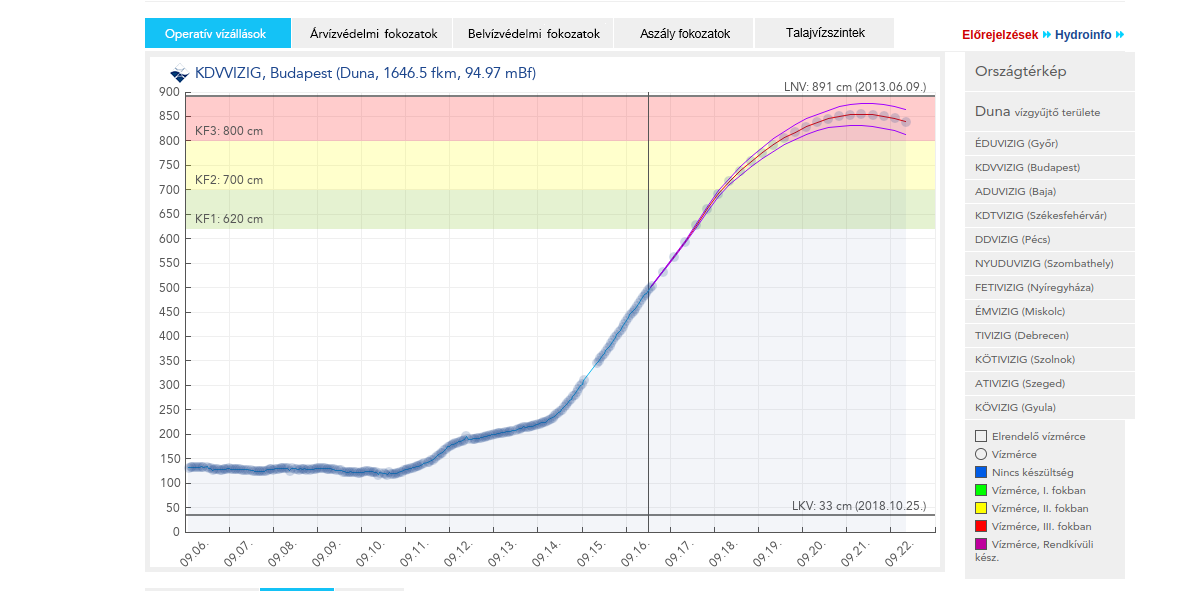
The Danube is expected to reach 8,50 meters above normal water level around September 21. This is actually a very high level, so even though it shouldn’t cause trouble for you as a tourist in Budapest, it will for sure be lots of locals down by the Danube making photos, and you might even see sandbags used for protection here and there.

Projected floods levels for Danube in Budapest in 2024.

Things might change, but it has been many, many years since the Danube was flooding in a similar way in Budapest.

  • It is expected that tram line number two will stop riding as normal from September 17, and the Margaret Island will also be closed to pedestrians in the coming days. Approximately 800,000 bags of sand will be used to protect the Margaret Island during the flood.

General information about flood in Budapest.

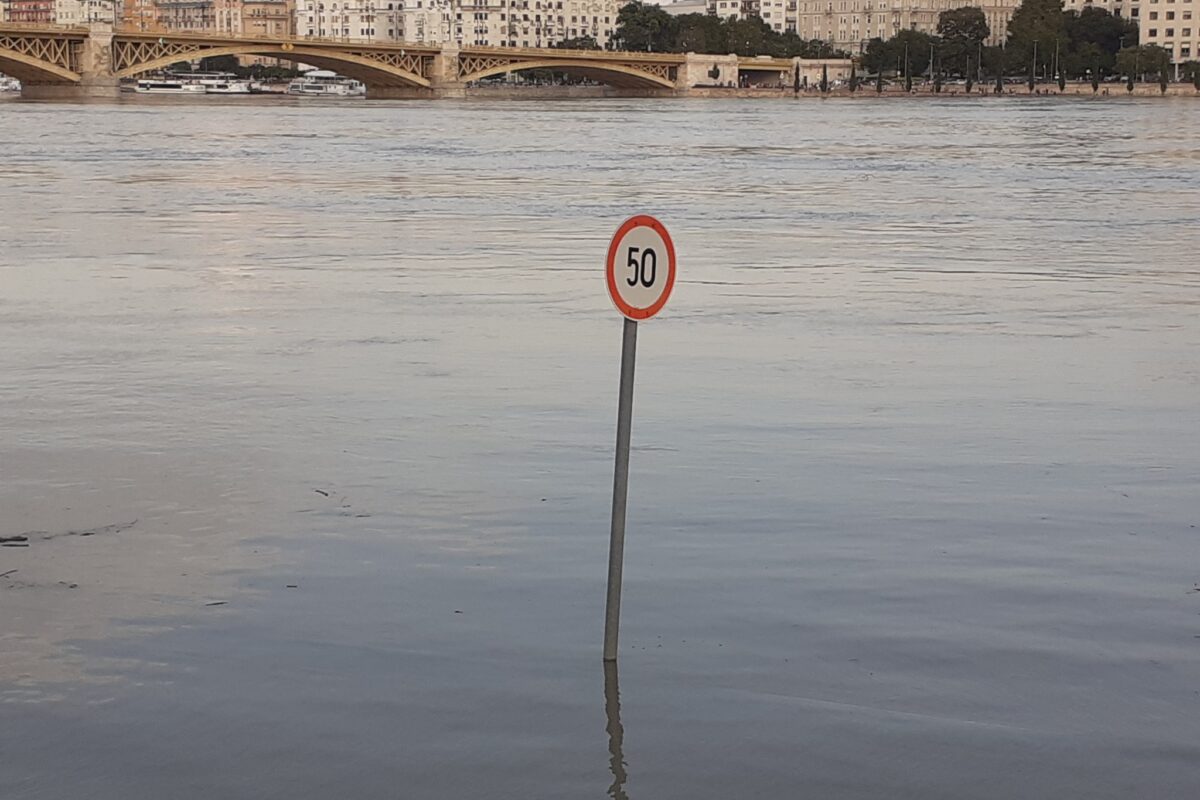
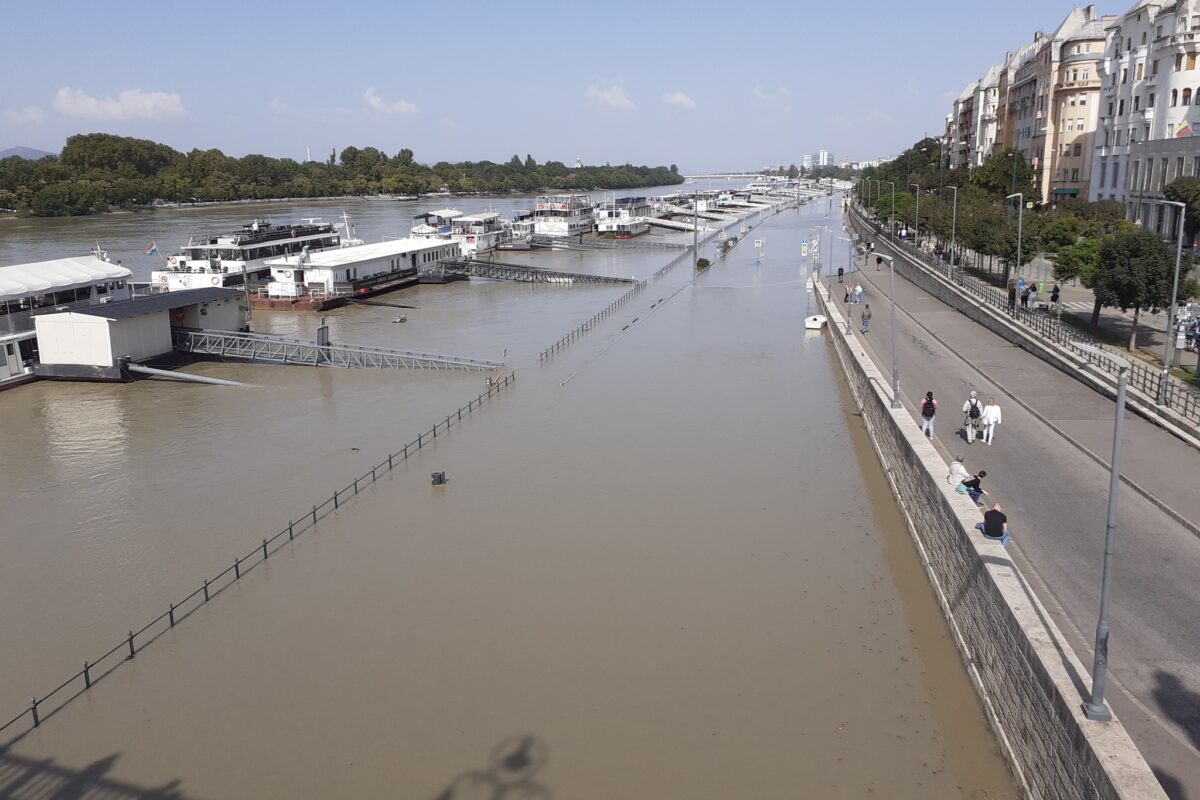
Because of the high water levels the road on both the Pest and the Buda side next to the Danube is standing under water. This will require all drivers to choose other roads, which again will lead to increased traffic and lots of jams in areas and on roads near the Danube. If possible, use public transportation instead.

Also depending on how high the water will get, it might cause trouble for river cruises, especially for the large boats. As the water levels get higher, it might cause trouble for the largest boats to drive below the bridges. But, this is only when the water gets really high, and that happens very seldom in Budapest, so most likely, it shouldn’t cause much trouble now either.

If the water should reach 8-9 meters above normal, then hotel guests at the Margaret Island are moved to other hotels, because the idyllic island in the middle of the Danube is very threatened by the flood. But once again, that normally doesn’t happen, and if you have booked a hotel at this location, then you will get information from the hotel and all the help needed.

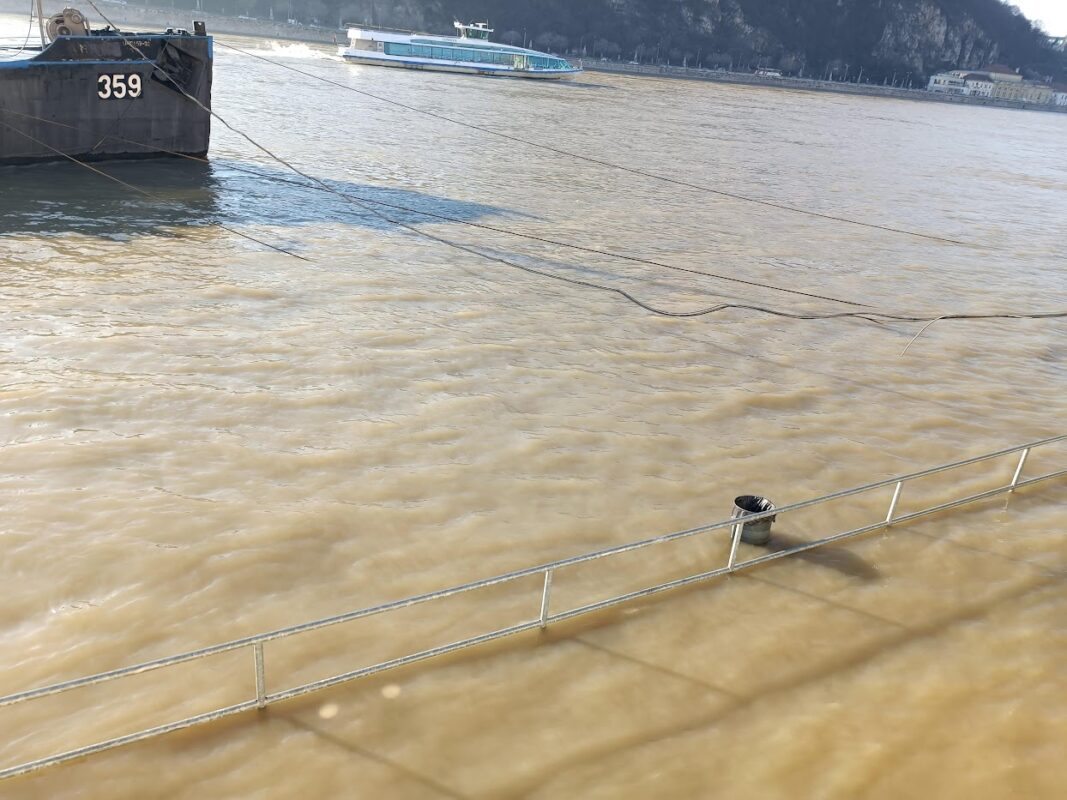
As you can see from the pictures above, life goes on as normal in Budapest, also during floods. As long as the water stays around 6 meters above normal level, it only causes traffic jams, but not much trouble besides that. Of course, the increased amount of water means that the Danube current is much stronger, so as always, you should be very careful because the Danube is a dangerous river.

What is causing the Danube to flood in Budapest (and elsewhere)?

The Danube River is flooding Budapest due to several factors. The most common reason is heavy rainful, and also melting snow. Whenever this takes place, then there is a danger of the river flooding, something that you can easily see in Budapest and elsewhere (as illustrated in the pictures above). When this increased amount of water comes, the drainage systems are unable to handle all the extra water, which again leads to flooding.

Do I need to worry about visiting Budapest during a flood?

You do not have any reason to worry about visiting Budapest, even though the Danube is flooding. It might cause trouble for some of the boat trips on the Danube, and especially the larger cruise ships might suffer from this. As a result, they are not capable of transporting passengers from Vienna to Bratislava to Budapest, but instead, the guests are placed on buses that transport them between the cities.

Most boats traveling on the Danube within the borders of Budapest can travel on the Danube with no limitations, even during heavy floods.

Besides this, life goes on as normal, and you can eat your delicious Goulash soup and drink some Tokaj wine without worrying about anything!

Pizza Cruise on the Danube in Budapest – Should you buy a ticket?

There are many fantastic boat trips available on the Danube in Budapest. The river is fantastic and the view is even more awesome. Can you imagine watching the beautiful attractions of Budapest illuminated in the evening while eating the best food on earth… pizza? That sure sounds nice, doesn’t it? It is no wonder so many people are interested in buying tickets for the popular pizza boat trip on the Danube. But, is it worth it?

Recently, we published an article about a Dinner Cruise with Live Music on the Danube. In the article, we wrote that even though we are located in Budapest and help book tickets for different boat trips on the Danube in Budapest, we do not necessarily say that all trips are equally good. In fact, if there are boat trips we think you should skip, then we will tell you. So, what is the reality when it comes to the Pizza Boat Trip on the Danube arranged by Silverline in Budapest?

Powered by GetYourGuide

Our experience eating pizza on the Danube in Budapest.

The trip we are discussing is the one you can book tickets for above using the GetYourGuide widget. If you visit the page, you can see several positive and some negative reviews. Here are our thoughts!

The trip itself is great. The Danube is beautiful, and the service on the ship is good. You can drink as much as you want which is ideal if you are thirsty, meaning you can get unlimited soft-drinks, ice-tea and some other drinks.

But, why do you buy tickets for a boat trip on the Danube where they serve you pizza? Because you love pizza. And if you love pizza, then you want the pizza to be good. Unfortunately, that was not so on this ship.

We attended the boat trip with a group of six persons, and you can choose from four different pizzas (that must be done upon booking). We tasted three of the four pizzas (we skipped the Hawaii pizza as none of us appreciate pineapple on pizza).

The pizzas were served, and we were looking very much forward to eating pizza while enjoying the view.

pizza on the danube

The pizzas came and upon first look we felt disappointed. It looked like the cheese and the ham and the ingredients were the cheapest of the cheapest at the nearest super market. Unfortunately, the taste didn’t tell us otherwise. We were then having serious discussions about whether we were actually served a frozen pizza with a basic tomato sauce, and then they just added toppings according to the orders, but we didn’t really come to a conclusion (even though I still believe it was a basic frozen pizza with some toppings added before added on the ship).

We traveled with kids, so our kids had a wonderful time on the Danube, one of my son even makes jokes about this being the best pizza he has ever eaten, but I guess that says more about his attitude than the pizza.

All in all, we will remember the trip, and we had a good time. But, if the goal is to combine a trip on the beautiful Danube in Budapest with a delightful pizza, then you should bring the pizza yourself and not eat the one you are served onboard.

Powered by GetYourGuide

What are your thoughts? Do you have any questions?

This is our experience, but we know from reviews on GetYourGuide that many people have truly enjoyed the trip. Would you like to share your thoughts about the trip? Or do you have any questions?

Please use the comment field below and let us hear from you!

Which are the best activities in Budapest in April?

Summer isn’t here yet, but you have decided to take some days off to visit Budapest. Even though April is a spring month, the weather isn’t always stable, meaning that you can expect both sunshine and some rainshowers. When you plan your trip to Budapest in April, which are the things you should take into consideration? Are there any activities you should reserve beforehand or put on your schedule?

Spring comes early to Budapest, and already in March, you can be lucky enough to catch days with high temperatures, meaning that you can wear a shorts and t-shirt outside. But, that isn’t the normal, and there is a big difference between the beautiful days and the not so beautiful days. Of course, all days are beautiful in Budapest, but you should look at the weather forecast before you travel to get a hint of what kind of weather you can expect, as this will greatly influence what your days will be like and how much time you want to spend outside.

Budapest in April – some ideas!

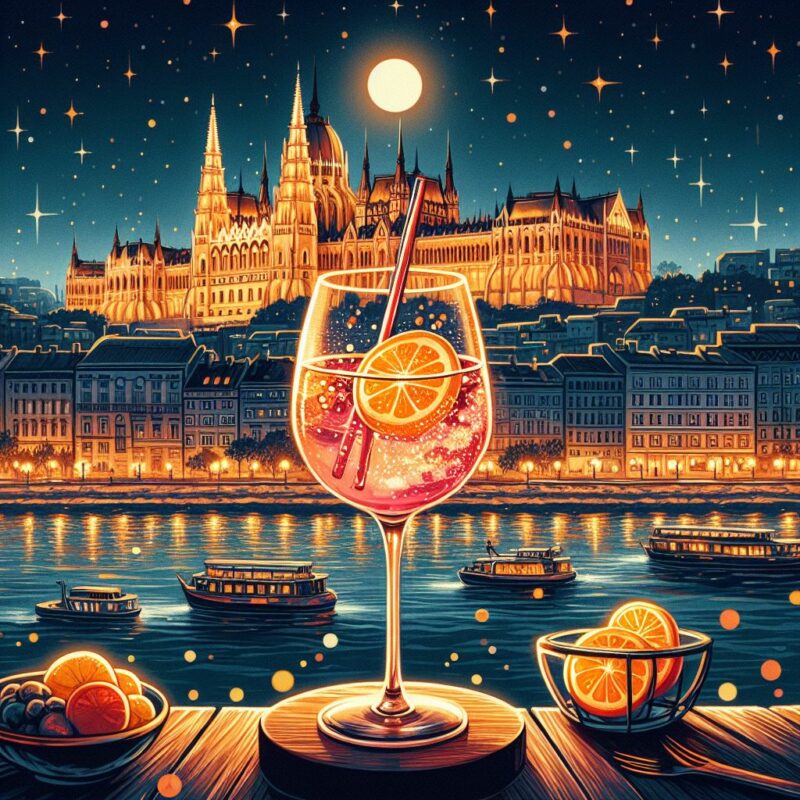
If you come to Budapest on some beautiful days in April, then you should use the chance to sit outdoor and drink delicious white wine from Tokaj, a spritz (combination of rose/white-wine and water with gas), and also to eat traditional Hungarian food. Many restaurants have tables outside waiting for you on days with warmer temperatures and sunshine, so you should look for such restaurants as you plan where to eat your dinner.

spritz in budapest

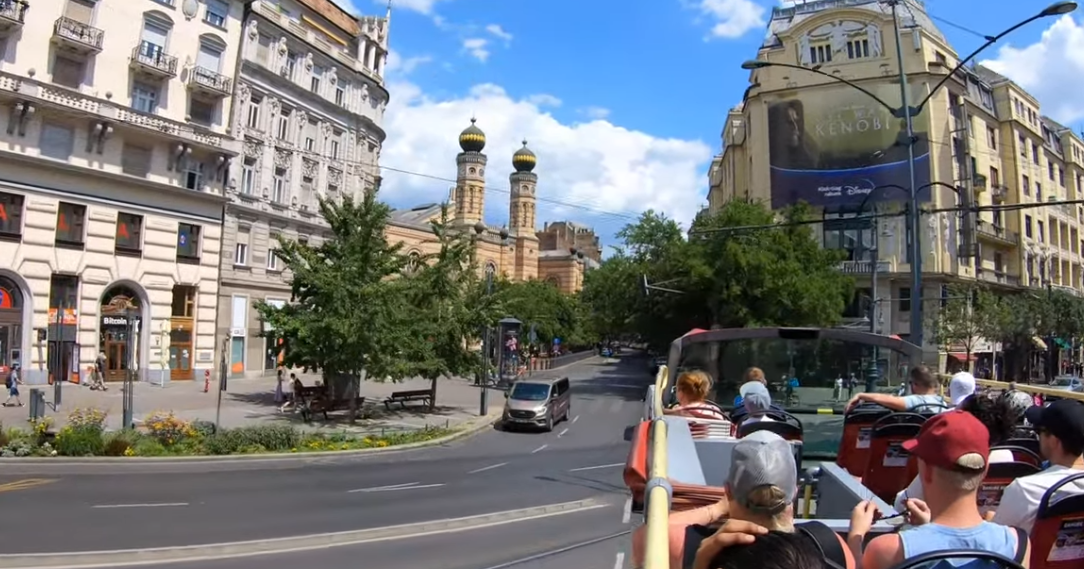
If you experience Budapest on a sunshine day in April, the hop-on hop-off buses are perfect, especially those without roof. It isn’t so warm that you melt, and the sun isn’t at its strongest yet (UV), but you can still feel good and see Budapest from the top of the bus, enjoying the sun and all the fantastic Budapest attractions. If you’d rather explore Budapest on a guided tour on foot, that is also a fantastic activity on a nice sunshine day in April.

hop on hop off budapest

It might require some planning ahead, but if you like running, then there are several running competitions in Budapest in April. Some of them are half-marathons, while others come with both shorter and longer distances available. You can read more about upcoming events, concerts, and exhibitions in Budapest in our Budapest calendar.

running in budapest

What else is there to say? As spring comes around, so does all the wonderful colors of nature. Why not visit the zoo in the City Park which is a combination of a botanical garden and a zoo? It will give you the pleasure of watching magnificent and majestic animals, combined with the peaceful colors of nature and beautiful flowers and trees. If you’d rather just enjoy the colors of nature, then a visit to the Japanese garden on the Margaret Island, or the botanical garden “Füvészkert” near the metro stop Semmelweis Klinikak are wonderful chances to see spring come forth.

Japanese Garden

No matter how many times you have been to Budapest, a boat trip on the Danube is a wonderful activity. If you have been on the Danube 30 times before, or it is something you have never experienced, it is a fantastic experience you shouldn’t miss. Do not forget, to see Budapest by daytime and in the evening are two widely different experiences, so both of them are warmly recommended!

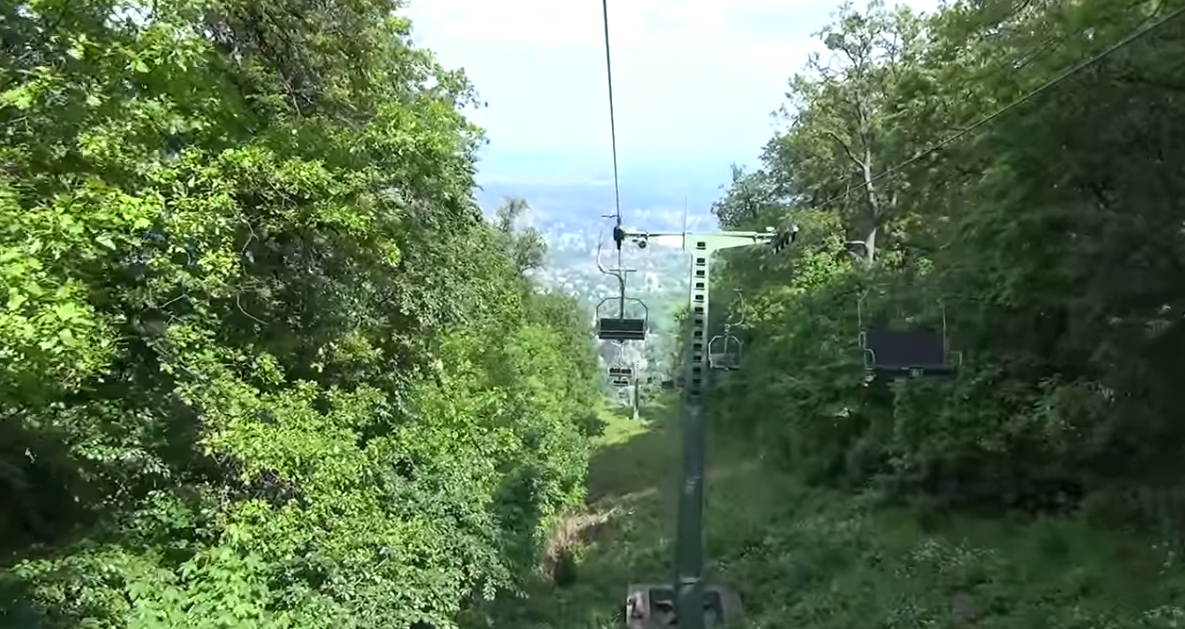
If you want to leave the city center and explore the vicinity, do like most other people do. Travel by metro to Nyugati Pályaudvar (blue line) and travel by bus 291 to the endstation. There you will find the chair-lift which will take you more than 262 meters upwards in about 12 minutes. At the end station you can walk around in a beautiful green area, or simply get back on the chair-lift and travel back to the city.

budapest chairlift

These are some fantastic activities you should consider if you come to Budapest in April. For more information about ongoing and upcoming programs in Budapest, look at our page “What’s going on in Budapest.”

If you have comments or questions, write them below.

Six activities you should try in Budapest in May!

May is one of the best months of the year if you want to explore Budapest. Even though it can be very warm, it doesn’t get extremely hot. In other words, May is perfect for walking up and down the streets of Budapest, shopping, eating outdoor, and staying up until late in the evening without fearing cold temperatures.

But, are there any special activities ideal for tourists coming to Budapest in May? Of course! Some of these activities are suitable during the entire year, but they are even more fantastic in May. Are you ready to be inspired? Bring your notebook, a cup of coffee, and start planning your trip to Budapest today!

Six great activities in Budapest in May.

Let’s get started! Do not forget that you can read more about all sorts of Budapest activities here in our Budapest Guide. You can also find information about the most popular attractions, guided tours, public transportation, and other important topics as you read the different articles.

May is a perfect month for a guided tour on foot.

If this is the first time you are coming to Budapest, you should definitely go on a guided tour. Such trips will help you get an overview of the city, and you can learn much more about the topics you are interested in. Some people are worried that you only learn about boring history on guided tours, but with a private guide you have the flexibility to learn more about the topics you are interested in. If you don’t care about history, then it is still fantastic to walk around the city and learn more about what Hungarians eat (as you visit the Grand Market Hall), get an overview of the city, and at the same time learn more about what makes Budapest such a beautiful city. And once again, you are very likely to experience nice temperatures in May, which makes a guided tour on foot a perfect activity.

guided tour in budapest

Whenever you come to Budapest, a boat trip on the Danube is a fantastic experience!

It doesn’t matter when you come to Budapest… a boat trip on the Danube is fantastic throughout the entire year. The only thing you should take into consideration is what time of the day you do the trip. Budapest is beautiful during daytime, but it is magical with the illuminated buildings in the evening. If you want to enjoy the view of the illuminated buildings in May, you should go on a boat trip starting (or still traveling) around 20.00 in the evening.

Should you buy tickets for a dinner cruise or just a sightseeing cruise? That is entirely your decision. It is something wonderful about eating while looking at the beautiful surroundings, but the food might take some of the focus from the joy of what you see.

Visit a thermal bath early in the morning or late in the evening!

Budapest is well-known for its thermal water. You should bring a swimming suit to Budapest, but if you want to maximize the experience in May, you should visit a thermal bath early in the morning or in the evening. Our favorite place is Szechenyi Furdö (located in the City Park). This is the best place for enjoying the hot springs outside, and the colder it gets, the better it is. And yes, that is why you should go early in the morning or late in the evening. Széchenyi Fürdő is open from 6 in the morning until 22.00 in the evening, and if you come early, you can enjoy the fresh air, combined with outdoor pools with temperatures between 26 and 38 Celsius. If you go in the evening, it gets a little bit more chilled, and you can also enjoy the romantic steam coming up from the pools which gets more visible with the lights turned on around the pools in the evenings.

Another advantage of going early or late is that you avoid the crowds.

Széchenyi in Budapest

Enjoy the Budapest view from one of many viewpoints in the city.

Budapest has lots of fantastic spots for those who want to take good photos or just want to enjoy the view with their own eyes. If you walk downtown, two great spots are Budapest Eye and the dome of the St. Stephen’s Basilica.

View from the Budapest Eye.

If you are located in the City Park, then BalloonFly is a perfect activity. The balloon will take you up 150 meters in the air from which you can get a stunning view of all of Budapest. The ride lasts for about 15 minutes, and it is one of the most exciting ways to see Budapest (unless you fear heights). The balloon is easy to spot as you walk around in the City Park of Budapest. It is only available on days with good weather.

balloonfly budapest
Examples of what you can see during a trip with BalloonFly in Budapest.

If you decide to travel to the Buda-side, then you can get a splendid view from the tower of the Matthias Church (the best in Budapest), or from the dome of the National Gallery (which is a part of the castle).

The Margaret Island is fantastic in May!

In the middle of the Danube, between the Margaret-bridge and the Árpád-bridge, you can find the peaceful island named after a lady named Margaret who lived on the island in the 13th century. She lived in a monastery at the island, and you can still see ruins of it as you walk around the island today.

With the fantastic weather waiting for you in Budapest in May, you should definitely put on some good shoes and walk around the island. There are lots of things you can do on the island, and for more suggestions, look at our article describing ten awesome Margaret Island activities.

If the weather is very nice, you should bring a blanket and something to eat and drink, and just spend some time in quietness and peace, and charge your inner batteries (instead of your cell-phone batteries).

Eat your dinner at a restaurant with outdoor seating!

You need to eat, and you need to drink. Why not enjoy a warm (but not too hot) May evening in Budapest by eating a dinner outside? There are lots of restaurants with outdoor seating available in May, giving you the chance to drink a glass of Hungarian wine accompanied by a tasty Goulash soup in a beautiful environment. There are several restaurants by the Danube that will give you such opportunities, but you can also look for sky-bars where you can drink and eat outdoor with a marvelous view of Budapest from the top of a building.

wine in budapest

Come, come, come!

Budapest is waiting for you. These are only a few of many fantastic activities waiting for you in Budapest in May and throughout the year. If there should be some ugly clouds, you should either take a coffee break, visit a museum or find your swimming-suit and visit Széchényi Fürdő! Would you like to find out if there are any concerts, exhibitions, or festivals coming up in May? Look at our Budapest calendar to find out more.

If you have any comments or questions regarding what to do in Budapest in May, use the comment field below!

St. Stephen’s day

On August 20th, the Hungarians celebrate the name day of their first king, King Stephen. This is one of three national holidays in Hungary, but the only one that isn’t related to a revolution or a political riot.

August 20th is the “nicest” of the three holidays in Hungary. People are released from their jobs, and people just relax at home, go on excursions, and have a wonderful time. But, what is happening in the city of Budapest on August 20th?

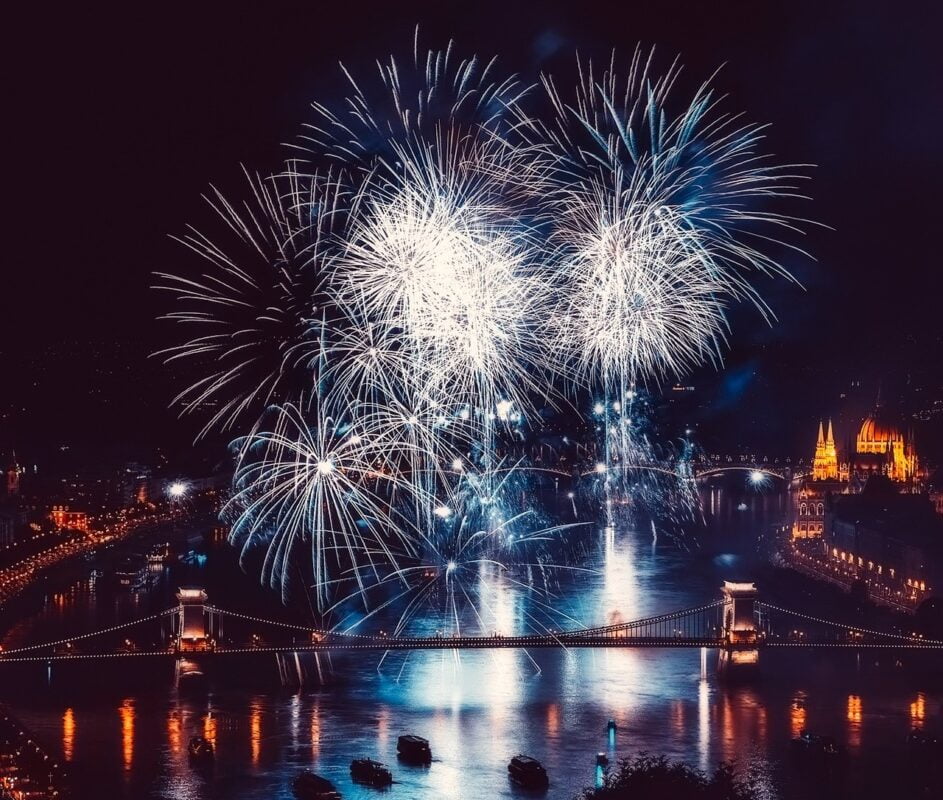
Fireworks in Budapest on August 20th

Budapest on August 20th

There are quite a lot of minor celebrations in town. There are special celebrations in front of the castle, by the former market (down by the Danube). On this day, people taste the Hungarian bread, they taste the cake of the year in Hungary, and sometimes, there are special performances and flight races in town.

The most important part of the August 20th celebration is the fireworks which last from 21.00 until 21.30. Normally, more than 1 million people enter the streets of Budapest to watch the event (along the Danube), and this is the most unifying celebration in Hungary every year.

What to do in Budapest on August 20th?

As a tourist, you will notice that stores are closed. But, most museums are open, the Szechenyi thermal bath is open, and so are most of the restaurants around town. If you want to enjoy a river cruise, there will be some differences in the timetables due to the fireworks starting at 21.00, but besides that, there isn’t much to think about.

If you need help with an airport transfer, booking of a wine dinner, or maybe some other program, contact us or look around here at hungarybudapestguide.com for more information!