Blog

A Journey Through Budapest: Top Attractions and Experiences on a Danube River Cruise

Budapest, often dubbed the “Pearl of the Danube,” offers one of Europe’s most enchanting river cruise experiences. A typical Danube River cruise in Budapest lasts between 60 and 150 minutes, providing a front-row seat to the city’s iconic landmarks, historical treasures, and stunning architecture. As you glide along the river, which splits the city into Buda and Pest, you’ll witness a blend of natural beauty and cultural heritage that makes Budapest a must-visit destination. Whether you’re taking in the sights during the day or under the twinkling lights of an evening cruise, here’s a guide to the most frequently seen attractions and the exciting add-on experiences that can elevate your journey.

1. The Hungarian Parliament Building

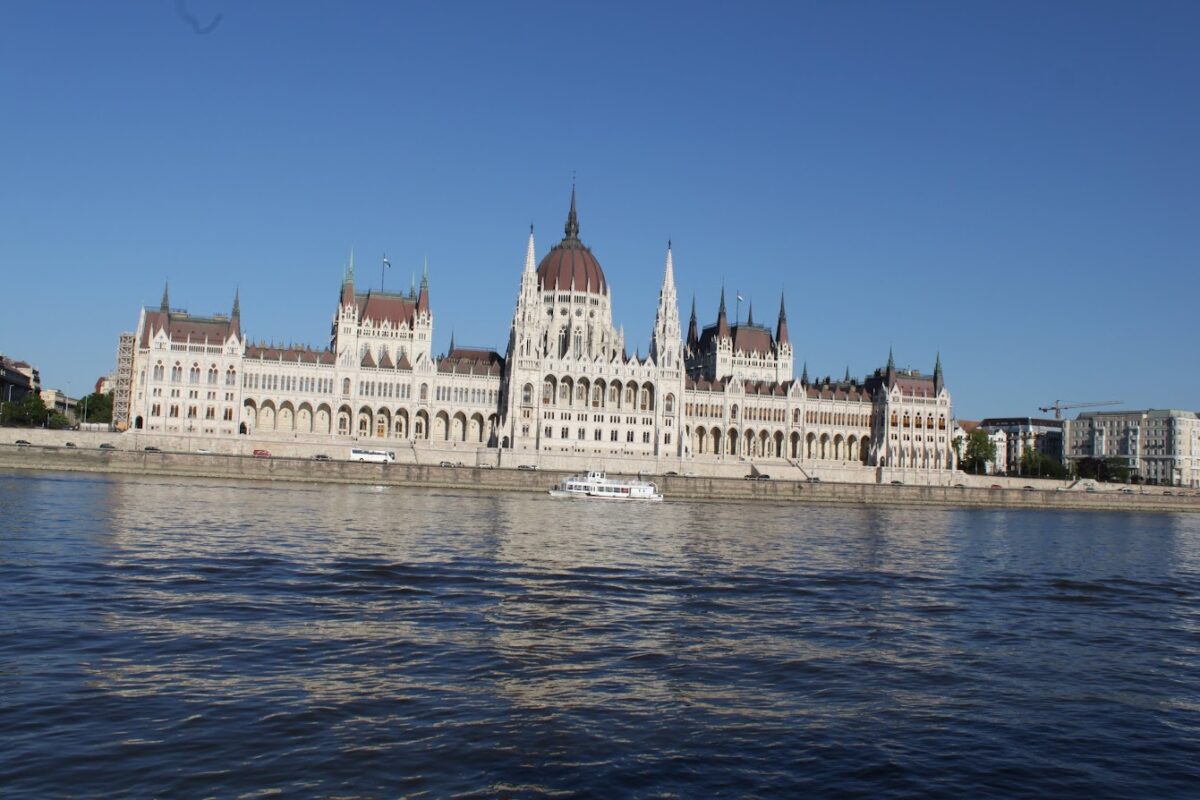
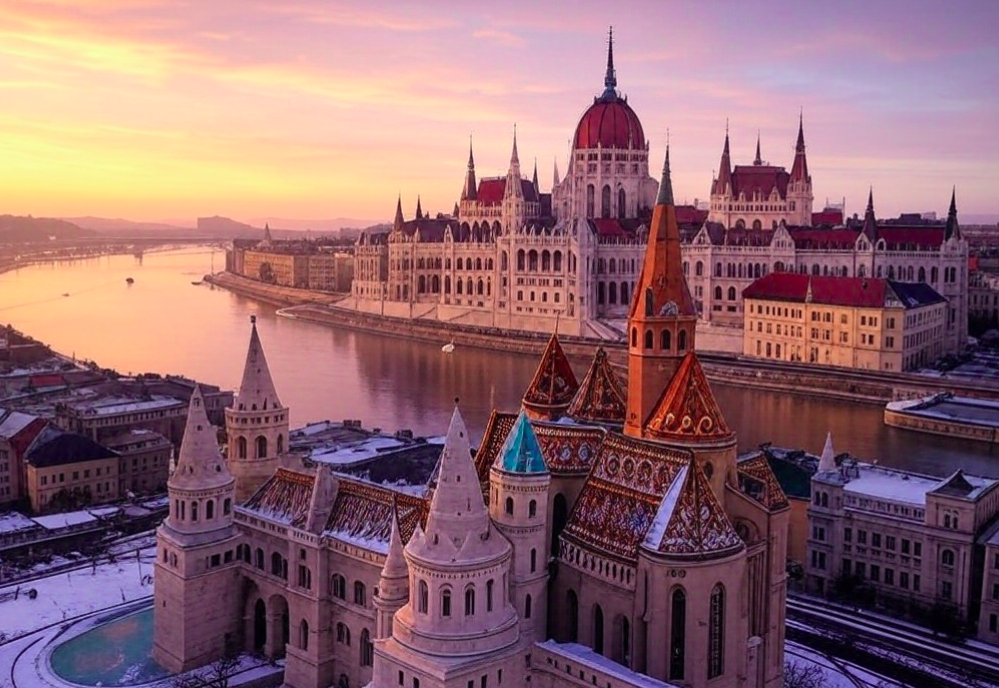
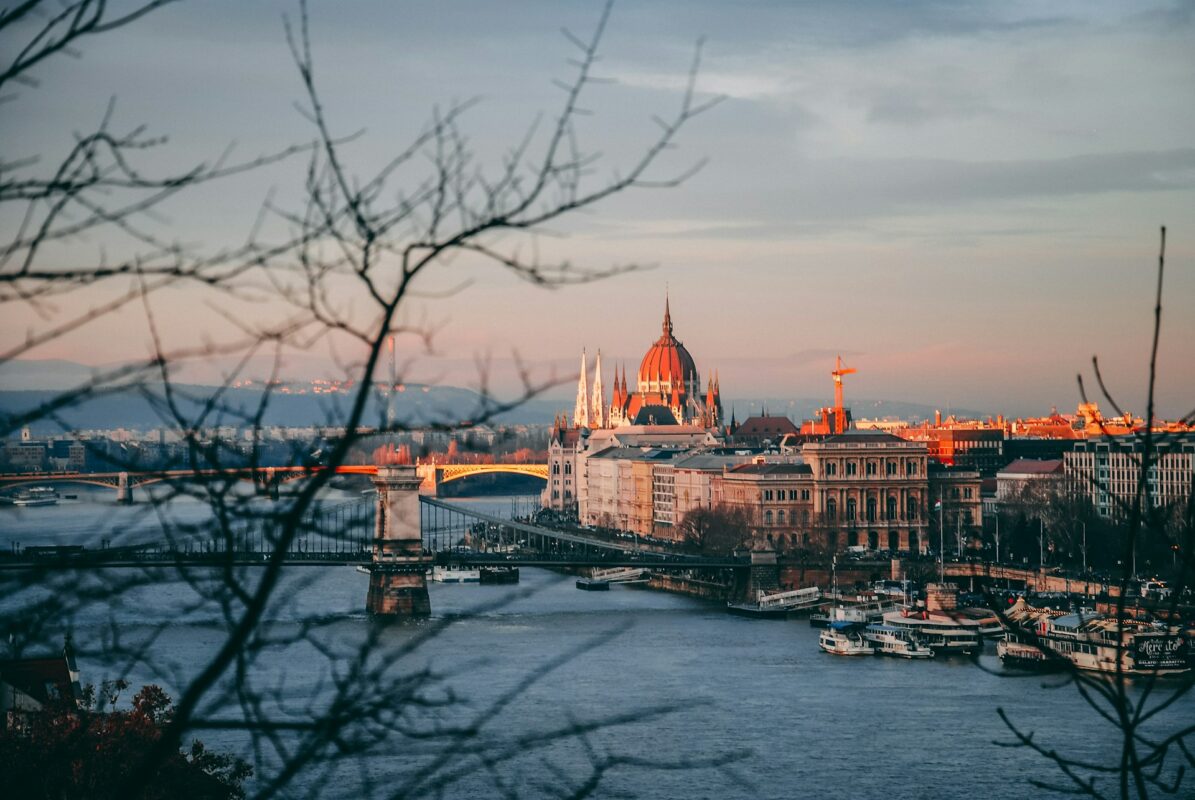
One of the first sights to capture your attention is the Hungarian Parliament Building, a masterpiece of Gothic Revival architecture. Located on the Pest side of the river, this iconic structure is one of the largest parliament buildings in the world. Its intricate facade, adorned with spires and statues, and the prominent central dome are even more striking when illuminated at night—a feature many evening cruises emphasize. As you pass by, guides often share stories of its construction in the late 19th century and its role as the heart of Hungarian politics.

2. Buda Castle and Castle Hill

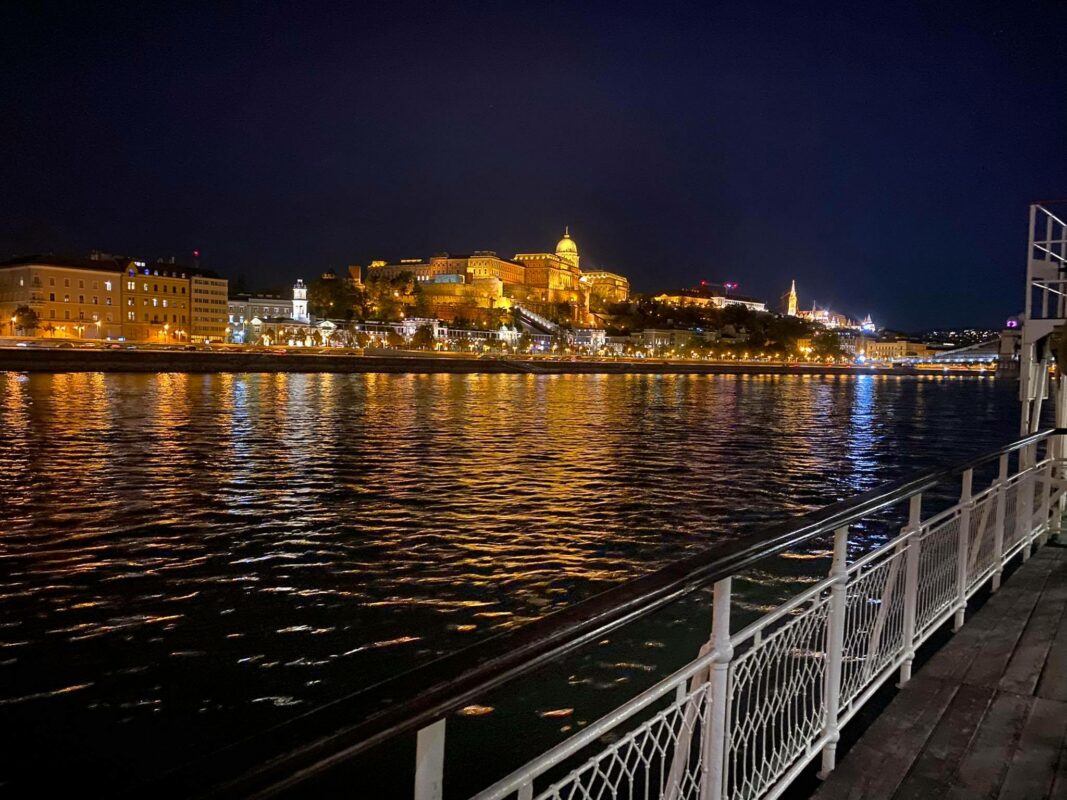
On the Buda side, the majestic Buda Castle dominates the skyline atop Castle Hill. This UNESCO World Heritage Site, a sprawling complex with roots dating back to the 13th century, houses the Hungarian National Gallery and the Budapest History Museum. From the river, you’ll get a panoramic view of its baroque architecture and the surrounding cobblestone streets of the Castle District. Many cruises highlight the nearby Fisherman’s Bastion, a neo-Romanesque terrace with seven turrets offering sweeping views of the city, though it’s best appreciated up close after your cruise.
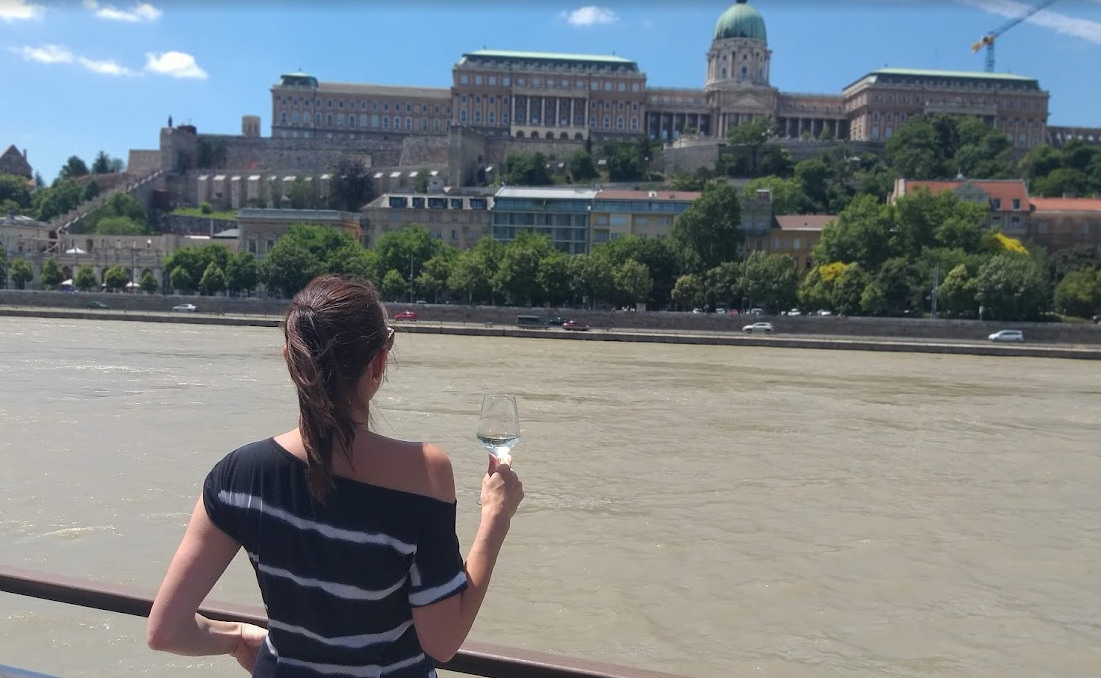
castle in background

3. The Chain Bridge

No Budapest river cruise is complete without passing under the iconic Chain Bridge, the city’s first permanent bridge connecting Buda and Pest. Opened in 1849, this suspension bridge is a symbol of Budapest’s unity and resilience. Its stone lions, designed by sculptor János Marschalkó, guard each end, and the intricate ironwork is a marvel of 19th-century engineering. Cruises often slow down here, allowing you to take in the bridge’s grandeur and snap photos with the backdrop of the city’s skyline.

4. Margaret Island

As you cruise further, you’ll spot Margaret Island, a lush, green oasis in the middle of the Danube. This 2.5-kilometer-long island is a favorite recreational spot for locals, featuring gardens, medieval ruins, and thermal baths. While most cruises don’t stop here, the sight of its tree-lined shores offers a refreshing contrast to the urban landscape. Guides often mention its history as a royal hunting ground and its current role as a peaceful retreat for walking, cycling, or enjoying a picnic.

5. The Shoes on the Danube Bank Memorial

A poignant moment on many cruises comes when passing the Shoes on the Danube Bank memorial on the Pest side. This somber tribute, consisting of 60 pairs of iron shoes, honors the Jews who were killed by fascist Arrow Cross militiamen during World War II. Victims were forced to remove their shoes before being shot into the river. The memorial’s location along the riverbank makes it a striking sight from the water, often accompanied by a moment of reflection as guides recount its history.

6. Gellért Hill and the Citadel

Rising above the Buda side, Gellért Hill offers a dramatic backdrop with its Citadel and the Liberty Statue perched at the summit. The Citadel, built in the 1850s by the Habsburgs, offers a glimpse into Budapest’s military past, while the Liberty Statue, a 14-meter-tall figure holding a palm leaf, symbolizes freedom and is visible from much of the city. Cruises often point out the hill’s thermal springs, including the famous Gellért Spa at its base, known for its Art Nouveau architecture and healing waters.
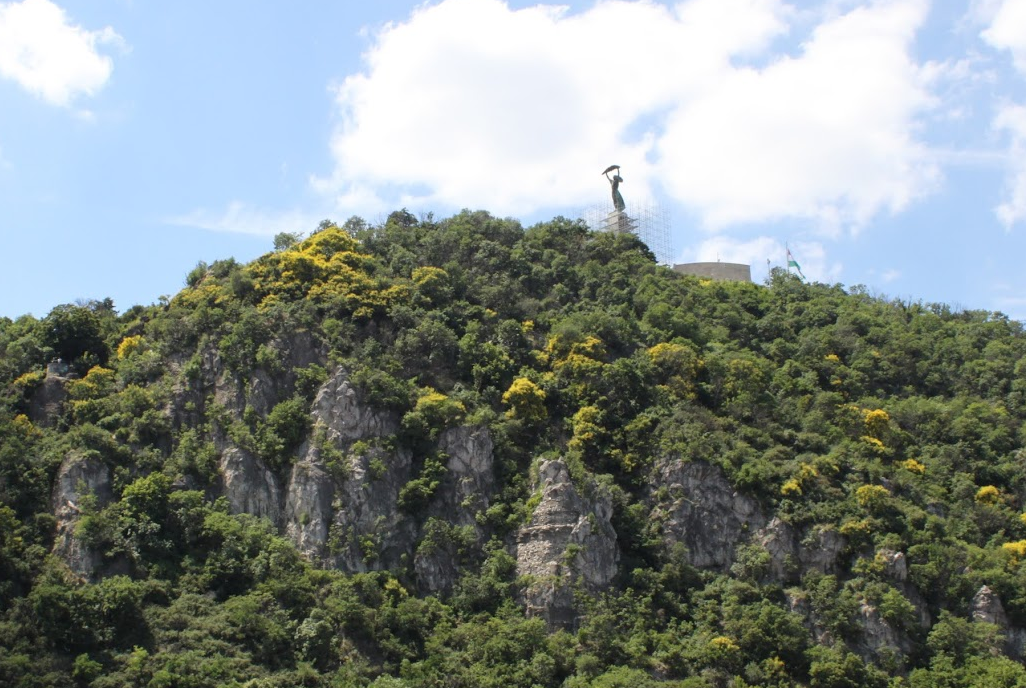
gellert hill

7. The Bridges of Budapest

Beyond the Chain Bridge, you’ll pass under several other notable bridges that span the Danube. The green-painted Liberty Bridge, with its Art Nouveau design, connects the Gellért Spa to the bustling Pest side. Further along, the Elisabeth Bridge, a modern white suspension bridge, stands out for its sleek design and historical significance—it was rebuilt after World War II destruction. Each bridge has its own story, often shared by onboard guides, adding depth to the visual spectacle.

8. The Riverside Architecture of Pest

The Pest embankment is lined with architectural gems that catch the eye as you cruise. Beyond the Parliament, you’ll see grand buildings like the neo-Renaissance Gresham Palace, now a luxury hotel, and the Hungarian Academy of Sciences, a neo-Renaissance structure from the 1860s. The vibrant Pest skyline, with its mix of historic and modern buildings, contrasts beautifully with the hilly, more residential Buda side, showcasing Budapest’s dual character.

9. The Danube Promenade

The cruise often highlights the Danube Promenade on the Pest side, a scenic walkway stretching from the Chain Bridge to the Elisabeth Bridge. From the water, you’ll see pedestrians strolling past luxury hotels, cafes, and sculptures, with the river reflecting the city’s lights at night. This area is a hub of activity and a great spot to explore on foot after your cruise, often recommended by guides for its proximity to attractions like Váci Street, Budapest’s main shopping area.

10. Nighttime Illuminations (on Evening Cruises)

If you opt for an evening cruise, which many operators offer, the city transforms into a dazzling display of lights. The Parliament, Buda Castle, and the Chain Bridge are illuminated, casting golden reflections on the water. Evening cruises, typically lasting 60 to 90 minutes, often include a glass of Hungarian wine or a light meal, enhancing the magical atmosphere. The illuminated skyline is a highlight for many travelers, making Budapest one of Europe’s most photogenic cities after dark.

Enhancing Your Cruise Experience

For those looking to elevate their Budapest river cruise, many operators offer a variety of add-on experiences that combine the scenic journey with local flavors and entertainment. You can opt for a wine-dinner program, savoring Hungarian wines paired with a gourmet meal as you glide past the illuminated landmarks. Cocktail programs are also popular, featuring signature drinks while you enjoy the views. For a more casual dining experience, some cruises offer a dinner buffet showcasing Hungarian cuisine. If you’re interested in cultural immersion, consider a folklore trip with traditional music and dance performances, or choose a cruise with live music for a lively atmosphere. To explore these options and book your perfect trip, visit https://www.hungarybudapestguide.com/activities/danube-cruise/ for more details on these enriching add-ons.

Conclusion

A Danube River cruise in Budapest is a perfect way to experience the city’s rich history, architectural splendor, and natural beauty in a short time. From the grandeur of the Hungarian Parliament to the serene greenery of Margaret Island, each attraction tells a story of Budapest’s past and present. Whether you choose a daytime journey, an evening sail under the city’s twinkling lights, or enhance your trip with a wine-dinner program or live music, this cruise promises unforgettable views and a deeper appreciation for one of Europe’s most captivating capitals.

Exploring Budapest on the Red Metro Line (M2)

The Red Metro Line (M2) in Budapest is more than just a convenient way to get across the city — it’s a gateway to history, culture, parks, nightlife, and panoramic views. Running from Déli pályaudvar in Buda to Örs vezér tere in Pest, this east-west metro line slices through some of the capital’s most vibrant districts. Whether you’re a visitor or a local rediscovering your city, hopping on M2 is like flipping through a real-life photo album of Budapest.

Let’s take a ride and explore what each stop has to offer.


Déli pályaudvar – Southern Gateway to Buda

Déli pályaudvar (Southern Railway Station) is the western terminus of the Red Line, and it’s your starting point if you’re coming from the hills of Buda or arriving by train from western Hungary.

What to do:

  • Walk up to Várfok utca for a scenic climb toward the Castle District.
  • Grab a coffee at a tucked-away café or try a local bakery for a strudel.
  • Jump on the train and visit Lake Balaton on a nice summer day!

Széll Kálmán tér – The Buda Buzz

Formerly known as Moszkva tér, this is a major transit hub and a hotspot of activity in Buda.

What to do:

  • Travel by bus to the Castle District, or grab some fresh air in the Millenium Park.
  • Stop at Mammut Shopping Mall if you’re up for some shopping.
  • Sip a coffee at Fény utca Market Hall, a favorite among locals for fresh produce and classic Hungarian bites.
red metro budapest

Batthyány tér – Danube Views and Photo Ops

This is arguably the most scenic station on the Red Line. Exit here and you’re rewarded with a jaw-dropping view of the Parliament Building across the Danube.

What to do:

  • Snap photos from the Danube promenade or grab a bench and just soak it all in.
  • Visit the Church of St. Anne, a gem of Baroque architecture.
  • Eat some pancakes in the pancake house, or go shopping in the Market Hall.
Panorama from Batthyány Tér

Kossuth Lajos tér – Heart of Hungarian Democracy

Welcome to the doorstep of Parliament and political Hungary.

What to do:

  • Take a guided tour inside the Hungarian Parliament, one of Europe’s most stunning government buildings.
  • Walk through Liberty Square, and check out controversial and thought-provoking memorials.
  • Admire the Danube panorama and the Shoes on the Danube Bank, a moving tribute to Holocaust victims.

Deák Ferenc tér – Downtown Central

The busiest station in the city — where M1, M2, and M3 intersect — Deák is your launchpad to central Pest.

What to do:

  • Dive into nightlife in Gozsdu Courtyard or wander the Jewish Quarter with its eclectic bars and ruin pubs like Szimpla Kert.
  • Visit St. Stephen’s Basilica or shop in Fashion Street.
  • Relax in Erzsébet tér, especially in summer when the giant Ferris wheel and open-air bars are up and running.

Astoria – Literary Corners and Grand Buildings

Astoria is surrounded by grand architecture and cultural landmarks.

What to do:

  • Visit the Hungarian National Museum, just a short walk away.
  • Explore the nearby ELTE University area — it’s student-heavy and full of cheap eats and indie bookstores.
  • Grab a lángos or a slice of pizza and people-watch at Károly körút.
  • Visit one of the worlds largest synagogue, the Dohany Utcai Synagogue.

Blaha Lujza tér – Local Life and Urban Grit

Once a hub of glitz with the New York Café, now it’s a bit rough around the edges, but charming in its authenticity.

What to do:

  • Sip overpriced (but worth it) coffee in the stunning New York Café, inside the Boscolo Hotel.
  • Check out local theatres like Erkel Theatre or small indie venues.
  • Walk to Rákóczi tér and Teleki Market, a taste of everyday Budapest.

Keleti pályaudvar – Eastern Rail Gateway

Keleti is Budapest’s main international railway station, and the area is a mix of old-world grandeur and modern chaos.

What to do:

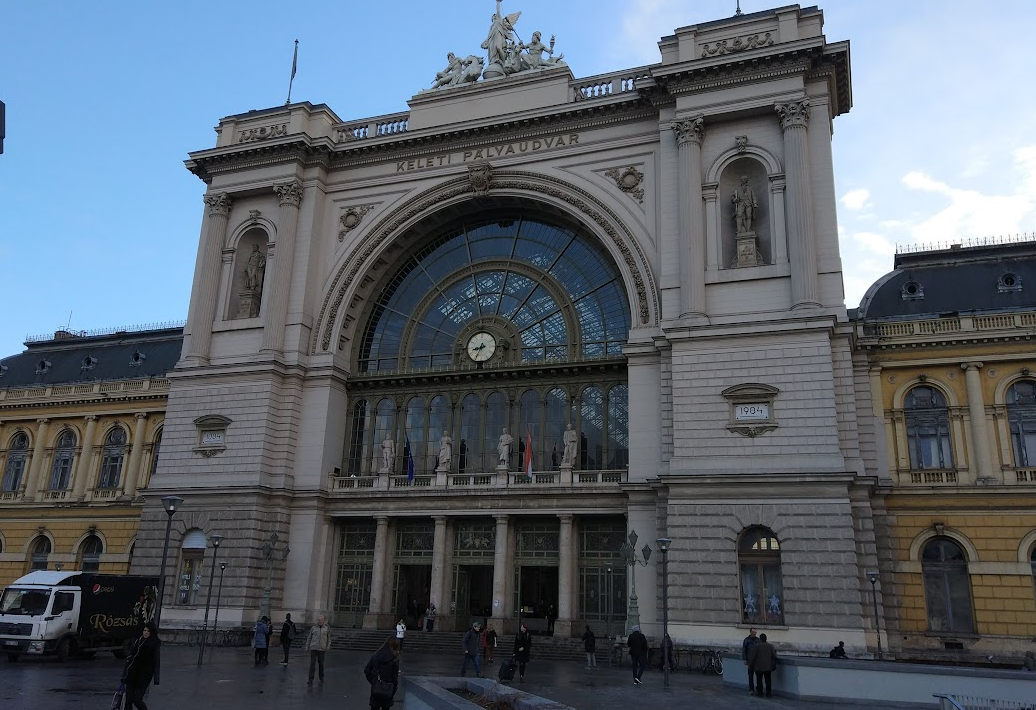
  • Marvel at the Keleti Railway Station building — it’s a piece of architectural history.
  • Hop on a train to Eger, Debrecen, or even Vienna or Transylvania.
  • Grab a quick meal or stock up on supplies if you’re traveling long-distance.
keleti railway station

Puskás Ferenc Stadion – For Sports and Shows

Named after the legendary footballer, this stop serves sports fans and concertgoers alike.

What to do:

  • Attend a game or concert at the Puskás Aréna, the national stadium.
  • Check out Arena Mall, one of the biggest shopping centers in the city.
  • Nearby City Park (Városliget) is a longer walk or bus ride away — perfect for a picnic or paddle boating.

Pillangó utca – Peaceful Pause

One of the quieter stops, it’s mostly residential — not much to do, but worth knowing if you’re looking for calm.

What to do:

  • Walk the side streets and get a feel for suburban Budapest.
  • Spot butterflies in spring — “pillangó” means butterfly, after all!

Örs vezér tere – Suburban Frontier

The eastern terminus of M2, Örs is a shopping and transit mega-hub.

What to do:

  • Shop at Árkád and Sugár malls or explore IKEA Budapest if you’re hunting for home goods.
  • Connect to the suburban rail (HÉV) toward Gödöllő, home of the royal palace.

Bonus Tip: Use the Red Line as Your Daily Anchor

If you’re staying in Budapest for a few days, basing yourself near any M2 station gives you fantastic access to both Buda and Pest. It is also possible to change to the other metro lines at Deák Ferenc Tér and Keleti Pályaudvar, making it easy to access the other parts of Budapest as well not directly connected to the red metro line. You can find a full Budapest metro map right here.


Let’s Sum It Up.

The Red Metro Line may only have 11 stops, but each is a unique portal to a different slice of Budapest. From imperial landmarks and bustling squares to hidden cafés and major transit points, M2 is the city’s spine. It’s fast, frequent, and affordable — and maybe the most underrated way to discover the Hungarian capital.

So next time you see that red line on the map, don’t just think of it as a way to get from A to B. Think of it as the red carpet to Budapest’s rich tapestry of culture, food, architecture, and local life.

What Happened to the Public Transportation Boat in Budapest?

For years, Budapest offered a hidden gem for both locals and tourists: a public transportation boat that was not only affordable but also seamlessly integrated into the city’s public transit system. With just a standard transportation pass, you could hop aboard and glide along the Danube River, soaking in breathtaking views of some of the city’s most iconic landmarks. From the majestic Buda Castle perched atop its hill to the verdant slopes of Gellért Hill, the neo-Gothic splendor of the Hungarian Parliament, and the timeless elegance of the Chain Bridge, this boat ride was a budget-friendly way to experience Budapest’s beauty from a unique vantage point. It was the kind of service that made you wonder why every riverside city didn’t offer something similar.

But that’s all in the past now (since 2023). The beloved public transportation boat, once a staple for sightseeing on a dime, is no longer available. Its disappearance has left a gap in Budapest’s otherwise excellent public transit network, much to the disappointment of those who cherished its charm and convenience.

What’s left today?

Today, the only remaining public transportation boat operates far from the city’s bustling center. This lone survivor runs on the southern fringes of Budapest, connecting Csepel-Királyerdő and Molnár-sziget in the Soroksar area. While it serves a practical purpose for locals in that region, it’s a far cry from the scenic route that once captivated visitors. The journey offers little in the way of attractions, with none of the historic or cultural landmarks that draw millions to Budapest each year. For tourists, it’s neither convenient nor compelling—located too far from the city core to be part of a sightseeing itinerary.

So, what’s the consequence of this change? If you’re hoping to enjoy a leisurely cruise along the Danube and take in Budapest’s stunning riverside panorama, you’re now left with one option: the pricier sightseeing cruises offered by private companies. These tours, while undeniably enjoyable, come with a heftier price tag that can feel steep compared to the old public boat’s unbeatable value. What was once an accessible, spontaneous adventure included in your transit pass has morphed into a premium experience, putting it out of reach for budget-conscious travelers.

The loss of the public transportation boat is a quiet blow to Budapest’s reputation as a city that blends affordability with charm. For those still eager to explore the city’s sights without breaking the bank, public transportation remains a viable option—just not by water. Buses, trams, and the metro can still get you close to the major attractions, even if they lack the romance of a river cruise.

If you’d like to learn more about how to make the most of Budapest’s public transportation for sightseeing, check out this helpful guide: How to Do Sightseeing in Budapest Using Public Transportation. It’s a great resource for navigating the city’s streets and discovering its treasures, even without that cherished boat ride.

Happy Action Movie from Budapest? Watch Dave Bautista in Killer’s Game.

Looking for a dose of action-packed fun with a splash of humor, all set against a vibrant European cityscape? The Killer’s Game might just be the ticket. Starring Dave Bautista, this action-comedy romp follows Joe Flood, a hitman who, after a terminal diagnosis, puts a hit out on himself—only to discover he’s not dying after all. What ensues is a wild chase as he fends off a colorful crew of assassins while trying to win back his ex-girlfriend, played by Sofia Boutella. Directed by J.J. Perry, the film blends over-the-top stunts with Bautista’s undeniable charm, making it a lighthearted entry in the assassin genre. Filmed in Budapest, Hungary, the city’s stunning architecture and lively streets add an extra layer of appeal to this entertaining flick.

The Killer’s Game hit theaters in the United States on September 13, 2024, distributed by Lionsgate, and later became available for streaming on Prime Video as of January 2025. Its theatrical release coincided with a busy weekend, competing with Beetlejuice Beetlejuice and Speak No Evil, which may have contributed to its modest box office haul of $2.6 million opening weekend from 2,623 theaters. Reception has been a mixed bag—critics on Rotten Tomatoes gave it a 47% rating, citing a lack of originality, though audiences have been kinder, with a 77% Popcornmeter score praising Bautista’s engaging performance and the film’s gleeful absurdity. It’s not a critical darling, but it’s a crowd-pleaser for those who enjoy a bit of mindless, bloody fun.

Which Sites, Buildings, and Locations in Budapest Can Be Seen Throughout the Movie?

Budapest’s rich tapestry of historic and modern landmarks provides a dynamic backdrop for The Killer’s Game. While the film doesn’t always call out specific locations by name, keen-eyed viewers can spot several iconic spots. The story kicks off with Joe Flood at a dance performance, filmed in one the Hungarian State Opera House (which we also see again later in the movie). Action scenes unfold across the city’s cobblestone streets and bridges, with the Chain Bridge and its panoramic views of the Danube River making a probable appearance during high-energy chases. The Buda Castle district, with its medieval charm and sweeping vistas, also features as Joe sets traps for his pursuers in a castle-like setting—perfectly matching the area’s dramatic flair. From bustling Pest to the hilly Buda side, Budapest’s diverse urban landscape shines as Joe battles his way through assassins in this lively romp.

An interesting thing about the movie is that EVERYTHING is recorded in Budapest. And that is a wonder, showing how the city is able to perform well in all settings, providing both sleek modern hideouts, gritty historical buildings, but also able to provide the atmosphere of a big, majestic, and beautiful city.

Watch the movie first, then see the locations in real life later.

It’s nice to see Budapest in a movie, but it’s much more beautiful in real life. The Killer’s Game offers a fun glimpse of the city’s cinematic potential, with Dave Bautista dodging bullets amid its stunning scenery, but the real magic of Budapest—its vibrant culture, thermal baths, and breathtaking views—awaits in person. Come visit the movie for yourself, and use the information available on this website to learn more before you come.

Want to See More Movies with Clips from Budapest? Here’s a List of Five:

Budapest has long been a Hollywood darling, and these films showcase its charm in spades:

  1. I Spy (2002) – Eddie Murphy and Owen Wilson zip around Budapest, with the Buda Castle, Chain Bridge, and Fisherman’s Bastion stealing scenes in this goofy spy caper. Crazy humor, with lots of beautiful Budapest scenes.
  2. Spy (2015) – Melissa McCarthy’s comedic chaos unfolds across Budapest, doubling as Paris, with spots like the Párisi Udvar arcade and Hungarian State Opera House in the mix. Yet another crazy humor movie that for sure will make you laugh (if you like such humor).
  3. Die Hard 5 (A Good Day to Die Hard, 2013) – Bruce Willis brings the action to Budapest standing in for Moscow, featuring Heroes’ Square and the Pest side of the Danube in epic car chases. A terrible movie, but the fact that it was recorded in Budapest gives you at least one reason to be happy.
  4. The Martian (2015) – Matt Damon’s sci-fi survival tale uses Budapest’s Bálna building as NASA headquarters, with its sleek, futuristic design shining through. Even though the story takes place on Mars, at least some scenes from earth was recorded in Budapest.
  5. Tinker Tailor Soldier Spy (2011) – This moody espionage thriller captures Budapest’s Cold War vibe, with Nyugati Railway Station and Párisi Udvar adding atmospheric depth.

Now you have even more to watch tonight, after you have finished The Killer’s Game!

Do you want to share your thoughts about any of these movies? Or would you like to recommend some other blockbuster movie showing scenes from Budapest? Use the comment field below.

Wizz Air Unveils Four Exciting New Routes from Budapest for Summer 2025

Get ready to pack your bags and explore Europe like never before! Wizz Air, the Hungarian low-cost airline known for connecting travelers to vibrant destinations at affordable prices, has just announced four thrilling new routes from Budapest. Starting in the summer of 2025, you can jet off from the Hungarian capital to Gdansk, Bilbao, Wroclaw, and Vilnius. Whether you’re craving a seaside escape, a cultural adventure, or a hidden gem, these new routes promise something for every traveler. Let’s dive into what makes each destination special and why you should start planning your next trip now!


A few words about the new destinations!

Maybe you think this is about the people of Hungary traveling to new places. Of course it is. But, this is just as much about making the city of Budapest available to people living in these cities and countries. So fasten your seat-belt and get ready to travel to Hungary, or maybe to Spain, Poland, and/or Lithuania.


Gdansk: A Baltic Gem Awaits

Launch Date: June 30, 2025
Frequency: Three times weekly (Monday, Wednesday, Friday)

First up is Gdansk, a stunning port city on Poland’s Baltic coast. Picture yourself strolling through colorful streets lined with historic merchant houses, the salty breeze of the sea in the air. Gdansk is a treasure trove of history and charm, with its iconic Long Market and the majestic St. Mary’s Church beckoning explorers. Known as part of the “Tri-City” alongside Gdynia and Sopot, it’s a perfect blend of rich heritage and laid-back coastal vibes. Whether you’re a history buff or just want to dip your toes in the Baltic Sea, Gdansk is calling your name. Flights kick off at the end of June, giving you the perfect excuse for a summer getaway.


Bilbao: Spain’s Northern Delight

Launch Date: July 1, 2025
Frequency: Twice weekly (Tuesday, Saturday)

Next, Wizz Air is taking you to Bilbao, a vibrant city in northern Spain that’s bursting with character. Famous for the Guggenheim Museum—a shimmering masterpiece of modern architecture—Bilbao blends cutting-edge design with Basque traditions. Wander the old town’s narrow streets, savor pintxos (the local take on tapas), and soak in the lush green hills that surround this coastal gem. It’s a destination that feels both cosmopolitan and authentic, making it ideal for art lovers, foodies, and nature enthusiasts alike. With flights starting in July, Bilbao is set to become your new favorite Spanish escape.


Wroclaw: Poland’s Fairy-Tale City

Launch Date: July 1, 2025
Frequency: Twice weekly (Tuesday, Saturday)

Say hello to Wroclaw, a city that feels like it’s straight out of a storybook. Located in southwestern Poland, Wroclaw is famous for its picturesque Market Square, charming bridges, and a quirky tradition of gnome statues hidden around town (yes, really!). Often compared to Krakow for its beauty but less crowded with tourists, Wroclaw offers a peaceful yet enchanting vibe. Explore its medieval architecture, relax by the Oder River, or hunt for those elusive gnomes—it’s a trip that promises whimsy and wonder. Flights begin in July, so start dreaming of this Polish delight now!


Vilnius: Lithuania’s Cultural Capital

Launch Date: June 30, 2025
Frequency: Three times weekly (Monday, Wednesday, Friday)

Last but certainly not least, Vilnius, the capital of Lithuania, joins the Wizz Air network from Budapest. This city is a hidden gem in the Baltics, with its UNESCO-listed old town, baroque churches, and a thriving arts scene. Imagine sipping coffee in a cozy café, gazing at the red-brick Gediminas Tower, or exploring the quirky Užupis district—a self-proclaimed “republic” of artists. Vilnius is perfect for travelers seeking culture, history, and a touch of eccentricity. With flights launching at the end of June, it’s an easy hop from Budapest to this Baltic beauty.


Where are you going? Start Planning Your Next Adventure!

So, where will you go first? Will it be Gdansk’s sandy shores, Bilbao’s artistic flair, Wroclaw’s fairy-tale charm, or Vilnius’s eclectic streets? With Wizz Air’s new routes from Budapest, Europe’s most exciting corners are just a flight away. Mark your calendar for June 30 and July 1, 2025, and get ready to discover the magic of these four incredible cities.

How to Do Sightseeing in Budapest Using Public Transportation?


Budapest, Hungary’s vibrant capital, is a treasure trove of history, architecture, and culture. From the grandeur of Buda Castle to the thermal baths of Széchenyi, it’s a city that begs to be explored. While walking or taking a taxi might seem tempting, Budapest’s public transportation system—affordable, reliable, and extensive—offers the best way to see it all. Whether you’re marveling at the Parliament Building or sipping coffee by the Danube, here’s how to navigate Budapest’s top sights using buses, trams, metros, and more.

Why Public Transportation?

Budapest’s transit network, operated by BKK (Budapesti Közlekedési Központ), is a tourist’s dream. It’s cheap (a single ticket costs ~450 HUF, or $1.20 USD as of March 2025), eco-friendly, and connects every major landmark. With four metro lines, trams gliding along the Danube, and buses reaching quieter corners, you’ll save time and money while soaking in the city’s charm. Plus, it’s an authentic way to travel like a local.

Getting Started: Tickets and Passes

Before hopping on, grab a ticket or pass. Single tickets (valid for one uninterrupted trip) are available at metro stations, BKK ticket machines, or via the BudapestGO app—download it for real-time schedules too. For sightseeing, consider these options:

  • 24-hour Travelcard: ~2,500 HUF, unlimited rides for a day.
  • 72-hour Travelcard: ~5,500 HUF, perfect for a weekend trip.

Validate tickets on board (trams/buses) or at metro gates. Hang onto them—inspectors do random checks!

AI Generated picture of Budapest.. the reality is much nicer!

Sightseeing Itinerary: Day 1 – Buda Side

Start your adventure on the Buda side, the hilly, historic half of the city.

Buda Castle and Fisherman’s Bastion

  • How to Get There: Take Metro Line M2 (red) to Széll Kálmán tér, then hop on the Castle Bus (Várbusz)—a free shuttle (with a valid ticket) to Buda Castle. Alternatively, ride the iconic Castle Hill Funicular from Clark Ádám tér (near Chain Bridge) for ~4,000 HUF round-trip.
  • What to See: Explore the castle’s courtyards and the Hungarian National Gallery, then stroll to Fisherman’s Bastion for panoramic views of Pest and the Danube.

Matthias Church

  • How to Get There: It’s a short walk from Fisherman’s Bastion—no extra transit needed.
  • What to See: Admire this Gothic masterpiece with its colorful tiled roof and intricate interiors.

Gellért Hill and Citadel

  • How to Get There: From Buda Castle, take bus 27 from Szentháromság tér to Búsuló Juhász, then walk 10 minutes uphill.
  • What to See: The Citadel offers stunning vistas, and the Liberty Statue is a photo must. Descend via trails for a scenic return.

Wrap up with a tram ride on Tram 19 or 41 along the Buda embankment—pure riverside bliss.

Sightseeing Itinerary: Day 2 – Pest Side

Cross to Pest for bustling streets and grand architecture.

Hungarian Parliament Building

  • How to Get There: Take Metro Line M2 to Kossuth Lajos tér.
  • What to See: This neo-Gothic marvel is Budapest’s crown jewel. Book a guided tour to see the Holy Crown of Hungary inside.

St. Stephen’s Basilica

  • How to Get There: From the Parliament, ride Tram 2 (a scenic route along the Danube) to Széchenyi István tér, then walk 5 minutes. You can also walk between the two locations easily, and then enjoy the beautiful Liberty Square during your walk.
  • What to See: Climb the dome for 360-degree views or enjoy the serene interior. Entry is free, but donations are appreciated.

Heroes’ Square and City Park

  • How to Get There: Take Metro Line M1 (yellow)—Europe’s oldest electrified metro—to Hősök tere.
  • What to See: Admire the Millennium Monument, then wander into City Park for Vajdahunyad Castle and the Széchenyi Thermal Bath (more on that next).

Széchenyi Thermal Bath

  • How to Get There: From Heroes’ Square, it’s a 10-minute walk, or take bus 20E to Széchenyi fürdő.
  • What to See: Soak in Budapest’s largest thermal spa. Entry starts at ~12,000 HUF—bring a towel and flip-flops!

Sightseeing Itinerary: Day 3 – Danube Highlights

Focus on the river and its iconic crossings.

Chain Bridge

  • How to Get There: From Pest, take Tram 2 to Széchenyi István tér. From Buda, use bus 16 from Szentháromság tér.
  • What to See: Walk across this historic suspension bridge, linking Buda and Pest since 1849. Snap photos with lion statues guarding each end.

Danube Promenade and Shoes on the Danube

  • How to Get There: From Chain Bridge, stroll along the Pest side or take Tram 2 to Vigadó tér.
  • What to See: The promenade offers river views, while the Shoes on the Danube memorial—60 pairs of bronze shoes—honors Holocaust victims.

Margaret Island

  • How to Get There: Take Tram 4/6 from Pest to Margitsziget, or bus 26 from Árpád híd metro station (M3).
  • What to See: This green oasis has gardens, ruins, and a musical fountain. Rent a bike or relax by the water.

Discovering Budapest via Public Transportation Boat (no longer available)

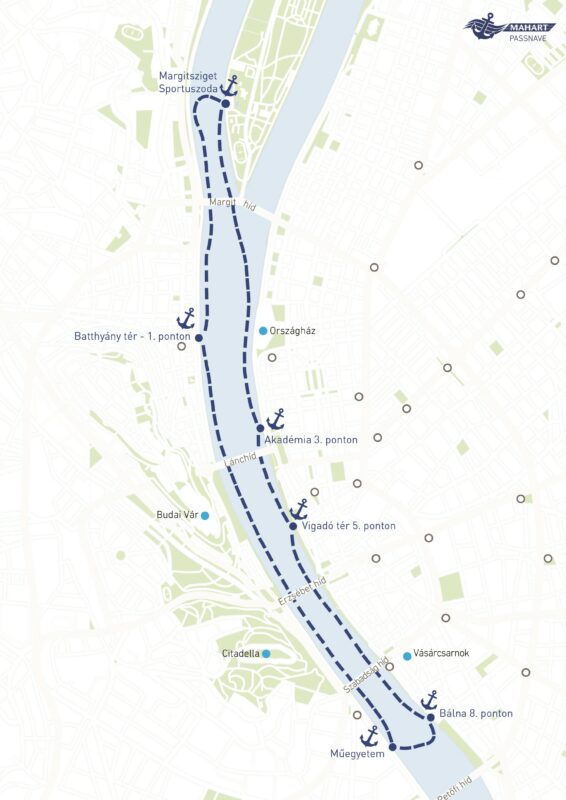
For a unique perspective, explore Budapest by public transportation boat along the Danube. Operated by BKK, these boats offer a scenic, budget-friendly alternative to tourist cruises. These boats are no longer available (since 2023).

  • Availability: Boats run from mid-March to late October, weather permitting. Services like D11 (Újpest to Haller utca) and D12 (Római fürdő to Haller utca) operate weekdays, with limited weekend runs (e.g., D13). In 2023, high maintenance costs paused services, but as of 2025, they’re back seasonally—check BudapestGO for updates.
  • Payment: Use standard BKK tickets or passes (e.g., 24-hour Travelcard, 2,500 HUF). Single tickets (450 HUF) work too, validated onboard. Boats are free with the Budapest Card on weekdays. Cash or card payments aren’t accepted onboard—buy tickets in advance via the app or at BKK kiosks.
  • What to See: Departing from piers like Boráros tér or Batthyány tér, you’ll glide past the Parliament Building’s illuminated spires, Buda Castle perched atop its hill, and the Chain Bridge’s elegant arches. Look for Gellért Hill’s Citadel and Margaret Island’s greenery. The zigzagging route offers unobstructed views of Pest’s vibrant skyline and Buda’s historic charm—perfect for photos.

Tips for a Smooth Ride

  • Timing: Metros run every 2-5 minutes during peak hours (5 AM–11:30 PM), trams and buses every 10-15 minutes. Check BudapestGO for night bus options after midnight.
  • Crowds: Avoid rush hours (7-9 AM, 4-6 PM) for a comfier ride.
  • Accessibility: Most metros (except M1) and newer trams/buses are wheelchair-friendly—look for blue symbols.
  • Language: Signs are in Hungarian, but key stops have English announcements.

Why It Works

Budapest’s compact size makes public transit ideal. The metro’s four lines—M1 (yellow), M2 (red), M3 (blue), and M4 (green)—form the backbone, while trams like Tram 2 offer postcard-worthy views along the Danube. Buses fill gaps, reaching hilly Buda or outer Pest. A 72-hour pass (~$15 USD) covers it all, leaving you free to hop on and off without breaking the bank.

Beyond the Sights

Public transit isn’t just practical—it’s part of the experience. Ride the vintage M1 metro for a history lesson, or watch locals bustle on Tram 4/6, one of Europe’s busiest lines. Pair your journey with a kürtőskalács (chimney cake) from a street vendor near a stop, and you’re living Budapest life.

Final Thoughts

Sightseeing in Budapest by public transportation is efficient, affordable, and fun. From Buda’s castles to Pest’s baths, every landmark is a ride away. So, grab a travelcard, download BudapestGO, and let the city unfold before you—no car required. Have a favorite Budapest spot? Share it—I’d love to hear your picks!

Are the Christmas markets in Budapest expensive?

Hungarians like to feel sorry for themselves and they often complain about the prices in grocery stores, restaurants, and most of all, at the Christmas markets in Budapest. But, are the prices at the Christmas markets really that awful, or is the complaining just about being true to your genetics and the culture of the people? We have taken a look at the prices at the biggest Christmas markets in the center of Budapest, and this is what we discovered.

If you want to learn more about the Christmas markets in Budapest, where they are located, what you should buy, and all sorts of other practical information, take a look at our article about the Christmas markets in Budapest.

How much does a glass of hot wine cost at a Budapest Christmas market?

The most important thing you want to drink at the Christmas markets in Budapest is the hot wine. This has a special smell and taste, and on a cold December day, nothing tastes as good as a cup with this special drink. In 2024, you will normally be able to buy 3dl of this special drink at a price of 1450 HUF, which equals €3,5. That isn’t really a bad price, and if you would go to any restaurant elsewhere in the city center, you would for sure have to pay just as much. But, luckily a price cap has been set on this product, meaning that those selling hot wine at the Christmas markets are not allowed to sell it at a higher price than this. Of course, if you ask for things added to the drink, or a bigger amount, then the price will differ. But, the basic price of hot wine should be 1450 HUF in 2024.

Are you really cold? Would you like to buy something with a higher alcohol percentage than the hot wine? You can buy a can of beer at about €3,5, while 4cl of the traditional Hungarian palinka (fruit spirit) will cost you approximately €7. Of course, the prices will vary between the different stands, but these are just examples so you know approximately what to expect.

I feel hungry… what do I have to pay for food at the Christmas markets?

One of the most popular things to eat at festivals and markets in Hungary is the “lángos”. This is a dough fried in oil, and then they add all sorts of ingredients on top afterward. The price for a standard lángos in 2024 is 2300 HUF at the big Christmas market at the Vörösmarty square.. BUT, and yes, there is a big BUT right here. That is the price of the basic version which comes empty or with garlic butter on top (which is my favorite). If you want to buy one that looks more extreme, maybe with cheese and sour cream (the favorite of most people), or one with meat, or with smoked cheese, then the price can easily increase with between 50%-100%. So, you better watch out and be careful to avoid surprises as you pay for the product you are about to order.

duck leg at budapest christmas markets

Of course, these prices are quite extreme compared to what it would cost to prepare one at home, or maybe the price if you would buy it from a stand during the summer elsewhere. But, if you compare the prices with downtown Budapest, and also take into consideration how expensive it is to actually rent a place where you can sell products at the Christmas markets, it isn’t really that bad.

Would you like something smelling even better? You can buy some BBQ pork ribs for around €13, while you can buy the traditional Hungarian beef stew in bread at around €15. Would you like a full plate with a duck leg, potatoes, and some cabbage in addition? The price for this is around €23 at some of the stands, but that is also a full meal with delicious taste and a magic smell.

Watch out for this!

Would you like to eat out, but you don’t want to spend a lot of money? You should look at the food stands for the daily menus. Many places have daily menus in which you can get a plate with food for approximately €5. You will not always be able to find them, but if you see them, then just check the price and if both the price and the meal sounds good, then that is something you should give a try.

What is the conclusion? Are the Christmas markets in Budapest expensive?

The answer greatly depends on what you compare it with. Most locals never go to a restaurant downtown Budapest, meaning that they don’t know how much a goose leg with cabbage and potatoes would cost at a restaurant downtown Budapest. To such a person, the Christmas market prices will feel like a robbery, but that is because they don’t compare it with the right places.

Another Hungarian might buy a lángos at a shopping mall or at a local market somewhere, and the price will then be less than half of what you pay at the Christmas market. But, then again, those places are around all year around, and they probably pay less in rental fee for an entire year compared to the fees paid by those selling the similar products at the Christmas markets.

All in all, it is a costly adventure to go shopping at the Christmas markets, but if you compare it with dining in restaurants in the vicinity of the Christmas markets downtown Budapest, you will not see a big difference. If you also include the atmosphere and the joy of eating a delightful meal surrounded by lots of people, beautiful Christmas lights, and the smells you experience at the Christmas markets, our conclusion is that the prices aren’t really that bad!

But, if you come to Budapest thinking that it will be extremely cheap to shop at the Christmas markets, then you are wrong. If you compare the prices to the more wealthy city of Vienna, you will quickly realize that the prices at the Christmas markets in Vienna are very similar to those in Budapest.


What is your experience? Have you visited the Christmas markets in Budapest? What did you buy at the Christmas markets? Were you satisfied with the quality and the price? We would love to hear about your experience and thoughts on this interesting topic!

Boat trips on the Danube in Budapest are available again!

Have you been to Budapest recently, or are you planning to come in the near future? Then you have probably paid attention to the news about the Danube (and other rivers in Europe) flooding and create big trouble. The Danube caused lots of trouble in Hungary as well, and even though Budapest protected itself in a great way, it still effected many people. For example, there haven’t been any boat trips on the Danube in the last week because of the strong current and high water (making it hard for boats to cross under the bridges).

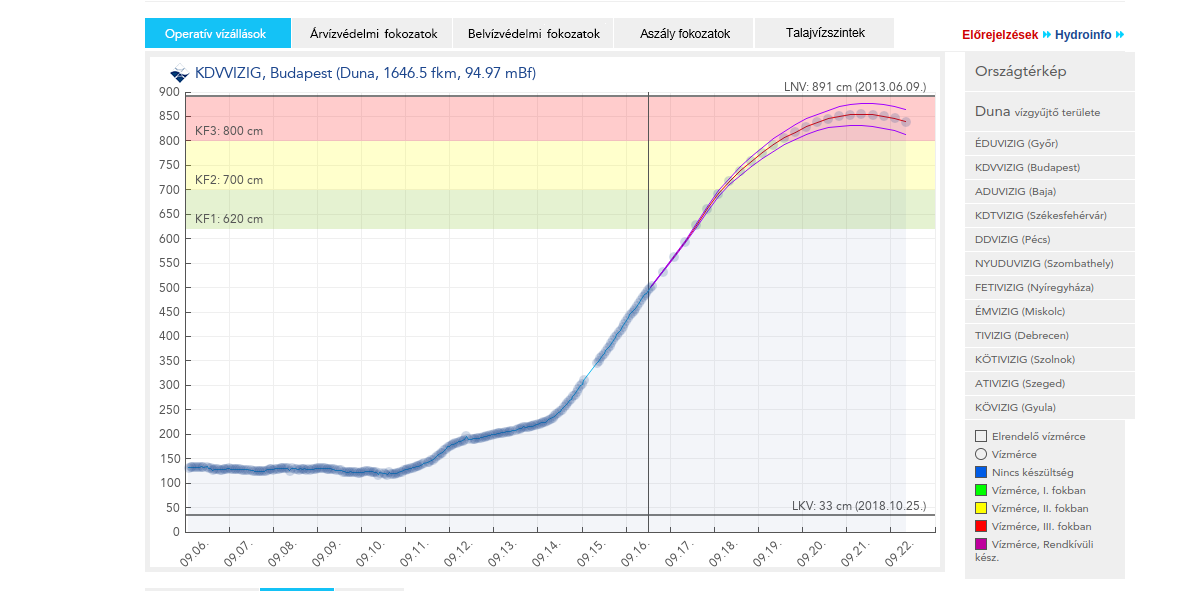
But, the good news is that the peak was reached this weekend (Danube was almost 8,5 meters higher than it is on a normal day), and now the water levels are going down. As a result, from September 25, most boat trips on the Danube are returning to normal, meaning that you can eat your dinner on the Danube, enjoy folklore performances on the Danube, or just go on a sightseeing trip in which you learn more about the city while listening to a guide on a loudspeaker or with an ear-plug.

It is still a lot of water in the Danube, so anyone walking nearby should still be extremely careful (due to the strong current).

If you want to read more about other cool activities, or interesting attractions in Budapest, look around here in our Budapest Guide.

Flood in Budapest

You have probably heard the news that the Danube and other rivers in Europe are flooding at the moment. In what way might this influence your visit to Budapest? Will it cause any trouble that Danube is carrying so much water at the moment?

For most tourists the fact that the Danube is flooding will not influence your stay very much. Life goes on as normal for most people, of course with some exceptions. As the Danube is flooding, it is causing quite a lot of trouble both north and south of Budapest as basements are filled with water and they do not have a well-built protection against floods. But, Budapest is a city prepared for floods, which means that you don’t really have a lot to worry about, unless you are driving a car.

What’s on with the Danube flooding in 2024?

The Danube is expected to reach 8,50 meters above normal water level around September 21. This is actually a very high level, so even though it shouldn’t cause trouble for you as a tourist in Budapest, it will for sure be lots of locals down by the Danube making photos, and you might even see sandbags used for protection here and there.

Projected floods levels for Danube in Budapest in 2024.

Things might change, but it has been many, many years since the Danube was flooding in a similar way in Budapest.

  • It is expected that tram line number two will stop riding as normal from September 17, and the Margaret Island will also be closed to pedestrians in the coming days. Approximately 800,000 bags of sand will be used to protect the Margaret Island during the flood.

General information about flood in Budapest.

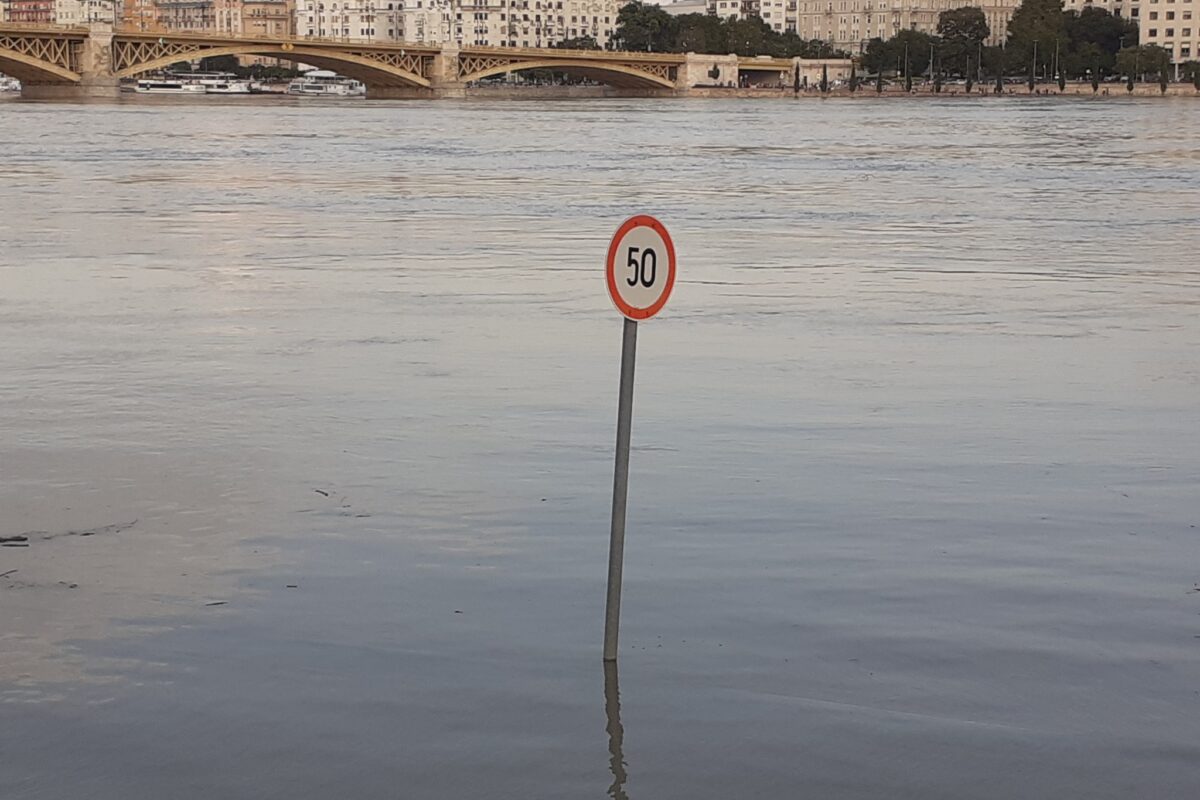
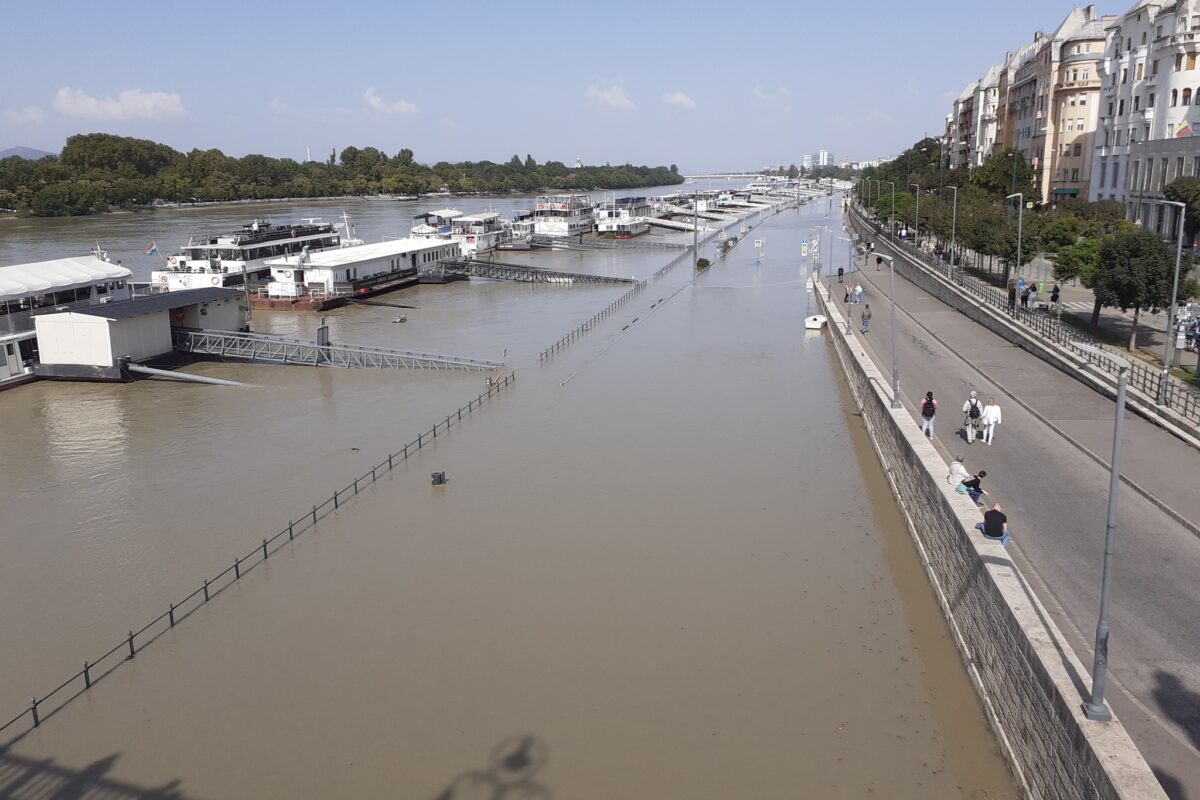
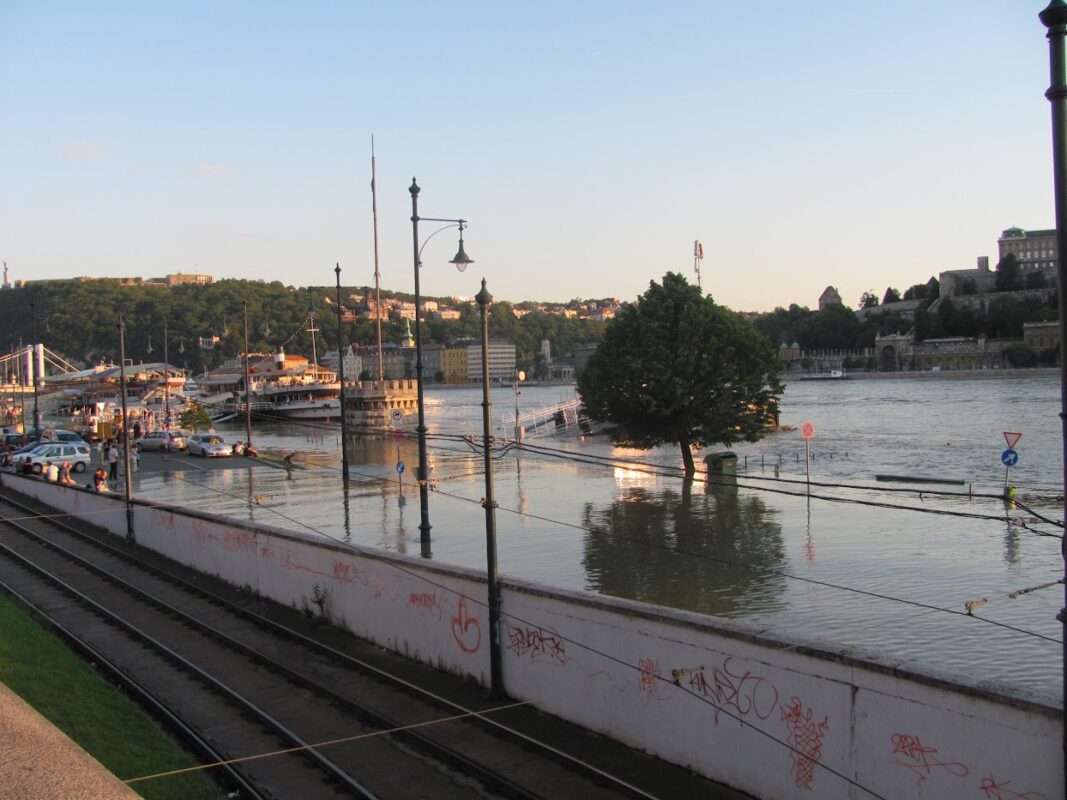
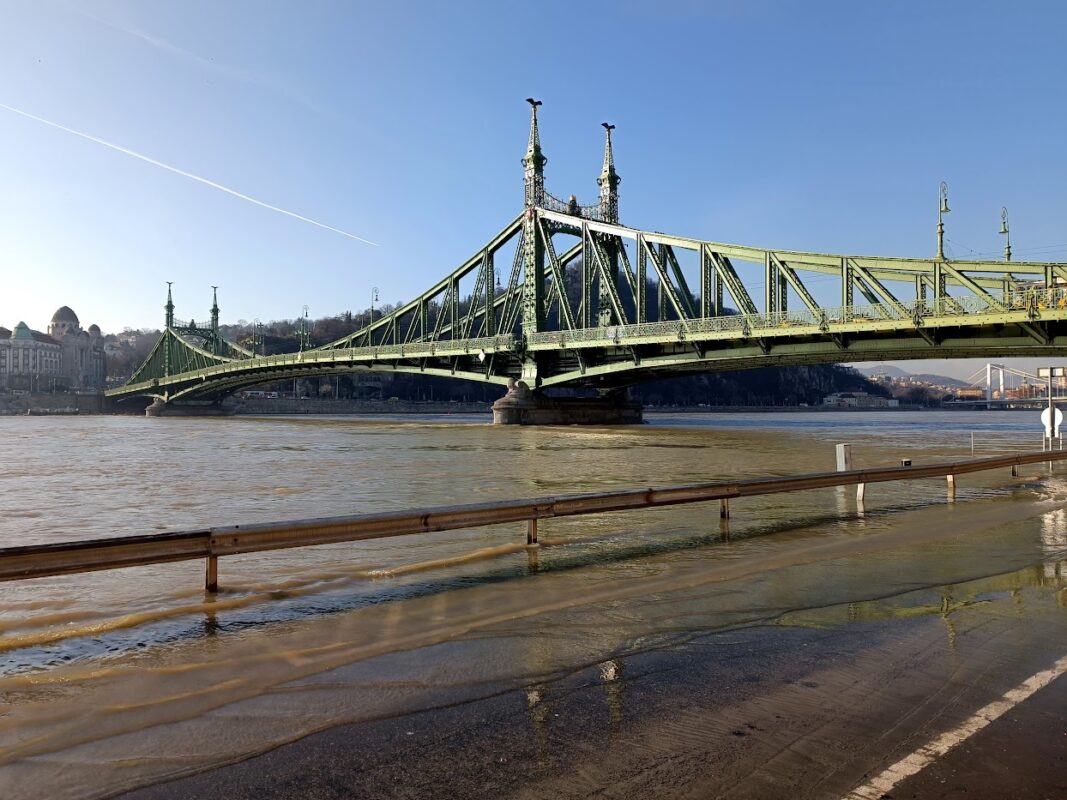
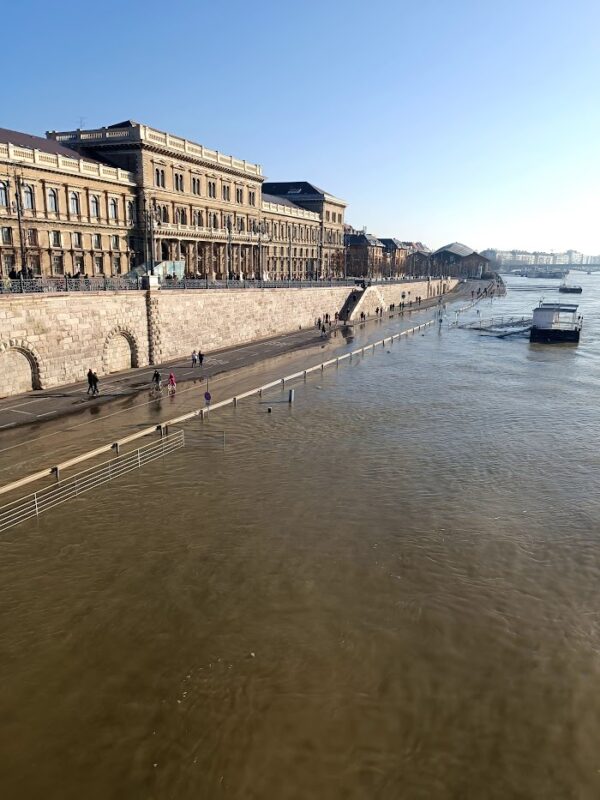
Because of the high water levels the road on both the Pest and the Buda side next to the Danube is standing under water. This will require all drivers to choose other roads, which again will lead to increased traffic and lots of jams in areas and on roads near the Danube. If possible, use public transportation instead.

Also depending on how high the water will get, it might cause trouble for river cruises, especially for the large boats. As the water levels get higher, it might cause trouble for the largest boats to drive below the bridges. But, this is only when the water gets really high, and that happens very seldom in Budapest, so most likely, it shouldn’t cause much trouble now either.

If the water should reach 8-9 meters above normal, then hotel guests at the Margaret Island are moved to other hotels, because the idyllic island in the middle of the Danube is very threatened by the flood. But once again, that normally doesn’t happen, and if you have booked a hotel at this location, then you will get information from the hotel and all the help needed.

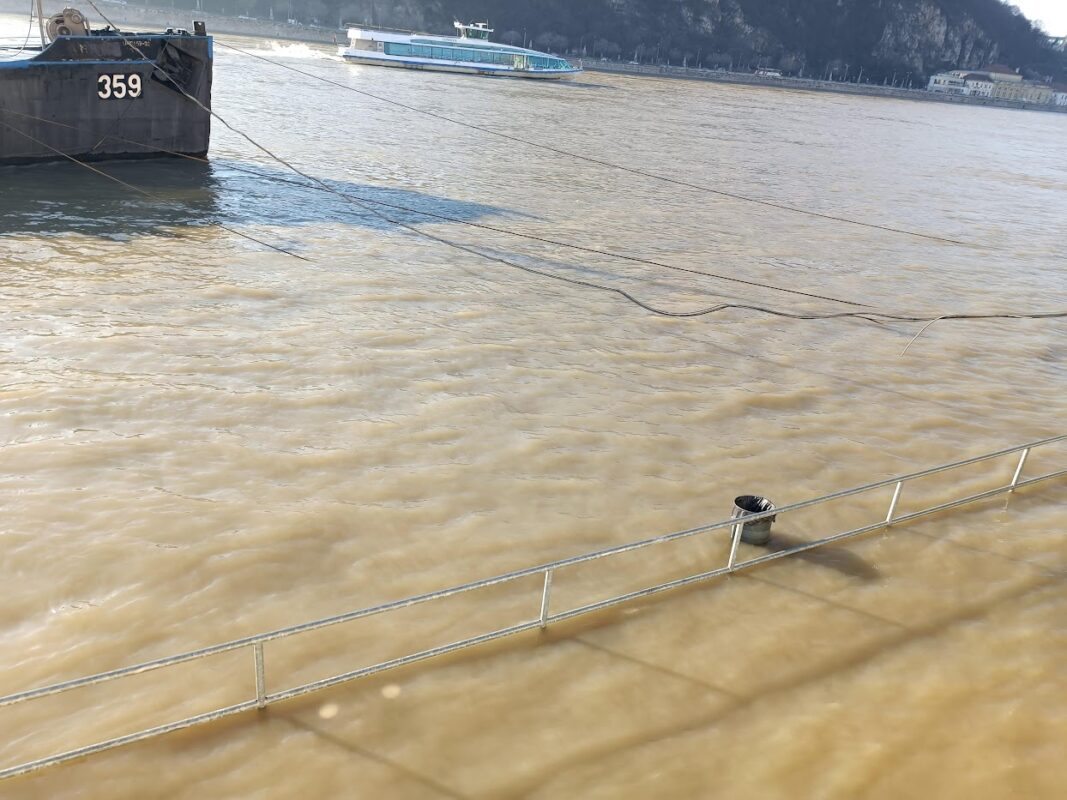
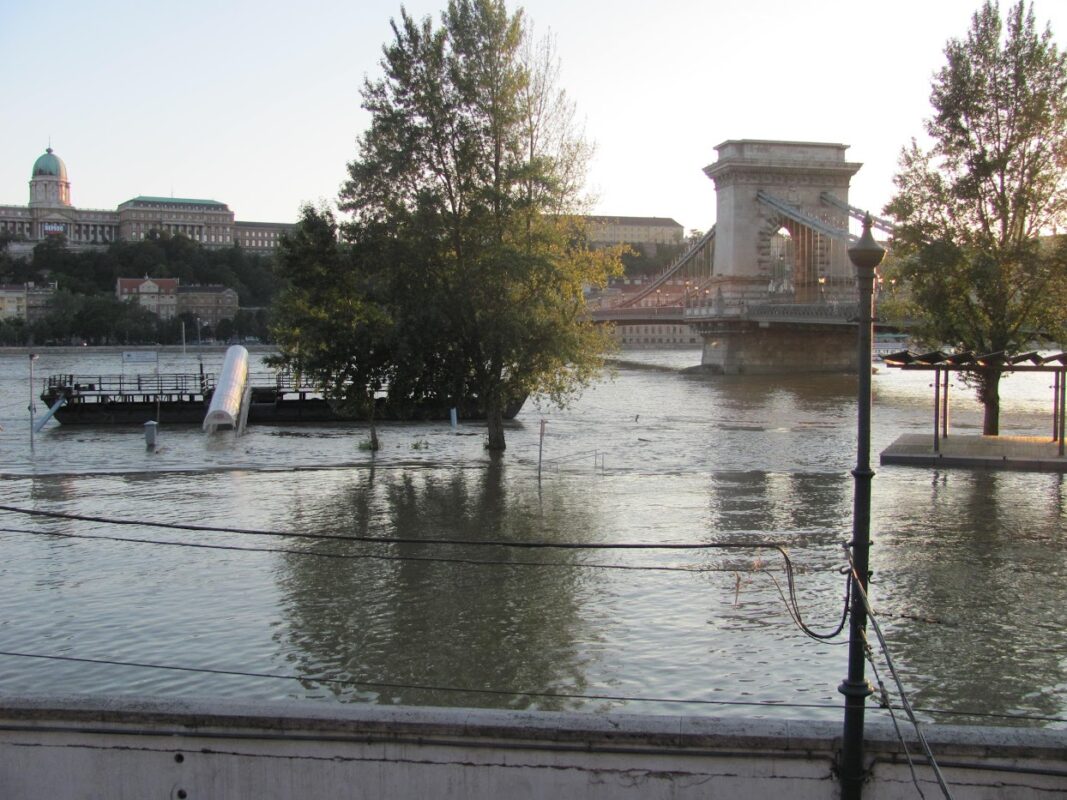
As you can see from the pictures above, life goes on as normal in Budapest, also during floods. As long as the water stays around 6 meters above normal level, it only causes traffic jams, but not much trouble besides that. Of course, the increased amount of water means that the Danube current is much stronger, so as always, you should be very careful because the Danube is a dangerous river.

What is causing the Danube to flood in Budapest (and elsewhere)?

The Danube River is flooding Budapest due to several factors. The most common reason is heavy rainful, and also melting snow. Whenever this takes place, then there is a danger of the river flooding, something that you can easily see in Budapest and elsewhere (as illustrated in the pictures above). When this increased amount of water comes, the drainage systems are unable to handle all the extra water, which again leads to flooding.

Do I need to worry about visiting Budapest during a flood?

You do not have any reason to worry about visiting Budapest, even though the Danube is flooding. It might cause trouble for some of the boat trips on the Danube, and especially the larger cruise ships might suffer from this. As a result, they are not capable of transporting passengers from Vienna to Bratislava to Budapest, but instead, the guests are placed on buses that transport them between the cities.

Most boats traveling on the Danube within the borders of Budapest can travel on the Danube with no limitations, even during heavy floods.

Besides this, life goes on as normal, and you can eat your delicious Goulash soup and drink some Tokaj wine without worrying about anything!

Exploring Budapest and Surroundings by Car: All you must know!

Many people who come to Hungary have heard about Budapest and somehow believe that the Hungarian capital is all the country has to offer. That is a big mistake, and in this article, we would like to give you some great tips that will help you not only explore the surroundings of Budapest by car but also discover the entire city of Budapest in ways that would be much harder unless you sit behind the steering wheel of a car.

The city of Budapest covers an area of 525 square kilometers, while the country of Hungary has a size of 93,030 square kilometers (similar to a country such as Portugal). Budapest is in the center of the country, which means that you can get to almost anywhere in the country within 2 1/2 hours of driving, making it easy to explore, even the most hidden spots and locations where tourists seldom place their feet.

Budapest has always been a big and important city, which means that it has big and wide streets, and it is fairly easy to drive in the city by car. The biggest problem at times might be finding a free parking lot, but there are more and more parking houses, and also several locations at which you can park your car at a very low cost near the center of Budapest. In this article, we want to share information that you will find useful as you explore Budapest and Hungary by car, some advice on the process of renting a car, and lots of tips on where you should go once you have a car available for use.

Important tips if you want to use a rental car in Budapest and Hungary.

There are several things you need to watch out for and pay attention to in the process of renting a car. The most important is that you will often get better prices if you plan ahead. Do your price research and always use car rental comparison websites, as they provide plenty of choices. Discover Cars is one we highly recommend. In addition to offering a great selection of car rental options in Budapest, the website is user-friendly and provides all the necessary information upfront. As you book your rental car early, it is also important to use a service that allows you to cancel your reservation (without you losing money) as closely as possible to the actual booking date. Even if you have heard about one special brand, keep your eyes open, compare the prices of several companies, and read reviews written by other users.

It is crucial to use a service that gives you easy access to the car. If you arrive at Budapest Airport, you should be able to pick up the car directly in the terminal building, or have a shuttle bus provided by the car rental company that will take you the short distance to where the rental car is located. You will get all the information you need to get access to your car quickly during the booking process, meaning there shouldn’t be any reason to worry!

Are you going to stay in a hotel in Budapest? Do not forget to find a hotel where you can park your car! Not all hotels offer such services, especially in the inner districts, and that might give you lots of stress and a big mess as you need to pay for parking in the street, renew your parking ticket throughout the day, and it will cost you a lot of additional money. In other words, find a hotel that offers car parking at a good price, or a hotel outside the city center where you can park your car for free. As you leave Budapest, most hotels offer parking free parking or at a very low cost.

Driving on the roads of Hungary.

Hungary has very nice highways that take you quickly in the direction of big cities such as Székesfehérvár, Györ, Debrecen, Szeged, Pécs, and Eger. If you drive even further, you can even visit the capitals of neighboring countries such as Vienna (Austria), Bratislava (Slovakia), Ljubljana (Slovenia), Zagreb (Croatia), and Belgrade (Serbia) within two to four hours. But, do not forget that you need to pay a highway fee in Hungary which you can buy for either 1 day, 10 days, 1 month, or 1 year. If you rent your car, do not forget to check if the car already has a highway vignette, or if you need to buy one yourself for the time of your car rental.

You can buy your e-vignette and check the prices at https://ematrica.nemzetiutdij.hu/en/vignette-purchase.

Like most of the countries in Europe, the steering wheel is on the left side in Hungarian cars, and you drive on the right side of the way. There are gas stations located frequently along highways and in cities, so it is easy to fill gas on the car if it is about to get empty. The prices are always in Hungarian Forint, and as you pay, it is always wise to pay with the local currency, because most gas stations use a very bad conversion rate for those eager to pay with Euro instead of the Hungarian Forint.

The highways of Hungary have a maximum speed limit of 130km/h, but even though you drive at this speed, you should keep to the right, as many drivers come faster and they will start blinking and drive into your “butt” if you keep left and don’t keep right to make way for those eager to drive faster in the left lane.

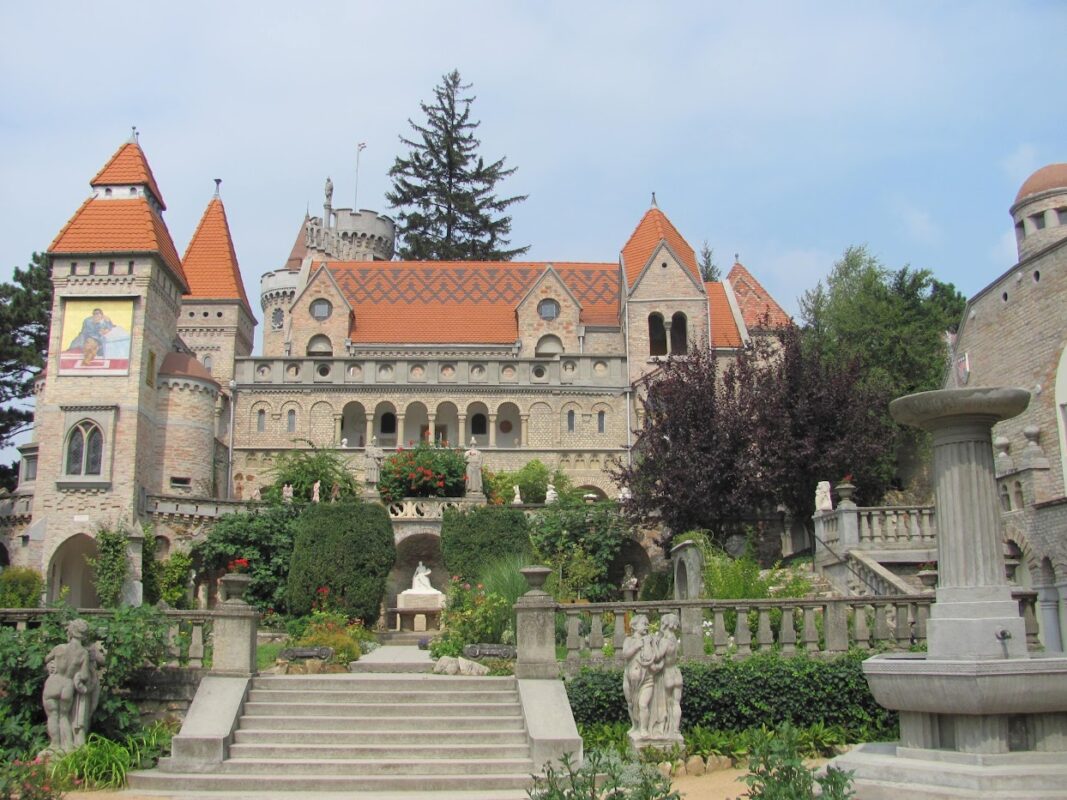
Bory castle in Székesfehérvár is a fantastic place to visit if you have a car available during your stay in Hungary.

Where to go with a car in Hungary?

You are sitting in your car ready to explore Budapest and Hungary… what next?

Some places worth visiting outside the city center of Budapest.

If you don’t feel like leaving the borders of Budapest at once, type Zugliget Chairlift into your GPS and drive to the popular chairlift in a beautiful green area of Budapest. Here you can walk for hours and enjoy a splendid view, and it also offers lots of places where you can park your car.

If you travel with the chairlift, and then walk some more, you can enjoy this splendid view!

Would you like to shop like the locals? Then you can drive to Budaörs, a popular area where you find Decathlon, Ikea, Auchan, Tesco, Aldi, Intersport, and many other stores. This will give you the chance to shop like a local on the outskirts of the city, instead of shopping like a tourist in the popular pedestrian street Váci utca. Do not forget that you need a vignette to visit this area if you approach it using the main highway (if you don’t have a vignette, you can tell your GPS to lead you to this location without using the highway).

This area also has some minor mountains, so if you’d rather enjoy a splendid view and some hills, then enter “Odvashegy utca” into your GPS and drive until you see a place to park your car on the right side (close to Rudolf király emlékpark). There you can leave your car and start climbing upwards immediately.

Cities and areas you should visit outside Budapest.

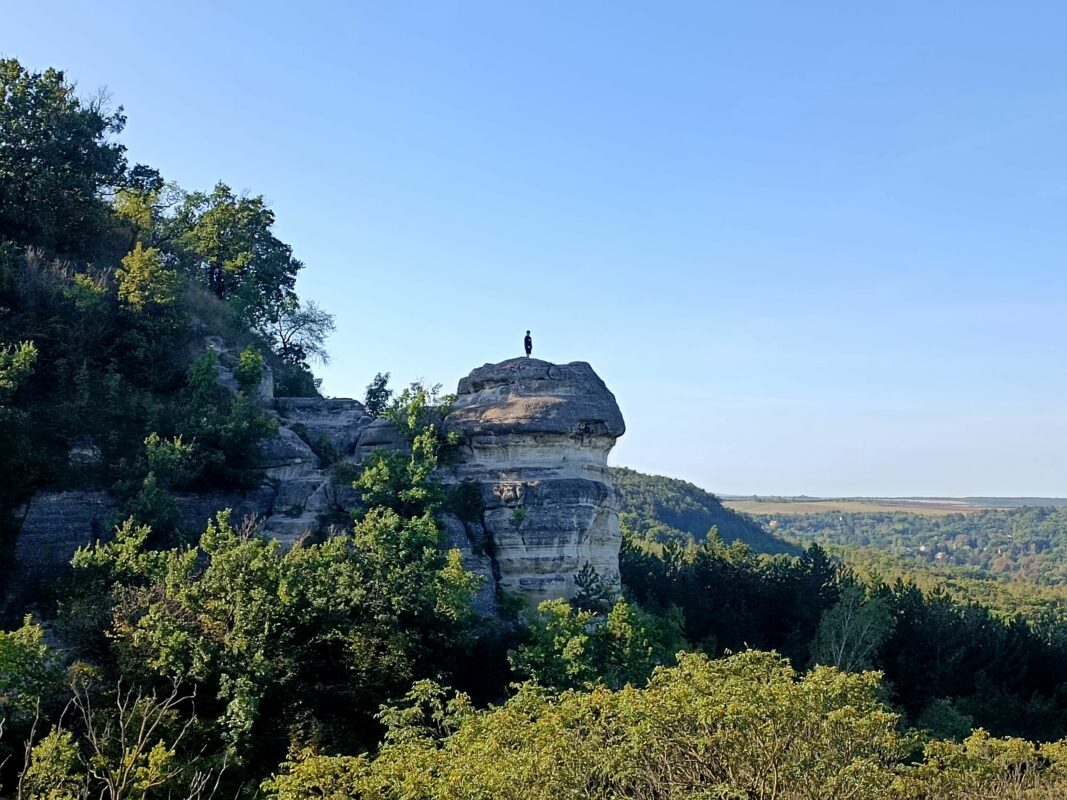
If you want to make a photo like the one you see below, you should enter “Nyakas kő alatti parkoló” into your GPS. It only takes 25-30 minutes to get there from the city center of Budapest, and it is a short walk of 15 minutes from the parking lot to the top of the cliff. You should be careful if it is raining and wet as it can be slippery, but besides that, this is a fantastic program opportunity.

nyakas kö
Nyakas kö, a beautiful place not far from Budapest.

Want to see even more of the beautiful nature and special sights and programs of Hungary? Travel to Egerszalok to see the famous Salt Hills. Not only is it fantastic to look at, but the area is full of SPA hotels, and hot springs, and it gives you an amazing opportunity to explore the countryside and enjoy a recreational location at the same time. If you first visit this area, drive to Eger, the city where the proud women of Hungary protected the city’s castle against the Turkish invaders in the 16th century.

Did you know that one of the most famous sweet white wines in the world is produced in Hungary, in the scenic Tokaj region? Why don’t you drive to this area, taste a lot of wine (while remembering that Hungary has a zero-tolerance policy when it comes to driving and alcohol), and visit the Hungarian “Jesus statue” a visit at its location in Tarcal?

Another option if you want to explore areas not so far from Budapest is to do a day trip in which you combine the three cities Szentendre, Visegrád, and Esztergom. This is a very popular route along the Danube in which you can see the biggest church in Hungary (Esztergom), a beautiful castle and a location where Dracula was imprisoned in the 15th century (Visegrad), and do some shopping and enjoy a walk in the pedestrian street of Szentendre. If you go to Esztergom and decide to walk across the Mária Valéria Bridge, you will suddenly discover that you are in the city of Štúrovo in Slovakia. Isn’t that cool?

As you probably understand, there are lots of places you can and should visit as you explore Budapest and Hungary by car. We hope this article has given you some good ideas, and if you have further recommendations of comments on this topic, please use the comment field below to share what is on your mind.