Events in Budapest Week 29 (13–19 July 2026)

If you are visiting Budapest this week, you have some compelling exhibition options to explore some unique artistic perspectives. Whether your interest lies in the Italian influences on Hungarian art or in the kinetic energy of Op Art, Budapest’s museums offer intriguing experiences this mid-July. Here’s a practical guide to help you pick the exhibition that best suits your taste.

Exhibitions

Two major exhibitions are ongoing this week, both offering deep dives into distinctive art themes and providing a quiet cultural escape from the mid-summer city buzz.

  • Dolce Vita: Two Centuries of Italian Inspiration in Hungarian Art
    Running from 8 April through 23 August 2026 at the National Gallery in Budapest, this exhibition is ideal for visitors who appreciate art history with a cross-cultural angle. It features about 150 pieces from 75 artists, encompassing paintings, prints, photographs, sculptures, and even archaeological artefacts. The exhibit is connected to the Bartók Spring International Art Weeks and highlights how Italian culture and artistic styles influenced Hungarian art over two centuries. Visiting Dolce Vita means witnessing a broad historical sweep in a single setting, making it a substantial activity if you prefer slow-paced, reflective cultural outings. The exhibit is available all day, allowing for flexible timing in your itinerary.
  • Vasarely 120: A Comprehensive Retrospective of the Father of Op Art
    Taking place until 16 August 2026 at the Museum of Fine Arts, this exhibition honors Victor Vasarely’s 120th birth anniversary. Vasarely, a Hungarian-born artist famed for his kinetic art and geometric abstraction, is celebrated with an unprecedented retrospective. For visitors drawn to modern and abstract art, or those curious about the roots of optical illusions in art, this is an excellent choice. The show runs all day, offering a convenient scheduling option. It caters well to travelers who enjoy engaging visually dynamic and intellectual art experiences.

Both exhibitions will be open during your stay, so you can choose based on your interest in either historic cross-cultural art influences or more contemporary abstract movements, or even visit both if time allows.

If you want to explore other happenings around the city during your visit, check out What’s Happening in Budapest for additional updates and activities.

Visitor Tips

  • The National Gallery and the Museum of Fine Arts are both centrally located and accessible by public transport. Consider reviewing the Budapest Metro Map to plan your route efficiently.
  • Since both exhibitions run all day, arriving earlier can help you avoid afternoon crowds and give you ample time to explore each collection thoughtfully.
  • Prepare for the weather by checking the Weather in Budapest so you can dress comfortably while navigating between venues.

Conclusion

Week 29 in Budapest offers art lovers thoughtful and well-curated options with Dolce Vita and Vasarely 120. Whether your preference leans towards historical intersections or modern kinetic visuals, these exhibitions provide substantial value and insight during your visit. Taking advantage of Budapest’s rich museum scene lets you experience the city’s dynamic cultural layers even during the quieter mid-summer period.

FAQ

  • Q: Are the exhibitions open every day during the week?
    A: Both exhibitions run continuously throughout the day from their start dates until their respective end dates, covering the entire week 13–19 July 2026.
  • Q: Where are these exhibitions located?
    A: Dolce Vita is hosted by the National Gallery in Budapest, while Vasarely 120 takes place at the Museum of Fine Arts.
  • Q: Is there a recommended time to visit these exhibitions?
    A: Arriving in the morning often offers a quieter experience and more time to absorb the exhibitions without the afternoon rush.
  • Q: Are both exhibitions free to enter?
    A: Please check the respective exhibition pages for ticket prices, as the supplied data does not include pricing details.
  • Q: Can I find transport information to these galleries in Budapest?
    A: Yes, the Budapest Metro Map is a useful resource to plan your journey efficiently between locations.


Events in Budapest Week 28 (6–12 July 2026)

Visiting Budapest in early July presents a great opportunity to explore some of the city’s top contemporary exhibitions that are running through the summer. This week, two major showcases invite art enthusiasts and curious travelers alike to dive into different facets of Hungarian and international art. Whether you’re an admirer of Italian influences or keen to explore abstract geometric styles, Budapest’s museums have something intriguing for you.

Exhibitions

During the week of 6 to 12 July 2026, the Dolce Vita: Two Centuries of Italian Inspiration in Hungarian Art exhibition is open at the National Gallery in Budapest. This temporary exhibit runs all day from 8 April through 23 August, offering visitors a thorough look at the Italian artistic inspiration that shaped Hungarian artists over two centuries. It features around 150 works by 75 artists, including paintings, prints, photographs, sculptures, and archaeological artefacts. This is a good pick if you appreciate art history and cultural crossovers, as the exhibit not only highlights masterpieces but also provides context on how Italy’s art legacy influenced Hungarian creativity over time.

Also ongoing is the Vasarely 120: A Comprehensive Retrospective of the Father of Op Art at the Museum of Fine Arts, which spans from 15 May until 16 August 2026. This retrospective celebrates the 120th anniversary of Victor Vasarely, a Hungarian-born pioneer of kinetic art and geometric abstraction who gained international fame primarily in Paris. The exhibition is suitable for those interested in modernism, optical illusions in art, and how geometry can intersect with visual perception. Since it is held all day, you can visit at your convenience and absorb the unique visual experience Vasarely’s art provides.

For visitors planning their cultural itinerary, I recommend starting with the Dolce Vita exhibition for its rich historical narrative and then complementing it with the Vasarely 120 show, which contrasts tradition with modern abstraction. Both are well-curated, indoors, and suitable for visitors keen to stray from typical sightseeing into deeper artistic territory.

Visitor Tips

  • Both exhibitions are open all day, but confirm timings and book tickets in advance if possible to avoid waits.
  • The National Gallery and the Museum of Fine Arts are centrally located; using the Budapest Metro Map can help you navigate quickly between venues.
  • Carry water and take breaks at nearby cafés if you plan to visit both exhibitions in one day; they are extensive and can be exhaustive.
  • Check the weather in Budapest for the week on our Weather in Budapest page to plan your outdoor transitions comfortably.

This week’s events focus on exhibitions enriching your visit with a blend of historical insight and contemporary artistic innovation. For other happenings around the city and ongoing cultural events, don’t forget to explore What’s Happening in Budapest.

FAQ

1. Are tickets required for the Dolce Vita exhibition?

Yes, it is advisable to book tickets for the National Gallery’s Dolce Vita exhibition in advance to ensure entry, especially during weekends.

2. What is the best way to get between the exhibition venues?

The Budapest metro and tram system offer convenient routes between the National Gallery and Museum of Fine Arts. Check the Budapest Metro Map for the shortest routes.

3. Are the exhibitions suitable for children?

While both exhibitions can be educational for older children interested in art, younger children might find them less engaging due to the detailed and contemplative nature of the displays.

4. Can I take photos inside these exhibitions?

Photography policies vary by venue. Generally, flash photography is prohibited. Check with staff upon entry about the specific rules at each exhibition.

5. How long should I plan to spend at each exhibition?

Plan for at least 1.5 to 2 hours at each exhibition to appreciate the collections without rushing. Combining both in one day is possible but will require a full day commitment.

Budapest’s cultural calendar for this week is shaped by these two thoughtfully presented exhibitions, offering a quiet but rich alternative to the city’s busy tourist hubs. Whether you lean towards historical art narratives or kinetic, optical art, you’re well-covered. And for other current events and suggestions, remember to check out the comprehensive listings at Budapest Guide.

Events in Budapest Week 27 (29 June – 5 July 2026)

Visiting Budapest this week offers a calm yet culturally rich experience, especially for those interested in art and exhibitions. While the city doesn’t have a packed schedule for this particular week, there are two major art exhibitions running that provide insightful looks into Hungarian and European art history. Here’s a detailed guide to help you plan your cultural outings.

Exhibitions

Art enthusiasts will find the city’s galleries a rewarding stop this week. Both exhibitions run throughout the summer months, making them accessible during your stay.

  • Dolce Vita: Two Centuries of Italian Inspiration in Hungarian Art
    This exhibition is held at the National Gallery. It runs from 8 April to 23 August 2026 and is open all day. Visitors interested in the intersection of Italian and Hungarian art will appreciate the breadth of works on display—around 150 pieces by 75 artists. The collection includes paintings, prints, photographs, sculptures, objects, and archaeological artefacts. It highlights Italian influences on Hungarian art over the past two centuries, providing a distinctive viewpoint into cultural exchange within the arts. It is an excellent choice for those who enjoy varied media and historical context in art exhibitions.
  • Vasarely 120: A Comprehensive Retrospective of the Father of Op Art
    Taking place at the Museum of Fine Arts, this retrospective celebrates the 120th anniversary of Victor Vasarely’s birth. The exhibition is available from 15 May to 16 August 2026 and is open all day. Vasarely is known internationally for his pioneering work in kinetic and geometric abstraction, and this exhibit is a rare opportunity to see an extensive collection honoring his impact on 20th-century art. It suits visitors who are curious about modern art movements and want to understand the roots of Op Art through one of its founders.

Both exhibitions are well suited for visitors who prefer indoor activities, especially those wanting to dive into Hungary’s artistic heritage while escaping the summer heat. Each venue is easily accessible by Budapest’s public transport system—consider consulting the Budapest Metro Map to plan your routes efficiently.

Be sure to allocate a few hours to explore either or both exhibitions thoroughly. Given that both run throughout the summer, you have flexibility in your schedule, but during your city stay in Week 27, these cultural stops will help add meaningful depth to your Budapest itinerary.

Planning Your Visit

While exploring the exhibitions, take some time to learn about local climate conditions if you plan to include outdoor walks before or after your visits. Check the Weather in Budapest page for up-to-date information on temperature and comfort levels.

For a broader perspective on events happening across the city this week, you might want to visit the What’s Happening in Budapest page, which updates regularly with current cultural offerings and practical tips.

Conclusion

This week in Budapest is a good opportunity for art lovers and visitors seeking a quieter pace to engage deeply with Hungarian cultural history through two significant exhibition offerings. Both the National Gallery and the Museum of Fine Arts provide thoughtfully curated experiences that are accessible and rewarding. Take advantage of the all-day opening hours to fit these into your sightseeing plans without rush, and use the city’s excellent transport network to reach the venues comfortably.

FAQ

  • Are the exhibitions suitable for children?
    While the exhibitions primarily attract adults and art enthusiasts, older children with an interest in art may find the visual elements engaging. However, they might require guidance to appreciate the historical context.
  • Do I need to book tickets in advance?
    The event data does not specify ticketing requirements. It is recommended to check the official venue websites or contact the galleries for the latest information before your visit.
  • Are the exhibition venues wheelchair accessible?
    Both the National Gallery and the Museum of Fine Arts strive to accommodate all visitors. Checking their accessibility information on official channels is advisable to ensure a smooth visit.
  • Can I visit both exhibitions in one day?
    Yes, both exhibitions are open all day and taking into account location and transport options, it is feasible to visit both in one day if planned carefully.
  • What is the best way to get around Budapest to see these exhibitions?
    Budapest’s metro, tram, and bus network efficiently connect major cultural venues. Using the Budapest Metro Map can help you navigate quickly.

Events in Budapest Week 26 (22–28 June 2026)

If you find yourself in Budapest during the last week of June 2026, the city offers a few compelling events ranging from live concerts to ongoing exhibitions. Whether you’re a music fan eager for big-name shows or an art lover exploring notable galleries, this week has some clear highlights worth planning around.

Concerts

The summer momentum in Budapest picks up with two major concert events this week, perfect for those wanting to enjoy music in an energetic setting.

  • OneRepublic Concert in Budapest – Taking place on 25 June, this concert brings an internationally acclaimed pop rock band to the city. Ideal for visitors who appreciate contemporary hits and polished live performances, the event promises a lively evening experience along with the city’s characteristic long summer nights. Since the concert lasts all day (from the data), it’s wise to check the venue specifics and set plans accordingly for arrival and departure.
  • Duran Duran in Budapest 2026 – Scheduled for 28 June, just three days after OneRepublic, this event spotlights the legendary British band known for their influential new wave sound. It’s a great option for fans of 80s music or those interested in the enduring appeal of classic bands performing live. Given this concert also runs all day, expect a full evening of entertainment and plan transport accordingly.

Both concerts are standalone events occurring towards the end of the week, giving music lovers clear options for an evening out. Considering public transport and timing is essential — the Budapest Metro Map can be a resourceful tool to reach the venues efficiently.

Exhibitions

For visitors leaning towards culture and art, two long-running exhibitions are accessible throughout this week, offering a chance to dive deep into Hungarian connections with art history and modernism.

  • Dolce Vita: Two Centuries of Italian Inspiration in Hungarian Art – This exhibition at the National Gallery is available all week from 8 April through 23 August. It presents a diverse collection of around 150 works by 75 artists, including paintings, prints, sculptures, and even archaeological artefacts, shedding light on how Italian culture influenced Hungarian art over two centuries. It’s a thoughtful and leisurely choice for those with an interest in visual art and cultural history. Given the extensive range, planning a couple of hours is advisable.
  • Vasarely 120: A Comprehensive Retrospective of the Father of Op Art – This retrospective at the Museum of Fine Arts commemorates Victor Vasarely’s 120th birthday, showing a significant collection related to kinetic and geometric abstraction art. Running until 16 August, it is equally accessible throughout the week and attracts visitors interested in modern art movements and Hungarian artists who gained international recognition.

Both exhibitions are all-day events, allowing a flexible schedule to visit when it suits your itinerary. If combining both, locate them in advance and allocate enough travel time between venues plus breaks. For more wide-ranging cultural activity planning, see What’s Happening in Budapest.

Visitor Tips for the Week

  • For concerts, booking tickets ahead is recommended given the popularity of OneRepublic and Duran Duran.
  • Check opening hours and any visitor regulations for the galleries, especially for the exhibitions since they are all-day but may have specific closing times or guided tours.
  • Utilize Budapest’s efficient metro system for quick access to venues — make use of the Budapest Metro Map to navigate easily.
  • Early evening walks along the Danube can be a pleasant supplementary activity after concerts.

This week in Budapest suits a culturally inclined visitor as well as music fans who want to catch internationally recognized live performances without overwhelming schedules.

Conclusion

Week 26 in Budapest offers a balanced mix of stimulating art exhibitions and high-profile concerts, suitable for visitors wanting to select distinct cultural experiences. Whether spending the day immersed in Italian-inspired Hungarian art or dancing along to OneRepublic or Duran Duran, the city’s diverse offerings make it easy to plan a fulfilling visit. Use local transport options to save time and enhance your overall stay.

FAQ

  • Q: Are the exhibitions open every day during the week?
    A: Both Dolce Vita and Vasarely 120 exhibitions are described as all-day events running throughout the week, but it’s best to verify the exact gallery opening hours before visiting.
  • Q: Where can I buy tickets for the concerts?
    A: Tickets for the OneRepublic and Duran Duran concerts can typically be purchased online through official event pages or authorized sellers—check the linked event pages for details.
  • Q: How can I get to the concert venues using public transport?
    A: Budapest’s metro and bus network provide efficient transport options; consulting the Budapest Metro Map can help plan your route.
  • Q: Is it possible to visit both exhibitions in one day?
    A: It is feasible to visit both exhibitions in one day if you allocate sufficient time for travel and viewing, but allowing a full day for each might be more comfortable.
  • Q: Can I find more cultural events happening in Budapest this week?
    A: Yes, for a broader look at events around the city, check What’s Happening in Budapest for up-to-date listings and ideas.

Events in Budapest Week 25 (15–21 June 2026)

Concerts

If you’re visiting Budapest this week and are a fan of iconic rock and pop music, Sting Budapest 2026 is a key event to mark in your calendar. Taking place on 18 June at the impressive MVM Dome, this concert gives visitors a rare chance to see Sting perform in the Hungarian capital. Given Sting’s selective tour locations in 2026, this Budapest performance is particularly notable for music lovers looking to catch his live show in a city that’s not on the usual major Western European tour list.

Planning ahead for this evening is a smart move. The MVM Dome is well-connected by public transport – you can check out the Budapest Metro Map to find the easiest route. Arrive early to experience the venue comfortably and avoid last-minute rushes. For visitors unfamiliar with the city, consider pairing the concert night out with dinner in the nearby Palace District, known for its dining and nightlife.

Exhibitions

Art enthusiasts have two significant exhibitions to choose from this week, both running throughout extended periods but fully accessible during your stay.

  • Dolce Vita: Two Centuries of Italian Inspiration in Hungarian Art at the National Gallery is open from 8 April to 23 August. This exhibition is part of the Bartók Spring International Art Weeks and features around 150 pieces by 75 artists, spanning paintings, prints, sculptures, photographs, and archaeological artefacts. It’s a unique chance to explore the cultural dialogue between Italy and Hungary across two centuries, offering depth for anyone interested in art history and European cultural connections.
  • Vasarely 120: A Comprehensive Retrospective of the Father of Op Art at the Museum of Fine Arts is open from 15 May to 16 August. This exhibition commemorates 120 years since the birth of Victor Vasarely, a pioneering figure in kinetic art and geometric abstraction. Visitors interested in modern and contemporary art will find this retrospective compelling, as it deeply reflects the evolution of visual perception in art, anchored by the work of a Hungarian-born artist who made an international impact.

To make the most of these exhibitions, consider visiting early in the day to avoid crowds, especially on weekends. Both galleries are centrally located and easily accessible from most parts of the city. Pairing a visit to these exhibitions with a walk around the nearby city parks and historical districts can round out your cultural day.

For additional event information and planning tips during your visit, check out What’s Happening in Budapest.

Visitor Tips for the Week

  • Book your ticket for the Sting concert in advance as it’s expected to draw a large audience. Consider the transport schedule to avoid delays.
  • National Gallery and Museum of Fine Arts have café facilities if you want to take a break during your museum tour, helping you stay refreshed.
  • If you want to explore further cultural sights or need weather updates before heading out, the Weather in Budapest page can help you dress appropriately for the day.
  • Check currency exchange rates and cash availability ahead of time – useful details can be found on the Currency in Hungary guide.

FAQ

  • Q: Where is the Sting concert held in Budapest?
    A: The concert takes place at the MVM Dome, a major venue known for hosting large-scale events.
  • Q: How long can I visit the Dolce Vita exhibition?
    A: The Dolce Vita exhibition runs from April 8 until August 23, 2026, so you can visit anytime during this period.
  • Q: What types of artworks are included in Vasarely 120?
    A: The exhibition showcases kinetic and geometric abstract art, highlighting works by Victor Vasarely, the pioneer of Op Art.
  • Q: Are there public transport options near the exhibition venues?
    A: Yes, both the National Gallery and the Museum of Fine Arts are centrally located and easily reachable by Budapest’s extensive metro and bus system.
  • Q: Where can I find updates on other events happening in Budapest during my visit?
    A: Visit the What’s Happening in Budapest page for the latest information on events and activities.

Whether you’re here for the live music experience or diving into Hungary’s rich art heritage, Budapest’s events this week offer well-curated options that cater to different interests and provide insight into the city’s vibrant cultural scene. Plan your days around these highlights and enjoy a well-rounded visit.

Metz Triumphs at the EHF Final 4 in Budapest

Congratulations to Metz on winning the EHF Final 4 in Budapest this year!

While, as a Hungarian, it would have been sweeter to see Győr take the trophy, we must also admit that it is fantastic for the sport to see different teams and countries claim the victory. A huge congratulations to all of France for this amazing achievement.

It certainly seems like Budapest is becoming a lucky city for the French. First, PSG won the Champions League, and now Metz has claimed the Women’s EHF Champions League title right here in the Hungarian capital.

Now, the countdown begins as we wait another year for the next incredible tournament. You can read more about the dates for the upcoming event and find additional information here: EHF Final 4 Budapest.


What’s Next?
With the handball season wrapping up, it is officially time to gear up for the World Cup in Football! Keep an eye out for our upcoming post to find out more about the best places to watch the matches live in Budapest.

Budapest’s Sporting Fever Continues: The EHF Final 4 Arrives this Weekend!

What an incredible time to be in the Hungarian capital! The UEFA Champions League final just finished, and it was a truly massive event that brought an electric atmosphere to the streets of Budapest. It was a fantastic final to witness live, even though Arsenal played a quite defensive game that kept everyone on the edge of their seats. But if you think the sporting fun is over in this beautiful city, think again. The adrenaline is still pumping, and Budapest is ready to play host to yet another elite European tournament.

Even though the overall size and global media attention of the event cannot be directly compared to the men’s football Champions League final, handball fans know exactly where the real excitement is heading next. The highly anticipated EHF Final 4—the absolute pinnacle of the Women’s Champions League in handball—will be arranged in Budapest this upcoming weekend! It is a fast-paced, high-scoring, and incredibly intense tournament that promises an unbeatable weekend for anyone visiting the city. For more details on the event, ticketing, and atmosphere, you can check out the EHF Final 4 guide.

Four Matches, One Action-Packed Ticket

Below you can see exactly how the drama will unfold over two intense days. The entire tournament is structured so that a single ticket unlocks access to all four matches. Here is the full schedule breakdown according to the tournament details shown in the image:

Saturday, 6 June 2026 – Semi-finals

  • 15:00 (CEST): Metz Handball (FRA) vs CSM Bucuresti (ROU)
  • 18:00 (CEST): Brest Bretagne Handball (FRA) vs Györi Audi ETO KC (HUN)

Sunday, 7 June 2026 – Finals

  • 15:00 (CEST): 3rd place match (Runner-up Semi-final 1 vs Runner-up Semi-final 2)
  • 18:00 (CEST): The Final (Winner Semi-final 1 vs Winner Semi-final 2)

Who Are the Favorites?

The competition this year is fierce, but the local Hungarian crowd already knows exactly who they are rooting for. The absolute favorites to lift the trophy have to be the powerhouse team Győri Audi ETO KC from Hungary! Playing on what is essentially home soil, the Hungarian fans are expected to turn the stadium into a roaring sea of green and white. However, they face steep competition right out of the gate from French giants Brest Bretagne Handball in the semi-finals, while Metz and Bucharest will battle out an equally volatile opening match.

Finding Accommodation Near the Venue

The entire tournament will take place at the state-of-the-art MVM Dome, which is famously located just next to the iconic football stadium, Groupama Arena. This sports hub is highly accessible from the city center via public transport, making it an ideal area to base yourself during your trip.

Wanna book a hotel near the venue? Zoom in and out and find a great hotel or accommodation using the interactive map below:


Using this tool, you can easily discover hotels within walking distance of the arena or along the main metro lines leading straight to the matches.

Explore More of Budapest

Whether you are coming specifically for the handball matches or just happen to be traveling through Hungary during this vibrant weekend, there is always something incredible to experience. Beyond the arena doors, Budapest is bustling with open-air ruin bars, thermal baths, and outdoor summer festivals. Make sure to head over to the Budapest What’s On guide for more information about what’s going on in Budapest during your stay! Enjoy the games, explore the city, and let the sporting celebrations continue!

7 Rookie Mistakes to Avoid for the Arsenal vs. PSG Champions League Final in Budapest

Buckle up, football fanatics! The air is getting thick with anticipation, the chants are already echoing in your dreams, and the adrenaline is pumping harder than a last-minute penalty kick. On May 30, the Puskás Aréna will become the epicenter of the universe as Arsenal and Paris Saint-Germain collide for the ultimate glory: the 2026 Champions League trophy.

This is going to be nerve-wracking. This is going to be loud. This is going to be legendary. Whether you are rooting for the Gunners to finally conquer Europe or hoping the superstars from the banks of the Seine—who enter as the slight favorites over the boys from the Thames—take it home, you are in for a 50/50 emotional rollercoaster.

But before you lose your voice shouting at the referee, let’s make sure your trip to the “Pearl of the Danube” isn’t a comedy of errors. Here are 7 massive mistakes you absolutely shouldn’t make as you descend upon Budapest for the Champions League Final 2026.


1. The “I’ll Just Wing It” Lodging Disaster

Listen, we all love a bit of spontaneity, but trying to find a hotel room in Budapest on May 30 without a booking is like trying to tackle Kylian Mbappé in an open field: you’re going to fail, and it’s going to be embarrassing.

Budapest is a world-class city, but the Champions League Final is a world-class logistical beast. If you haven’t booked your hotel or apartment yet, stop reading this and do it now. If you wait, you’ll end up staying in a town three train rides away where the only “local attraction” is a very confused cow.

Pro Tip: Always check the distance between your accommodation and the Puskás Aréna. You want to be close enough to feel the vibe, but not so far that you’re spending three hours in a tram. Booking early doesn’t just guarantee a bed; it saves you a fortune in “last-minute-desperation” pricing.

2. Peaking Too Early (The Alcohol Trap)

We get it. You’re in Budapest, the land of ruin bars and cheap, high-quality beer. The excitement is overflowing. But here is a golden rule: You do not want the highlight of your trip to be a nap on a park bench while the match of the century is happening two miles away.

Consume alcohol with reason. Enjoy the local Dreher or Soproni, but remember that football is a celebration of peace, love, joy, and—most importantly—goals. You can’t appreciate a 30-yard screamer if you’re seeing three balls on the pitch. Be at peace with the rival fans. Whether they are wearing red or blue, we are all there for the beautiful game. Make memories, not enemies (and definitely not a hangover that starts at kickoff).

3. Underestimating the Hungarian Sun

By the end of May, Budapest isn’t just “warm”—it’s a radiant heat-trap of glory. You’ll be spending your Saturday roaming the fan zones and your Sunday celebrating (hopefully) in the streets.

If you forget the sun lotion, you’re going to regret it. There is only one acceptable reason for your face to be bright red, and that is because you’ve painted it with Arsenal colors. If you’re a PSG fan and your face is red, you’ve just failed at basic biology. Slather on the SPF so you don’t spend the flight home peeling like an onion.

4. Being Afraid of the Tap Water (and Blaming the Wrong Culprit)

In some cities, the tap water is a gamble. In Budapest, it’s a win. The tap water here is perfectly safe to drink. Yes, it might have a faint hint of chlorine, but it’s harmless and, more importantly, free!

If you wake up on Sunday morning feeling like a group of angry gnomes is mining for coal in your stomach, don’t blame the water. It wasn’t the H2O. It was the 2:00 AM “mystery meat” kebab from a street corner or the seventh pint of lager. Own your choices—the water is your friend, especially when you need to hydrate for the big game.

gyros in budapest

5. Getting Into a Wrestling Match for a Taxi

When you land at Liszt Ferenc International Airport, you’ll be tempted to just run into the first car you see. Don’t. Look for the Fő Taxi kiosk right outside the terminal. They are the official partners, they have regulated tariffs, and they provide a price estimation before you even hop in.

However, keep your expectations in check. With tens of thousands of fans pouring in for the Champions League Final, the wait times will be longer than a VAR review. Be patient. If you’re in a rush, consider the 100E airport express bus, but generally, Fő Taxi is your best bet for a direct ride to your hotel.

6. The “Empty Stomach” Tactical Error

Budapest is a culinary goldmine, but during a high-peak weekend like this, the best tables disappear faster than a lead in stoppage time. If you want a legendary medieval feast at Sir Lancelot, where you eat with your hands like a true warrior, you need to book now.

Looking for something more refined? The gourmet delights at Aszu or the classic Hungarian atmosphere of Rezkakas are essential experiences, but they will be fully committed weeks in advance. The same goes for Danube River cruises. Don’t be the person eating a granola bar on a curb while everyone else is enjoying a world-class meal. Check out what else is going on in Budapest to plan your schedule.

7. Leaving Without Experiencing the “Real” Budapest

If you only see the airport, the hotel, and the stadium, you’ve failed your trip. Budapest has too much soul to ignore.

  • The View: Take the hike (or the bus) up to the newly renovated Citadella on Gellért Hill. The panoramic view of the city is a dopamine hit that no drug can match.
  • The Drinks: You must try Tokaj, the “Wine of Kings,” or the bold, red Bikaver (Bull’s Blood) from Eger. And if you want to start your Sunday like a true Hungarian pro, take a shot of Pálinka. This fruit spirit is basically liquid lightning—it’ll wake up your ancestors.
  • The Food: You need calories to sustain your cheering. Do not leave without eating:
    • Lángos: A glorious deep-fried dough traditionally topped with garlic water, sour cream, and a mountain of shredded cheese. It is the ultimate comfort food.
    • Kürtőskalács: The “Chimney Cake,” a sweet, caramelized dough spun over a spit.
    • Gundel Pancake: A decadent crepe filled with walnuts, raisins, and rum, smothered in chocolate sauce.

Final Thoughts

This weekend is about more than just a trophy. It’s about the energy of two of the world’s greatest fanbases meeting in one of the world’s most beautiful cities. Whether you’re celebrating on the banks of the Danube or commiserating with a late-night Lángos, make sure you do it right.

For more tips, maps, and local secrets, head over to our full Budapest Guide. We’ll see you at the Puskás Aréna—may the best team win!

The “Dancing Minister” & The Danube: Why Budapest is Suddenly the World’s Hottest Vibe Check

In the wake of the April 2026 elections, Budapest is experiencing more than just a political transition—it’s having a full-blown “main character” moment. The landslide victory of Péter Magyar and the Tisza Party has ignited a global obsession with the “Pearl of the Danube,” turning political rallies into travel ads that are currently breaking the internet.

The Iconography of Change

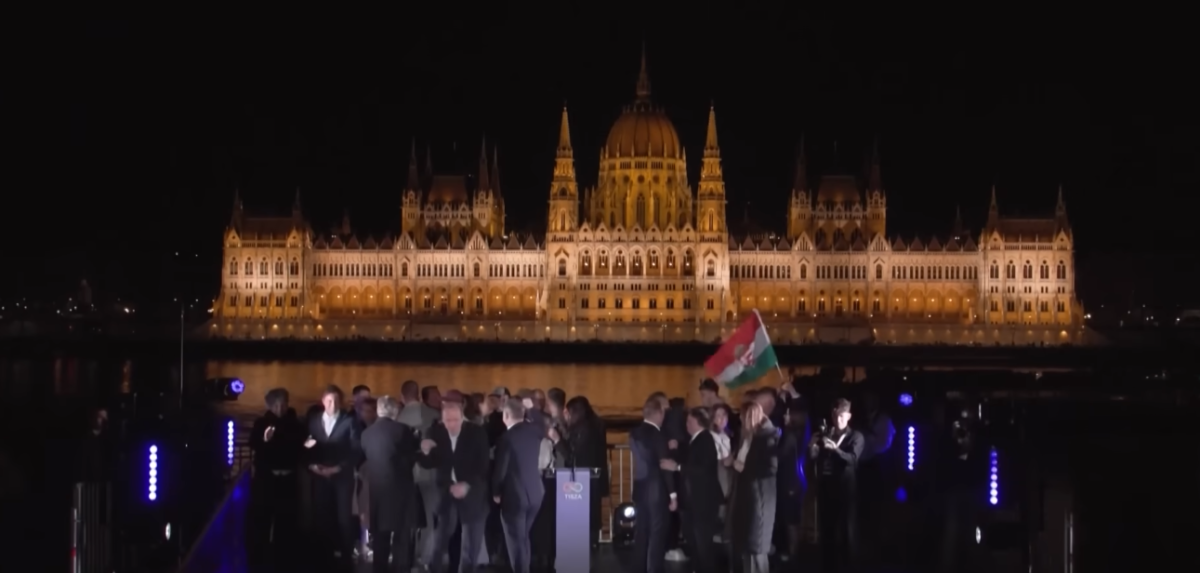
The defining image of the campaign wasn’t a stiff press conference. It was Péter Magyar standing before a sea of supporters with the neo-Gothic Hungarian Parliament glowing like a golden palace behind him. This visual—mixing historic grandeur with modern democratic energy—has done more for Budapest’s “cool factor” than a decade of tourism board spending.

“The surge in interest isn’t just about politics; it’s about the ‘vibe’ shift. Travelers want to be where history is being made, especially when it looks this good on camera.”

The “Dancing Minister” Phenomenon

If you’ve been on TikTok this week, you’ve seen him. Zsolt Hegedűs, the likely candidate for Health Minister, became an overnight sensation for his uninhibited, celebratory dance moves on the victory stage. Dubbed the “Dancing Machine Politician” by international media, his joy has humanized the new administration and painted a picture of a welcoming, vibrant, and optimistic Hungary.

For younger travelers, this “viral joy” is an invitation. Budapest is no longer seen through a lens of “stuffy politics,” but as a city that is safe, progressive, and alive with celebration.

Economic Optimism and “Democratic Tourism”

Beyond the viral clips, there is a tangible “Magyar Effect” on the economy. With a pro-EU government in the wings, the Forint is stabilizing and investor confidence is peaking. This is giving rise to “Democratic Tourism”—a trend where international visitors choose a destination specifically to support its new, hopeful direction.

Hotels in the capital report a significant uptick in bookings from Western Europe and North America, with many visitors citing the “joyful energy” of the recent news coverage as the primary reason they finally clicked “book.”

A New Chapter for the Danube

As the “New Hungary” takes its first steps, the tourism sector is the first to reap the rewards of this global rebranding. With its combination of historic grandeur and newfound cultural momentum, Budapest is the pulse of a changing Europe. 2026 isn’t just the year of the election; it’s the year the world fell back in love with Hungary.

Budapest’s Aviation Revolution: Comparing the 2019 Benchmark with the 2024–2025 Surge

The story of Central European tourism over the last six years has been one of dramatic peaks, devastating valleys, and a recovery so aggressive it has caught many industry experts by surprise. For Budapest, the “Pearl of the Danube,” the journey from the record-breaking heights of 2019 through the silence of the pandemic to the current operational realities of 2025 reveals a city that has not only recovered but is fundamentally reinventing its role as a regional powerhouse.

As we look at the data today, the question is no longer “When will tourism return?” but rather “How will the city manage this unprecedented influx?” With neighboring Vienna reporting that 2025 was its busiest year in history, all eyes are on Budapest to see if it has kept pace with its imperial rival.

The 2019 Golden Era: A High-Water Mark

To understand the current boom, we must first look at the pre-pandemic landscape. In 2019, Budapest Ferenc Liszt International Airport (BUD) was on an unstoppable trajectory. It was the year of “over-tourism” headlines, with the airport handling a record 16.2 million passengers.

At that time, Budapest had solidified its reputation as the ultimate value-for-money destination in Europe. Travelers flocked to the city to walk along the UNESCO-listed banks of the Danube, indulge in Michelin-starred dining overlooking the river, and explore the burgeoning ruin bar scene. It was a year of unbridled growth, where the only concern was whether the city’s infrastructure could hold the weight of its own success. Then, the world stopped.

The 2024–2025 Recovery: Breaking the 2019 Ceiling

The “lost years” of 2020–2022 saw passenger numbers plummet, but the rebound that began in late 2023 reached a fever pitch in 2024. By the end of 2024, Budapest had successfully clawed back to its pre-pandemic volume, ending the year with approximately 16.2 million passengers—matching the 2019 record almost to the person.

However, it is the 2025 data that has truly rewritten the record books. While 2019 was a peak, 2025 has become a new plateau. Current projections and year-to-date figures show that Budapest has shattered the 17-million barrier, heading toward 18.5 million passengers by year-end.

Passenger Traffic Comparison: Budapest Airport (BUD)

YearTotal PassengersYear-over-Year ChangeStatus
201916,173,489+8.8%Pre-COVID Record
2024~16,200,000+10.2%Full Recovery
2025 (Est.)18,500,000+14.2%All-Time Record

Is Tourism Booming Again?

The numbers provide an emphatic “yes,” but the nature of the boom has changed. In 2019, growth was heavily driven by Western European city-breakers looking for cheap beer and nightlife. In 2025, the demographics have shifted toward a more diverse and higher-spending traveler.

People are still coming to Budapest for the classic experiences—to walk the Chain Bridge or have a meal at the Danube—but there is a sophisticated new layer to the tourism scene. There is a massive surge in interest regarding Hungarian viticulture; experts suggest that visitors are increasingly coming specifically to taste the six iconic wines of Hungary, moving the city away from its “party capital” image and toward a “culinary destination” status.

What is Driving the Trend?

Several factors explain why Budapest is currently outperforming its 2019 self:

  1. The Connectivity Surge: Following the pandemic, Budapest Airport aggressively courted long-haul carriers. 2025 has seen an increase in direct flights from China, the Middle East, and North America. Budapest is no longer just a destination; it is becoming a transfer hub for travelers moving between Asia and Central Europe.
  2. Major Events: The completion of the MVM Dome and the National Athletics Centre has allowed Budapest to host massive international events that weren’t on the calendar in 2019. Each major concert or sporting event brings a surge of 50,000+ passengers in a single weekend.
  3. The “Schengen-Plus” Appeal: As security and stability become higher priorities for global travelers, Budapest is perceived as one of the safest and most stable capitals in Europe, drawing traffic away from other traditional Western European hubs.

Infrastructure: The New Terminal and Future Growth

The current boom has pushed Terminal 2A and 2B to their absolute limits. The rumors of expansion are no longer just whispers; they are official policy. To handle the projected 25 million annual passengers expected by 2030, the airport is moving forward with the reopening of Terminal 1 for low-cost carriers and the massive development of Terminal 3.

This new infrastructure will be a “smart terminal,” utilizing biometric boarding and high-speed rail links to the city center. This expansion is essential because, as the 2025 numbers show, the demand for Budapest is currently growing faster than the airport’s physical capacity.

Navigating the Influx: Airport Transfers

With the airport reaching record capacity, the arrival experience can be overwhelming. The taxi queues at the airport have grown alongside the passenger numbers, making pre-booked transportation more of a necessity than a luxury in 2025.

For those arriving at Liszt Ferenc International and looking for a seamless start to their trip, a private driver is often the most efficient choice. You can find detailed information on Budapest airport transfer prices and private bookings to avoid the crowds at the arrivals hall.

The Verdict: Budapest vs. The Region

Is Budapest fading in the shadow of Vienna? Quite the opposite. While Vienna remains the “corporate” gateway to the region, Budapest has positioned itself as the “lifestyle” gateway. The 14% growth rate seen in 2025 suggests that Budapest is actually capturing a larger share of the “leisure and luxury” market than it did in 2019.

The city is no longer just recovering; it is thriving in a new era of tourism. Whether it is the lure of a sunset cruise on the Danube, the world-class shopping on Andrássy Avenue, or the complex flavors of a glass of Tokaji, Budapest has proven that its appeal is pandemic-proof. As we look toward 2026, the numbers suggest that the “Pearl of the Danube” is only just beginning its newest and most successful chapter.