The “Dancing Minister” & The Danube: Why Budapest is Suddenly the World’s Hottest Vibe Check

In the wake of the April 2026 elections, Budapest is experiencing more than just a political transition—it’s having a full-blown “main character” moment. The landslide victory of Péter Magyar and the Tisza Party has ignited a global obsession with the “Pearl of the Danube,” turning political rallies into travel ads that are currently breaking the internet.

The Iconography of Change

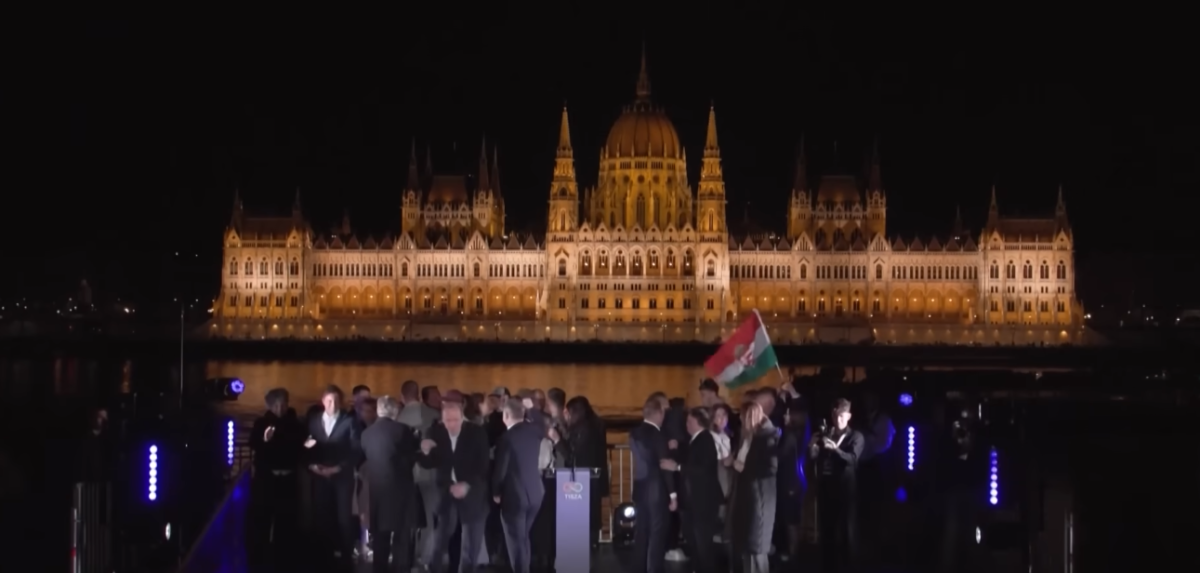
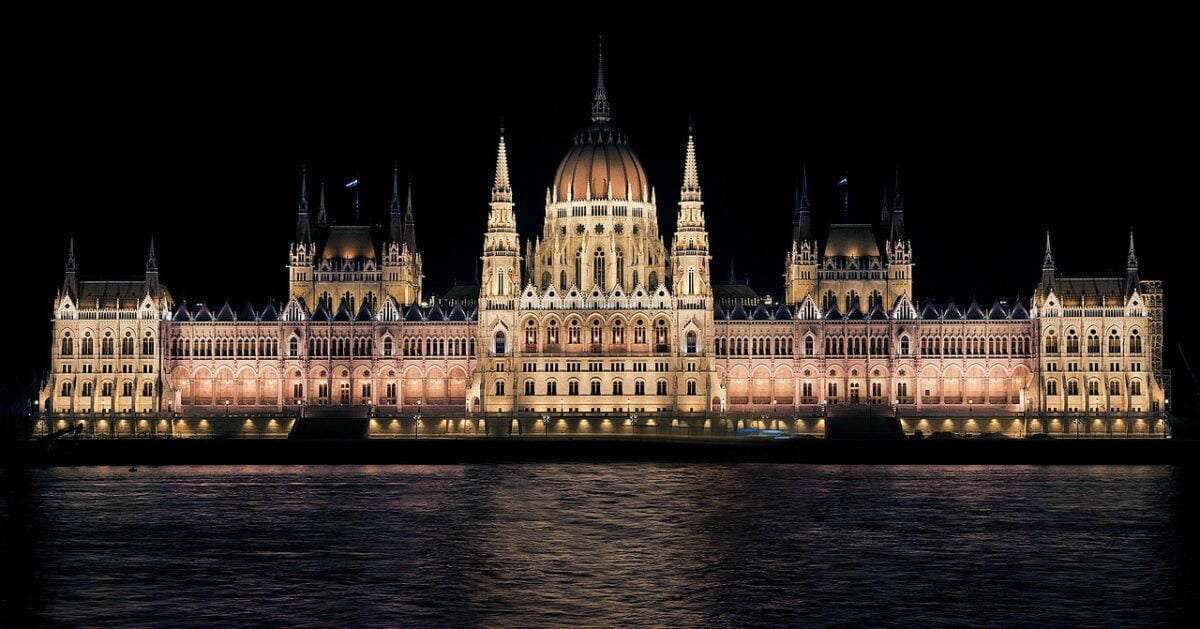
The defining image of the campaign wasn’t a stiff press conference. It was Péter Magyar standing before a sea of supporters with the neo-Gothic Hungarian Parliament glowing like a golden palace behind him. This visual—mixing historic grandeur with modern democratic energy—has done more for Budapest’s “cool factor” than a decade of tourism board spending.

“The surge in interest isn’t just about politics; it’s about the ‘vibe’ shift. Travelers want to be where history is being made, especially when it looks this good on camera.”

The “Dancing Minister” Phenomenon

If you’ve been on TikTok this week, you’ve seen him. Zsolt Hegedűs, the likely candidate for Health Minister, became an overnight sensation for his uninhibited, celebratory dance moves on the victory stage. Dubbed the “Dancing Machine Politician” by international media, his joy has humanized the new administration and painted a picture of a welcoming, vibrant, and optimistic Hungary.

For younger travelers, this “viral joy” is an invitation. Budapest is no longer seen through a lens of “stuffy politics,” but as a city that is safe, progressive, and alive with celebration.

Economic Optimism and “Democratic Tourism”

Beyond the viral clips, there is a tangible “Magyar Effect” on the economy. With a pro-EU government in the wings, the Forint is stabilizing and investor confidence is peaking. This is giving rise to “Democratic Tourism”—a trend where international visitors choose a destination specifically to support its new, hopeful direction.

Hotels in the capital report a significant uptick in bookings from Western Europe and North America, with many visitors citing the “joyful energy” of the recent news coverage as the primary reason they finally clicked “book.”

A New Chapter for the Danube

As the “New Hungary” takes its first steps, the tourism sector is the first to reap the rewards of this global rebranding. With its combination of historic grandeur and newfound cultural momentum, Budapest is the pulse of a changing Europe. 2026 isn’t just the year of the election; it’s the year the world fell back in love with Hungary.

Is Viktor Orbán as Bad as International Media Says? Understanding Hungary’s Political Landscape as a Visitor

When planning a trip to Budapest or anywhere in Hungary, many curious tourists come across headlines about the country’s Prime Minister, Viktor Orbán. Some paint him as a defender of national interests, others describe him as a strongman dismantling democratic norms. So what’s really going on — and does it matter for your visit?

Let’s explore the topic with a balanced lens.


Who is Viktor Orbán?

Viktor Orbán has served as Hungary’s Prime Minister since 2010 (and earlier from 1998–2002), and he’s one of Europe’s longest-serving elected leaders. He is the head of the Fidesz party and is known for his nationalist, conservative policies. His government promotes “illiberal democracy” — a term Orbán himself has used — focusing on Hungarian sovereignty, Christian values, and strict immigration control.


Why is He So Controversial?

The international media often criticizes Orbán for:

  • Centralizing power: Critics argue that Orbán has weakened the independence of the judiciary and other checks and balances.
  • Controlling the media: State-owned media largely support the government, and many independent outlets have either shut down or been bought by allies of the ruling party.
  • Anti-LGBTQ+ and migration stances: His policies have sparked protests and concern from EU institutions.
  • Tensions with the EU: Orbán’s government often clashes with Brussels on issues like rule of law, media freedom, and minority rights.

Supporters, on the other hand, argue that:

  • Orbán defends Hungary’s national identity and values at a time when many feel Western Europe is too liberal or globalist.
  • His economic policies have improved infrastructure and reduced unemployment (although critics point out these benefits haven’t been equally distributed).
  • He resists outside pressure from Brussels or Washington, which some Hungarians see as foreign interference.

What About the Media in Hungary?

Hungary’s media landscape has changed drastically in the last decade. Most major television channels, radio stations, and newspapers are now either state-run or owned by government-friendly businesses. While there are independent outlets, they face financial and political pressure, making it harder for dissenting voices to reach the general population.

This means that many Hungarians get a very different picture of world events than people elsewhere in Europe.


Should You Worry as a Tourist?

In short: no. Despite the political climate, Hungary — and Budapest especially — remains a safe and welcoming destination for tourists. Politics rarely affect visitors. You’ll find warm hospitality, a vibrant culture, fantastic architecture, thermal baths, and delicious food. People in Hungary may have strong political opinions, but they’re just as likely to want to share a bowl of gulyás and a glass of pálinka as they are to debate government policy.


A Final Thought

Understanding a country’s politics adds context to your travels — but it doesn’t have to define them. Viktor Orbán is a divisive figure at home and abroad, and while some criticisms are valid, the full picture is complex.

Hungary is more than its politics. So come, enjoy Budapest, keep your eyes open — and if you want to understand more, talk to locals, read from different sources, and form your own opinion.

For more insights and travel tips, visit our Budapest Guide.

Election in Hungary on April 8th

On this upcoming Sunday, on April 8th, it is time for elections in Hungary. Do you need to know anything about the election if you come to Hungary?

If you come to Hungary as a tourist, you will most likely not even notice that it is election day. You will for sure see political posters and commercials here and there (Vote for me etc…), but nothing else besides that. But, as the results are made public, you might start to see some reactions on the faces of the people.

Election in Hungary

Fidesz, the party led by Prime Minister Viktor Orban, are the favorites to win the election over again, and thus continue their reign in Hungary. They have led the nation in the last eight years, and due to changes they made to the voting laws, it is very hard to get rid of them. Lots of changes have been made, but on Sunday the most important change might be that the opposing political parties cannot create coalitions after the vote, only before. In other words, if Fidesz ends up getting 40% of the votes, Jobbik gets 15% (the right extreme party) and all left side parties get a total of 45% of the votes, then Fidesz has won in the given area. In that way the force the opposition parties to cooperate before the voting, but that is very hard, and thus this is strengthening the position of Fidesz in Hungarian politics.

The most important subject in the political campaign (of Fidesz) leading up to the election has been migration policy. They are very condemning the political statements given from the EU headquarter in Brussels, and they are clear that Hungary will not be invaded by dangerous migrants destroying the Hungarian culture and religion. But, a lot of people consider these political statements as more of a way to scare the Hungarian citizens (which will result in them voting for Fidesz), than how much it has to do with reality and what’s going on.

What to expect after the election?

It can turn out in any way. Some people believe people will go to the streets if Fidesz loses the election. Other people believe the opposition will go to the streets if Fidesz wins again. It is hard to predict, but pay attention to the news wherever you might be to get a final update on the election results! Some people also predict that Hungary might be forced to leave the EU if Fidesz continues their reign, but it is truly hard to understand what is going on. Media in Hungary is in large part controlled by friends of the government, and for that reason, the news we are served are heavily filtered (except for a few places). We have an old article here called “An introduction to Hungarian Politics.” It is a bit out of date, but the basics are still the same. Read it if you have the time and want to understand more about what’s going on in the country.

If you have comments or questions, use the comment field beneath.

Revolution day in Hungary – October 23rd

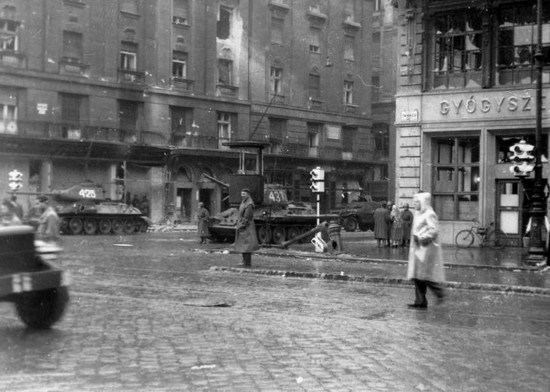
Today is the national day of Hungary and October 23rd is the day of the uprising against the communists in 1956. The revolution did not last for too long, but the spirit of the Hungarians still live and their courage to stand up against the communists gave courage to other nations around the world, even though it did not succeed the way the Hungarians hoped for.

Revolution in 1956
Revolution in 1956 – picture from fortepan

October 23rd is now one of three national days in Hungary, and on October 23rd people have the chance to relax at home and maybe go out into the city to buy an ice cream, eat some chimney cake and of course take part in one of many demonstrations in town.

There will be lots of political demonstrations in Budapest today, the biggest one probably arranged by the Elisabeth Bridge on the Pest side from 15.00. Quite some of the demonstrations are arranged by the left side in Hungary trying to protest and stand together against the right side which is currently leading the nation, but the right side will also have their gatherings today. If you want to understand more about Hungarian politics, why not read this interesting article on the subject of Hungarian politics.

All shops are closed in Budapest today, but restaurants, confectioneries, cinemas and museums are mostly open!

An introduction to Hungarian politics

To write an introduction to Hungarian politics is a very dangerous task, and a very hard task. In some nations politics might be a nice subject to speak about during dinners and in a coffee break at work. In Hungary politics is a dangerous subject which can turn friends, colleagues and lovers against one another. It can also make friends out of enemies if you suddenly find out that your enemy shares your thoughts on Hungarian politics. Still, I will try to give an introduction to the politics in Hungary in this article. The goal is not to influence people in any way, neither is this article meant to be read by Hungarians, but the goal is to help people from outside Hungary to get some more insight in the political life of Hungary, in a simple and short way (if that is possible).

I could go far back in history, but I will start it all on May 1st, 2004. That is the date when Hungary became a member of the European Union, together with nine other nations. In those days Hungary was predicted to become a successful EU nation within few years, and they spoke about getting the Euro already in 2008. That did not succeed, and the Euro has still not come to Hungary. What is the background?

hungarian parliament

Divided between left and right

Some people have suggested that Hungary would need leaders who are specialists in their field (economy etc…) to set the direction for the country. In other words, professional leaders not influenced by the politics of the Hungarian right or left side. The problem is that politics in Hungary is something you get served on a daily basis from your birth through television, newspapers, teacher and radio. Your parents, your teachers, your neighbor… everyone shares their opinion about politics, and therefore you will it very hard to stand objective if you have lived in the country for a while. You will find yourself under the influence of either the left or the right side. Therefor an objective person in Hungary is hard to find, very hard!

Once I spoke to a Hungarian who said he listened to two different radio channels one morning, and even though both channels spoke of the same matter, they said something completely different. It almost felt as if they were speaking about two different nations. Against this proves the fact that you will find yourself under the influence of what you listen to. In Hungary you can divide the political world to a left side (LMP, MSZP, DK) and to a right side (Fidesz, Jobbik). Here comes one of the first problems. If you read the newspapers and blogs related to the political left side of Hungary you will hear that Jobbik and Fidesz are quite good friends, and that the Hungarian Prime Minister is not at all separating himself enough from the radical extreme party named Jobbik. If you read the newspapers and blog related to the right side you will see that they often write of Jobbik and Fidesz as two total opposites, far away from one another. It is for sure true that Jobbik is a quite extreme and radical right side party, but related and friends of Fidesz or not… it depends on who you talk to!

The economical crisis in Hungary

In 2008 and since then the nation of Hungary has had large problems. Not only the individuals living in the nation, but also on a national scale Hungary has needed to make large adjustments. But who’s fault is this? Read and speak with the people from the left side, and they will blame the right side. They will claim that the country had large problems after the right sided rule between 1998 and 2002, and thus it was a giant work to get things in order. As they started getting things in order and to get the economy back on track, the right side still made things impossible. As the left side wanted to make reforms to get more money to hospitals, education and so on (making people pay small amounts of money to visit their doctors, lay in hospital, study in university), the right side gathered signatures and a voting was on the verge. The voting was the most stupid I have ever heard about in history. It had three questions: Do you want to pay to go to the doctor? Do you want to pay to lie in hospital? Do you want to pay to study? None has ever wanted to pay for anything in history, and thus with a giant win all three reforms were turned down. The left side sais that in this way it was impossible to do anything in the country, and the right side led by Viktor Orban were the ones to be blamed. If you read the newspapers, blogs and TV channels led by right sided people, the story will sound totally different. The communist ideal of everything included once you pay your taxes could be heard often, and also that they did not want the people to pay for the stupid ideas of the leaders back then.

Revolution in 2006

In 2006 the Hungarians celebrated the 50 year anniversary of the revolution in 1956, where the Hungarians stood up against the communists. Another revolution was also on the rise in the autumn of 2006, the new Hungarian revolution. A recording of a speech made by Ferenc Gyurcsany at a private political meeting, the prime minister in Hungary at that time, was leaked to the press and it had some interesting words and sentences in it. He spoke of how they had lied to the people of Hungary, and how they had not done anything at all (his party had then been leading the nation for the last four years, and had recently won the right to rule for four more years). Not only did he say this, but he cursed and used some really bad words…The people heard the recording and at once they demanded that he should step back from his post as Prime Minister of Hungary. He did not, and this lead to lots of demonstrations, which again lead to riots in the city on October 23rd in 2006 and the days after.

After this event the popularity of the left side sank to the bottom, and during the election of local politicians in the same year, the right side led by Fidesz won in almost all cities and regions of Hungary.

What to think about this?
Both sides reacted to the speech of Ferenc Gyurcsany that was leaked to the press, and the right side claimed that he finally said what is true; the left side did nothing and they lied to the people of Hungary. The left side claimed that what the Prime Minister spoke about was that none ever did anything in Hungary since the fall of communism, and enough was enough. It was time for politicians to stop lying and to start making changes in the country. After this scandal the right side constantly left the Hungarian Parliament during the discussions inside; why listen to a left side and a Prime Minister that is lying? Therefore it was always only a half full Parliament during discussions following this event.

Political situation in present day Hungary

Since 2010 lots of things have changed in Hungary. During the election back then Fidesz led by Viktor Orban won and alone they got 2/3 of all representatives in the Hungarian Parliament. Thus the party can do whatever they want, since 2/3 can do anything, even change, add and remove the laws in the constitution. The other parties are all represented in the Parliament, but they can not really make any difference, as Fidesz alone can control everything. On the left side you can hear radio and TV say that Hungary is the only democratic nation ever to vote for dictatorship to return. On the right side in the political world you can hear about how Fidesz now try to make up for the eight years of destruction made by the left side between 2002-2010, and how the only way to get Hungary out of the financial crisis and the present day troubles was to give one party all power in the nation. In that way they can do all the necessary changes without any one else destroying and interrupting (like the left side claim the right side did some years earlier). Again, it all depends on what newspapers you read, who you speak with and what TV channel you watch.

The current rulers of the country (Fidesz) have changed quite some laws and added and changed things in the constitution since 2010. One important change is that if anyone would like to make changes to the constitution, they will need 2/3 of all votes in the Parliament during one reign (4 year period), and then the law needs to be accepted during the next 4 year period by 2/3 of the Parliament. This is of course only valid for changes happening later, and the changes they have currently made does not need to be accepted by anyone else during the next reign, they are written in stone! They have also made changes to laws about the rights of the employees and the employers, about how the elections in the country are going to be, about the age of judges and lots of other stuff. Maybe these laws are helping Hungary back on track, or maybe it is leading Hungary back into dictatorship? Who knows, but time will show.

In the start of the article I said that my goal was to simply give some insight into the present day political situation in Hungary. I realize that it is an impossible task to do so, but I still hope that if you have managed to read through this entire article, that you have gotten some insight into the situation, and maybe some more understanding of what is going on in the beautiful country of Hungary. If you agree, disagree, have questions or whatever, feel free to write in the comment field.