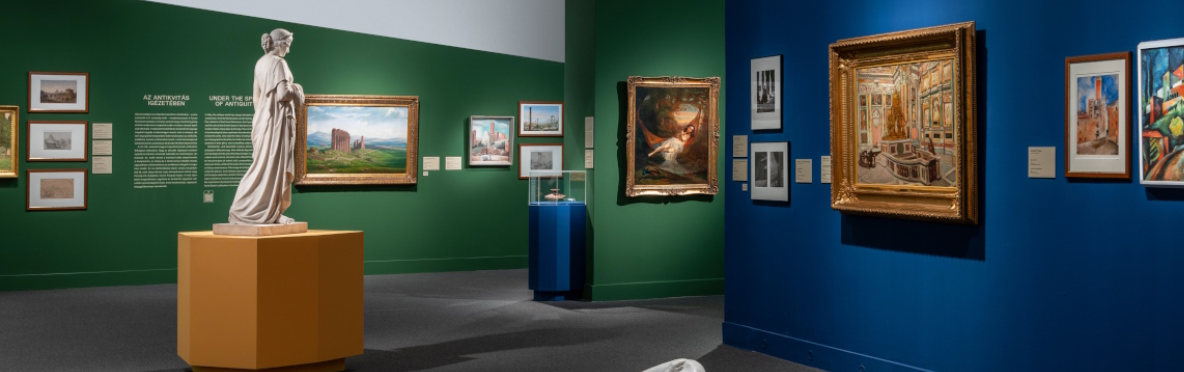
The National Gallery in Budapest is hosting a temporary exhibition titled Dolce Vita. Impressions of Italy in Two Centuries of Hungarian Art. Part of the Bartók Spring International Art Weeks, this collection showcases around 150 works by 75 artists, including paintings, prints, photographs, sculptures, objects, and archaeological artefacts. The display spans from the nineteenth century to contemporary art, illustrating how Italy has remained an eternal theme and a popular destination for Hungarian travellers and creators alike.
For centuries, individuals have made pilgrimages to Italy, drawn by its sunlight, coastal aromas, wine, and coffee, alongside historic relics of antiquity and exemplary Renaissance and Baroque architecture. This collective Italian experience has served as a constant source of inspiration. For historical figures like János Vaszary, Italy represented a landscape of color, light, movement, and life. While nineteenth-century artists like Antal Ligeti and Károly Markó the Elder studied the Old Masters and captured mythical landscapes, twentieth-century artists like Vilmos Aba-Novák, Aurél Bernáth, and Emese Benczúr shifted toward loose, gestural depictions of everyday life, seaside beaches, and contemporary pop-cultural topoi.
Exhibition Details and Planning
- Location: Ground floor, temporary exhibition space, National Gallery, Budapest
- Timeframe: 8 April – 23 August 2026
- Price: Not specified in the exhibition announcement
To learn more about the venue, its history, and permanent collections, you can find more information about the museum online. Additionally, if you want to explore other events, cultural festivals, or seasonal showcases taking place throughout the city during your visit, check out more information about what’s going on in Budapest.
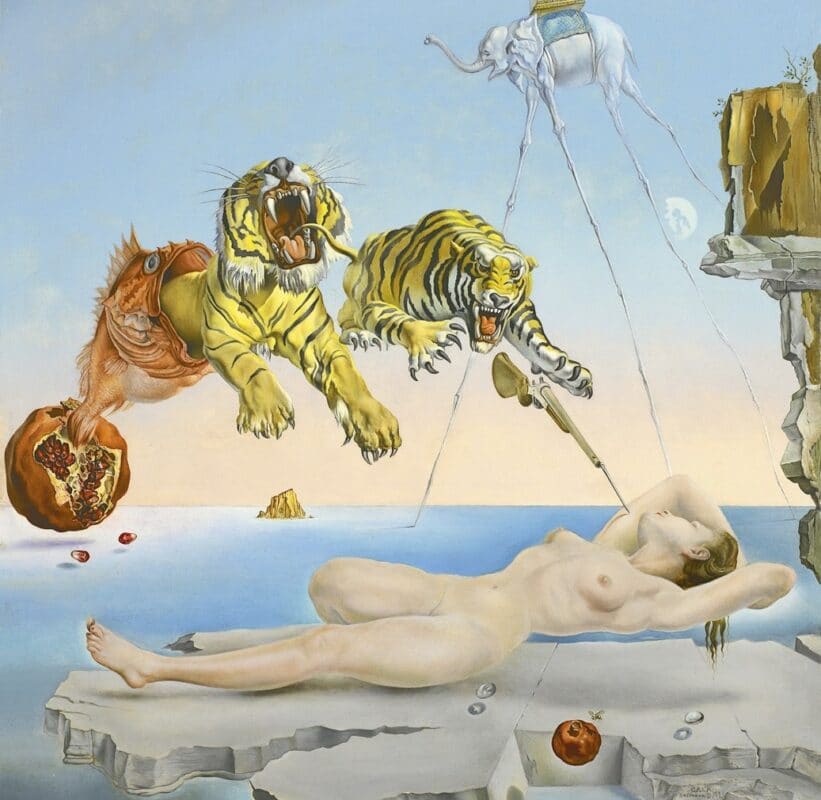
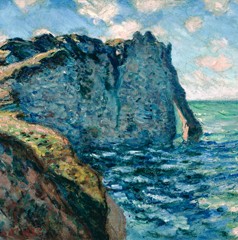 The exhibition is special in several ways. First of all, this is the reunited Museum of Fine Arts’ and National Gallery’s first common exhibition. The other reason is, the Israel Museum have big part in the exhibition’s life. The institution in Jerusalem and the Hungarian Museum of Fine Arts have worked together earlier, when the Holy Land’s Heritage exhibition was in Budapest in 2009 and at the same time the Israel Museum showed Hungarian graphics to its audience.
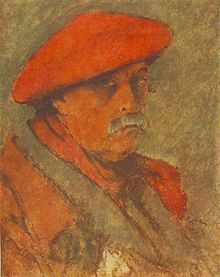
 János Thorma was a Hungarian painter who was born in 1870. He was an influential artist in his age. He founded the art colony of Nagybánya. He used several different styles on his works, like naturalism, historical paining, romantic realism and the individual post-impressionism of Nagybánya.
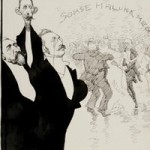 Maybe not everybody interests about the typical exhibitions, where the exhibited painting, sculptures and other objects could be incomprehensible, or the exhibited objects from the different historical ages are boring. Well, we have a good news for those, who come to the capital of Hungary, Budapest, because in the most famous gallery of the city, in the National Gallery, a wonderful and funny exhibition waits for the visitors from the work of the Hungarian caricaturist, József Faragó.
 We do not have a full list of museums open in this period, but here you can find some general information which will hopefully help you. What we can tell is this general information: