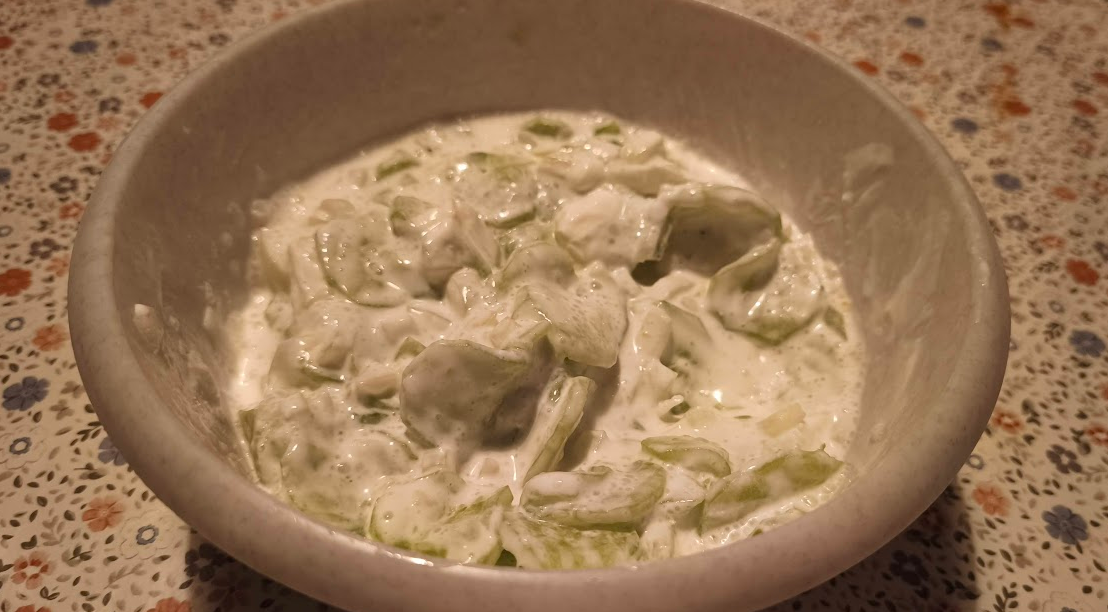
How to Make the Cucumber Salad With Sour Cream That You Loved in Budapest

You know the feeling.

You sit down in a cozy Hungarian restaurant in Budapest. Maybe you ordered a giant Wiener schnitzel bigger than the plate itself. Maybe it was a rich beef stew with dumplings. And then… next to it comes that cucumber salad with sour cream.

Cold. Garlicky. Creamy. Fresh. Slightly sweet. Slightly sour. Crunchy enough to wake up your entire soul.

🥒💥

And suddenly you realize:
“Why is THIS side dish stealing the show?”

The good news? You can make it at home in about 10 minutes of actual work.

The dangerous news? Once you start making it, you may never stop.


The Legendary Hungarian Cucumber Salad (Uborkasaláta)

This is the version many Hungarians grow up eating. It is simple, cheap, and absurdly satisfying.

Ingredients

  • 1 cucumber (the long “snake cucumber” / kígyóuborka style)
  • 1 small onion
  • 0.5 tablespoon salt
  • 1 tablespoon sugar
  • 1 tablespoon vinegar
  • 1 dl sour cream
  • 1 garlic clove (crushed)

Step 1 – Slice the Cucumber and Onion

🥒 Thin slices are the secret.

Slice the cucumber as thin as possible. If you have a mandoline slicer, now is its time to shine. Slice the onion thinly as well.

Put both into a bowl.

Add:

  • the salt
  • the sugar

Mix everything together.

Now leave it alone for 30 minutes.

This is where the magic begins. The cucumber starts releasing lots of water, becoming softer while still keeping some crunch.

Your kitchen will already start smelling like a Hungarian grandma is secretly cooking nearby.


Step 2 – Make the Creamy Dressing

🧄 In another bowl, mix together:

  • sour cream
  • vinegar
  • crushed garlic

That’s it.

Simple ingredients. Massive flavor.

The garlic is extremely important here. Without garlic, it tastes good. With garlic, it tastes like Budapest.


Step 3 – Squeeze Out the Water

💪 This part matters more than people think.

Take the cucumber-onion mixture and squeeze out as much liquid as possible.

If you skip this, the salad becomes watery and sad.

If you squeeze properly, it becomes creamy and addictive.


Step 4 – Mix Everything Together

Add the cucumber and onion mixture into the sour cream dressing.

Stir everything well.

Now place it in the refrigerator for at least one hour.

Yes, waiting is painful.
But this hour changes everything.

The flavors blend together beautifully, and the salad becomes cold, creamy, and ridiculously refreshing.


What Should You Eat It With?

🍽️ Almost everything.

This cucumber salad is legendary next to:

  • Wiener schnitzel
  • Goulash
  • Fried chicken
  • Stews
  • Grilled meat
  • Potatoes
  • Even bread

Some people honestly eat it directly from the bowl with a spoon at midnight while standing in front of the fridge.

No judgment here.


Why Hungarians Love It So Much

Hungarian food is often rich, heavy, meaty, buttery, paprika-filled, and glorious.

This cucumber salad cuts through all that richness perfectly.

The cold sour cream cools everything down.
The vinegar wakes up your taste buds.
The garlic punches you gently in the face.
The cucumber keeps it fresh.

🥒❤️

It is basically the side dish equivalent of air conditioning during a Budapest heatwave.


Want the Real Experience in Budapest?

Of course, making it at home is fantastic.

But eating it in an authentic Hungarian restaurant in Budapest while hearing plates clatter, people laugh loudly, and waiters carrying giant schnitzels past your table? Different level entirely.

If you want the real deal, read more about famous Budapest restaurants such as:

cucumber salad in a budapest restaurant

And honestly… once you taste the cucumber salad there again, you will probably order extra bread just to clean the bowl afterward.
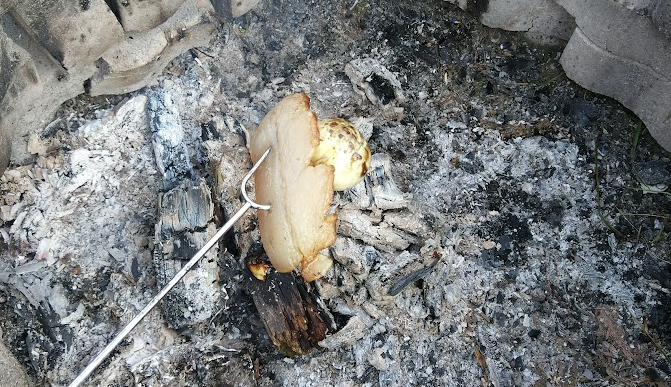
Szalonnasütés – Hungary’s Smoky, Greasy, Surprisingly Brilliant Tradition

If you ever find yourself in Hungary on a warm evening, somewhere near a lake, forest, or random backyard, chances are you’ll stumble upon a group of people standing around a fire… holding sticks… slowly roasting what looks like a thick slab of bacon. Congratulations — you’ve just discovered szalonnasütés.

So what is it?

At its core, szalonnasütés means roasting bacon (szalonna) over an open fire. But calling it “just cooking bacon” is like calling a football match “just kicking a ball.” It’s a full-blown social ritual. Friends gather, firewood crackles, someone inevitably brings a guitar, and the evening slowly turns into a mix of storytelling, laughter, and slightly overcooked onions.

How does it work?

You take a chunk of cured pork fat (often with some meat attached), stick it on a skewer, and hold it above the fire. As the fat melts, it drips down onto a slice of bread below — typically topped with chopped onions, maybe paprika, peppers, or tomatoes.

Yes, you read that right: hot bacon fat dripping onto bread.

And honestly? It’s glorious.

Wait… is that even healthy?

Let’s not pretend this is a kale smoothie.

Szalonnasütés is definitely high in fat and calories, but here’s the twist: it’s not automatically worse than what many people eat daily. Traditional Hungarian bacon is often minimally processed compared to industrial spreads. That brings us to the big question…

Bacon fat vs. margarine — which is worse?

Surprisingly, the answer isn’t as obvious as you’d think.

  • Szalonna (bacon fat): Natural animal fat, rich in saturated fats, but usually less processed.
  • Cheap margarine: Often heavily processed, sometimes containing trans fats (depending on quality), and made from refined vegetable oils.

In moderation, many would argue that real, traditional fat is actually preferable to low-quality processed spreads. Your body at least knows what it’s dealing with.

Of course, moderation is the key word here. Eating dripping bacon fat every night? Not ideal. Enjoying it occasionally by a fire with friends? That’s a different story.

Is it disgusting?

This depends entirely on your mindset.

If you’re used to clean, neatly packaged supermarket food, the idea of fat dripping onto bread might sound… questionable. But once you try it, something clicks. The smoky flavor, the crispy edges, the warm bread soaking up all that goodness — it’s rustic, messy, and incredibly satisfying.

It’s also deeply human. Cooking over fire is about as ancient as it gets.

More than just food

Szalonnasütés isn’t really about nutrition charts or food trends. It’s about slowing down, being outdoors, and sharing something simple with others. No fancy equipment, no complicated recipes — just fire, food, and good company.

And maybe that’s why Hungarians love it so much.

Because sometimes, the best meals aren’t the healthiest or the prettiest… but the ones you remember the longest.

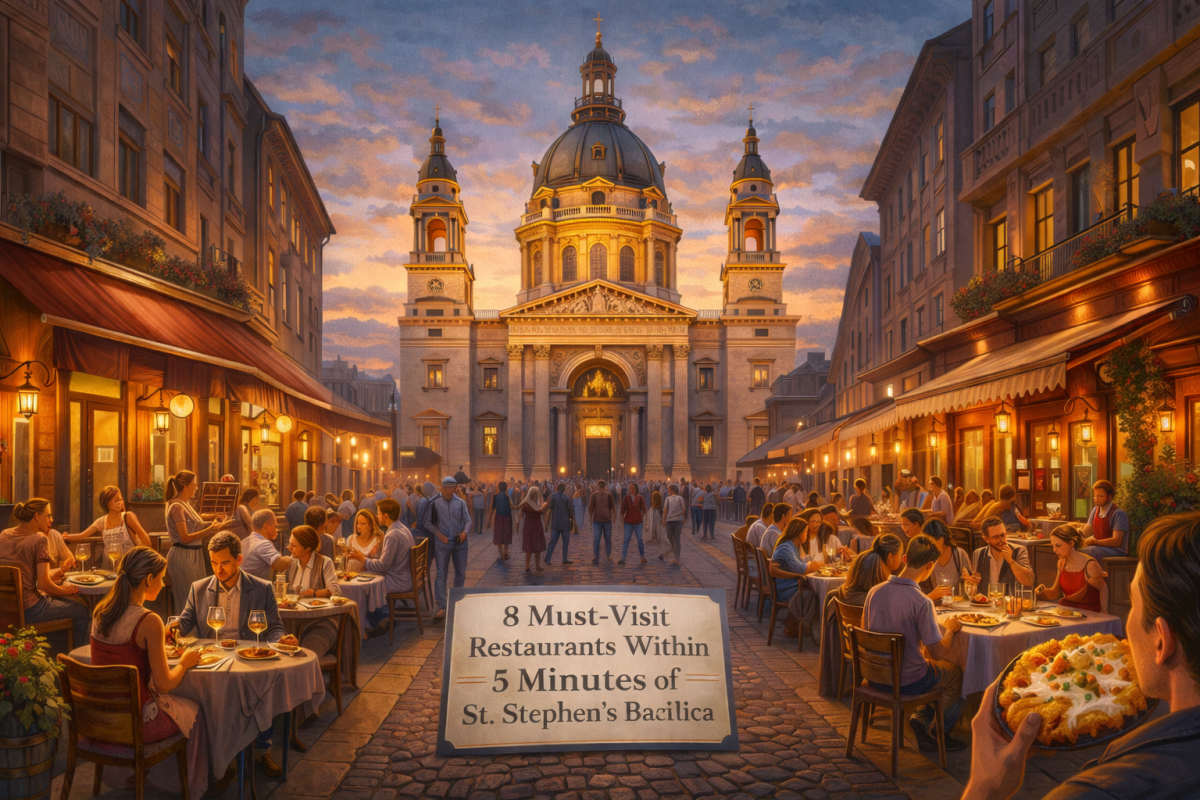
8 Must-Visit Restaurants Within 5 Minutes of St. Stephen’s Basilica

If you are standing in front of the magnificent St. Stephen’s Basilica, you aren’t just at the religious heart of Budapest—you’re in the center of its culinary universe. Within a 5-minute walk of that giant dome, you can find everything from Michelin-starred masterpieces to the best $5 pizza in Central Europe.

But with so many “tourist traps” lurking in the side streets, where should you actually spend your Forints? Here is our hand-picked guide to the 8 best spots near the Basilica for 2026.

1. The Gourmet Choice: Aszú Restaurant

If you want the “wow” factor without the stiff formality of traditional fine dining, Aszú is the place. Named after the legendary Tokaj wine, it specializes in “reimagined” Hungarian classics. It has one of the best terraces in the city for people-watching and a wine list that would make a sommelier weep with joy.

2. The Traditional Legend: Rézkakas Bistro

Located directly across the street from Aszú, Rézkakas is for those who want the classic, opulent Hungarian experience. Expect dark wood, impeccable service, and some of the best live cimbalom music in the city. It’s traditional luxury at its finest.

3. The Michelin Star: Borkonyha (Winekitchen)

Just a few doors down from the Basilica, Borkonyha has been a staple of the Budapest food scene for years. It’s a Michelin-starred kitchen that manages to feel like a relaxed French bistro. The menu changes constantly based on the freshest ingredients available.

  • Vibe: High-end gastronomy in a “no-frills,” bustling atmosphere.
  • The Secret: It’s famous for its massive wine selection (over 100 labels!).
  • More Info: https://borkonyha.hu/

4. The Artistic Sibling: Textúra

Founded by the same team behind Borkonyha, Textúra is located right next door. While its big brother focuses on wine, Textúra is all about—you guessed it—texture and playfulness. It features a stunning “tree” sculpture in the center and a living moss wall.

  • Vibe: Experimental, avant-garde, and visually stunning.
  • Perfect For: Foodies who want to see “science” on their plate.

5. The Italian Master: Forni di Napoli

Sometimes you just need a break from heavy paprika and cream. Forni di Napoli (on Október 6. utca) serves what many locals consider the best Neapolitan pizza in the district. Their ovens are searingly hot, and their dough is light as air.

6. The Asian Fusion: Quí

If you’re craving spice, head to Quí on Arany János utca. It’s a contemporary Thai and Vietnamese powerhouse. The interior is dark and moody, making it one of the “coolest” spots for a late-night dinner near the Basilica.

  • Vibe: Trendy, exotic, and great for cocktails.
  • Don’t Miss: Their authentic Pad Thai or the Crispy Duck salad.

7. The “Local Secret” (Cheap Option): Kisharang Étkezde

Don’t let the tiny size fool you. This “étkezde” (traditional lunchroom) on Október 6. utca has been serving home-cooked Hungarian meals for decades. It’s one of the few places in the center where you can still get a full meal for a very low price.

  • Vibe: Like eating in a Hungarian grandmother’s tiny kitchen.
  • Price: Very Budget-Friendly.

8. The Quick Bite: Retro Lángos Budapest

You cannot visit Budapest without trying Lángos—deep-fried dough topped with garlic, sour cream, and cheese. Located just behind the Basilica at Podmaniczky Frigyes tér, this isn’t a “restaurant” in the traditional sense, but it’s a mandatory stop for any traveler.

  • Vibe: Standing-room-only street food.
  • Price: The cheapest (and most filling) bite in the area.

Planning a special evening? We highly recommend booking ahead for the popular spots like Aszú or Rézkakas, as they fill up quickly—especially during the Christmas market season and summer months. Enjoy your meal in the heart of our beautiful city!

What is Aszú? A Guide to Hungary’s “Wine of Kings” and Where to Drink It

If you have ever walked through Budapest and noticed the word Aszú on a wine list, you might have wondered: Is that a grape? A region? A secret Hungarian code word?

Let’s clear it up.

Tokaji Aszú is Hungary’s most famous wine. It is sweet, complex, historic, and once famously called the “Wine of Kings, King of Wines.” And no, that’s not just clever marketing from a modern PR agency. That title goes all the way back to Louis XIV of France, who reportedly used those exact words after tasting it.

So what exactly is Aszú, and why does it deserve such drama?


The Magic Behind Tokaji Aszú

First things first: Aszú is not just any sweet wine. It comes from the Tokaj region in northeastern Hungary, one of the world’s oldest classified wine regions (dating back to 1737).

The secret ingredient?

Noble Rot (Yes, Really)

Aszú is made from grapes affected by Botrytis cinerea, better known as noble rot. Under the right conditions—morning mist, afternoon sun—the fungus shrivels the grapes, concentrating their sugars and flavors instead of ruining them.

The result?
Tiny, raisin-like berries bursting with:

  • Honey
  • Apricot
  • Orange peel
  • Caramel
  • Spice
  • And that unmistakable mineral backbone

If you want the full historical and technical background, you can read more on the official Tokaji Aszú page on Wikipedia.


What Does “Puttonyos” Mean?

When browsing a bottle of Tokaji Aszú, you will often see a number: 3, 4, 5, or 6 puttonyos.

This refers to the historical method of measuring sweetness. A puttony was a basket used to collect the noble-rotted grapes. The more baskets added to the base wine, the sweeter and richer the final result.

In modern production:

  • 3 puttonyos → sweet, but lighter
  • 5–6 puttonyos → intensely rich and luxurious

Today, the system has been simplified, but the terminology remains as a nod to tradition.


A Royal History

Tokaji Aszú was served in European royal courts for centuries. It was favored by:

  • Louis XIV of France
  • Russian tsars
  • Polish royalty
  • The Habsburg court

Hungary’s sweet golden treasure became a diplomatic gift and a symbol of prestige. When you sip a glass today, you’re tasting a piece of European history.

Not bad for a wine born from fungus, right?


How Should You Drink Aszú?

This is where things get interesting.

Many people assume sweet wine is only for dessert. While it pairs beautifully with:

  • Foie gras
  • Blue cheese
  • Fruit tarts
  • Crème brûlée

It can also work surprisingly well with savory Hungarian dishes, especially those featuring paprika, duck, or rich sauces. The acidity in Tokaji Aszú balances sweetness and prevents it from becoming heavy.

But here’s the thing: reading about it and tasting it are two completely different experiences.


Where to Drink Tokaji Aszú in Budapest

You can find Tokaji Aszú in many wine bars across the city. But if you really want to understand it—if you want to taste it the way it was meant to be tasted—pair it with Hungarian fine dining.

The best place to experience this wine paired with the food it was meant for is its namesake, Aszú Restaurant.

Located in the heart of Budapest, this elegant restaurant combines modern Hungarian cuisine with a serious passion for wine. Their curated selection of Tokaji wines makes it easy to explore different sweetness levels and styles without guessing your way through a wine list.

You can read more about the restaurant and reserve a table here.


Why This Matters for Food Lovers Visiting Budapest

Budapest is not just about thermal baths and grand architecture. It’s also about flavor. And Tokaji Aszú is one of the most iconic flavors Hungary has ever produced.

Understanding Aszú gives you insight into:

  • Hungarian wine culture
  • European royal history
  • Traditional winemaking methods
  • The balance between sweetness and acidity

And when you sit down in a restaurant that carries its name, you’re not just ordering wine. You’re participating in centuries of tradition.


Beyond One Restaurant: Vineyards and Michelin-Star Experiences

While Aszú Restaurant is a fantastic place to begin your journey, Tokaji Aszú is far from a one-address experience. If you have time, consider visiting the Tokaj wine region itself, where historic vineyards such as Disznókő, Oremus, and Royal Tokaji open their cellars for tastings among rolling hills and centuries-old underground tunnels carved into volcanic rock. Closer to home, Budapest also offers several outstanding fine-dining venues where Tokaji Aszú plays a starring role on expertly curated wine lists.

Michelin-starred restaurants like Costes, Borkonyha Winekitchen, Stand, and Babel regularly feature premium Tokaji selections, pairing them with contemporary Hungarian cuisine at the highest level. Whether you sip it in a vineyard surrounded by misty hills or in an elegant dining room in the heart of the capital, Tokaji Aszú remains one of Hungary’s most unforgettable tasting experiences.


Final Thoughts

If you visit Budapest and leave without tasting Tokaji Aszú, you’ve missed something essential.

It’s not just dessert wine. It’s history in a glass. It’s craftsmanship shaped by climate and time. It’s Hungary’s golden treasure.

And if you want to experience it properly, don’t just order a random glass somewhere.

Go where the name says it all.

6 Wines You Should Taste When You Come to Hungary

Hungary might not shout as loudly as France or Italy in the global wine conversation — but it absolutely should. This small Central European country has 22 officially recognized wine regions, a winemaking history stretching back over a thousand years, and a production volume that typically ranges between 2.5–3.5 million hectoliters per year, depending on the harvest.

From volcanic hillsides to sun-soaked plains, from bone-dry whites to legendary sweet nectar once served to kings, Hungary’s wine scene is wonderfully diverse.

If you’re visiting Hungary and want to drink like you actually mean it — not just grab a random house white — here are six wines you absolutely must taste, along with the stories behind them and where to try them.


1. Tokaji Aszú – The “Wine of Kings”

Let’s start with royalty.

Tokaji Aszú is Hungary’s most famous wine and arguably its most historic export. Produced in the Tokaj wine region in northeastern Hungary, it is made from grapes affected by noble rot (Botrytis cinerea), which concentrates sugars and flavors into intensely sweet, complex wine.

Expect flavors of:

  • Honey
  • Apricot
  • Orange peel
  • Caramel
  • Spice
  • Bright balancing acidity

This is the wine that Louis XIV reportedly called “The Wine of Kings, King of Wines.”

You can read more about its fascinating background on Wikipedia:
https://en.wikipedia.org/wiki/Tokaji_Asz%C3%BA

Where to Taste Tokaji Aszú

While visiting the Tokaj region itself is unforgettable — with its volcanic soil, rolling vineyards, and centuries-old underground cellars — you don’t need to leave Budapest to experience it properly.

One of the best places to taste Tokaji Aszú paired with modern Hungarian cuisine is Aszú Restaurant in the heart of the city. Their carefully curated Tokaj selection allows you to explore different sweetness levels and styles with expert guidance.

👉 Learn more and reserve a table here:
https://www.hungarybudapestguide.com/restaurants/gourmet-restaurants/aszu-restaurant/

If you taste only one sweet wine in your life, make it this one.


2. Egri Bikavér – Bull’s Blood with a Legend

Now we head west to the Eger wine region, home of Hungary’s most famous red blend: Egri Bikavér, or “Bull’s Blood.”

The name comes from a 16th-century legend during the Ottoman siege of Eger. Hungarian soldiers supposedly drank red wine before battle, and the Turks believed they were drinking bull’s blood to gain supernatural strength.

Dramatic? Yes. Effective branding? Absolutely.

Egri Bikavér is a blend, traditionally including grapes like:

  • Kékfrankos
  • Kadarka
  • Cabernet Sauvignon
  • Merlot

Modern high-quality versions are balanced, spicy, and layered — with cherry, plum, paprika spice, and earthy notes.

Where to Taste It

In Budapest, many wine bars carry premium Egri Bikavér selections. If you want something more structured and refined, Michelin-recommended restaurants often feature elevated versions of the blend.

But if you’re visiting Eger itself, tasting it in a traditional cellar in the Szépasszony Valley is a must.


3. Furmint – The Dry Face of Tokaj

Most people associate Tokaj with sweet wine, but Furmint (the main grape behind Tokaji Aszú) also produces stunning dry wines.

Dry Furmint is:

  • Crisp
  • Mineral-driven
  • High in acidity
  • Often compared to Riesling or Chablis

Thanks to Tokaj’s volcanic soil, it often carries a flinty, smoky edge that makes it incredibly food-friendly.

Where to Taste It

Again, Tokaj is the obvious destination — but in Budapest, restaurants specializing in Hungarian wine will almost always offer at least one dry Furmint by the glass.

At Aszú Restaurant, you can often compare dry and sweet Tokaj styles side-by-side — a fantastic way to understand the grape’s versatility.


4. Juhfark – The “Wedding Night Wine”

Now for something truly Hungarian.

Juhfark, which literally means “sheep’s tail” (named after the elongated grape cluster shape), is native to the tiny Somló wine region, one of Hungary’s smallest and most unique volcanic areas.

Historically, Juhfark was believed to increase the chances of conceiving a male heir. Habsburg rulers reportedly drank it on their wedding nights.

Superstition aside, Juhfark produces:

  • High-acid
  • Structured
  • Mineral-heavy wines
  • With smoky, salty undertones

It’s not flashy. It’s serious. It’s distinctive.

Where to Taste It

Somló is worth visiting if you love niche wine experiences. But in Budapest, specialty wine bars focusing on Hungarian indigenous grapes are your best bet.

Ask for it specifically — this is not a mainstream export wine.


5. Kékfrankos – Hungary’s Red Workhorse

Known internationally as Blaufränkisch, Kékfrankos is arguably Hungary’s most important red grape.

It thrives especially in:

  • Sopron
  • Villány
  • Eger

Kékfrankos wines are typically:

  • Medium-bodied
  • Bright in acidity
  • Red-fruited (cherry, raspberry)
  • Spicy and elegant

In cooler regions, it can resemble Pinot Noir in structure. In warmer regions like Villány, it becomes darker and more powerful.

Where to Taste It

Villány is famous for bold reds, but you’ll find excellent Kékfrankos in Budapest’s wine-focused restaurants and bistros.

If you enjoy balanced European reds that pair well with food, this is your grape.


6. Kadarka – Hungary’s Comeback Kid

Once nearly extinct, Kadarka has made a strong comeback in recent decades.

Historically used in Bikavér blends, it is now increasingly bottled as a single-varietal wine.

Kadarka is:

  • Light-bodied
  • Spicy
  • Floral
  • Bright and fresh

Think elegance over power.

Where to Taste It

Eger and Szekszárd are strongholds for quality Kadarka. In Budapest, look for modern producers who treat it seriously — it’s no longer just a blending grape.


A Quick Overview of Hungary’s Wine Regions

Hungary has 22 wine regions, grouped into larger wine districts, including:

  • Tokaj
  • Eger
  • Villány
  • Sopron
  • Balaton
  • Somló
  • Szekszárd

Each region has distinct soil types — from volcanic rock in Tokaj and Somló to limestone and loess in southern Hungary.

Hungarian winemaking dates back to Roman times, and today the country produces millions of hectoliters annually, with a growing focus on quality over mass production.

The modern Hungarian wine scene is a mix of:

  • Ancient indigenous grapes
  • International varieties
  • Boutique family wineries
  • Michelin-starred restaurant pairings

Final Thoughts

If you come to Hungary and only drink generic “house white,” you are missing the entire point.

Taste:

  • The royal sweetness of Tokaji Aszú
  • The legendary strength of Egri Bikavér
  • The volcanic edge of Juhfark
  • The elegance of Kékfrankos
  • The revival story of Kadarka
  • The dry precision of Furmint

Hungary may be small on the map — but in the wine world, it’s anything but small in character.

Cheers — or as we say here:

Egészségedre!

The Great Sas Utca Showdown: Aszú vs. Rézkakas – Which One Should You Pick?

If you’ve spent more than twelve minutes in the center of Budapest, you’ve likely found yourself wandering down Sas utca. It’s that charming, pedestrianized street leading away from the grand St. Stephen’s Basilica. It is also, quite literally, the “Gourmet Gauntlet” of Budapest.

On one side of the street, you have the sleek, wine-focused Aszú Restaurant. On the other side, practically staring it in the face, you have the legendary Rézkakas Bistro.

For a hungry tourist, this is the ultimate “first-world problem.” It’s like being forced to choose between a vintage Ferrari and a brand-new Lamborghini—both are going to get you where you’re going in style, and both are going to make your wallet significantly lighter.

So, how do you choose? Having “sacrificed” my waistline to test both, here is the ultimate breakdown of the Sas utca rivalry.


The Vibe: Tradition vs. Modern Elegance

Let’s start with the atmosphere. Both restaurants are “high-class,” meaning this is the place to wear that nice shirt you packed, not your “I ❤️ BUDA-F**KING-PEST” tank top.

Rézkakas feels like a warm, wood-paneled hug. It’s a bistro in the grandest sense of the word. It’s slightly more “Old World.” When you walk in, you feel like a 19th-century Hungarian count who is about to discuss politics over a heavy plate of venison. It’s intimate, prestigious, and deeply rooted in tradition.

Aszú, on the other hand, is the cooler, slightly more sophisticated younger sibling. The interior is stunning—featuring an incredible ceiling that looks like a swirl of wine or honey—and the lighting is designed to make everyone look about 15% more attractive. It’s “Gourmet Modern.” It’s the kind of place where you take a date if you’re planning to propose, or where you go to celebrate a deal that actually went through.

The Music Factor

Now, here is a secret: you’re going to hear the soulful strings of a violin at both. Both restaurants feature live Gypsy music (traditional Hungarian folk music).

  • At Rézkakas, the musicians are legendary, often featuring a cimbalom (that big hammer-dulcimer thing that sounds like a piano on caffeine).
  • At Aszú, the music is equally professional but often feels a bit more like a background soundtrack to your wine swirling, whereas at Rézkakas, the music is often the heart of the room.

The Battle of the Terrace: Why Season Matters

If you are visiting Budapest between April and October, the game changes completely.

Aszú has the undisputed “Terrace Advantage.” While both restaurants have outdoor seating, Aszú’s terrace is much larger and more expansive. Sitting outside on Sas utca at Aszú on a warm May evening is peak Budapest. You get to people-watch the tourists walking toward the Basilica while you enjoy a chilled glass of dry Furmint.

Rézkakas has outdoor seating too, but it’s a bit more “cozy” (read: smaller). If you suffer from claustrophobia or just like a lot of elbow room for your Goulash, Aszú’s outdoor setup wins the round.


The Food: Reimagined vs. Refined

You aren’t going to get a “bad” meal at either place. You are more likely to find a unicorn in the Danube than a bad Paprikash on Sas utca. However, the approach is different.

At Rézkakas, the food is “Refined Traditional.” Think of the best meal a Hungarian grandmother ever made, then give her a Michelin-star kitchen and a staff of twenty. The portions are generous, the sauces are rich, and the flavors are bold. Their Crispy Duck Leg is the stuff of local legend.

At Aszú, the keyword is “Reimagined.” They take the same Hungarian DNA but play with textures and presentations. You might get a Goulash that is served in a way you’ve never seen before, or a dessert that looks more like a piece of modern art than a cake. It’s lighter, more experimental, and very focused on how the food interacts with—you guessed it—wine.


Let’s Talk Wine: The “Aszú” Factor

It’s in the name. Aszú is named after the world-famous sweet dessert wine from the Tokaj region. Consequently, their wine cellar is a temple to the grape. If you are a wine aficionado, Aszú is your heaven. Their sommelier doesn’t just pour wine; they tell stories. They have a massive selection of dry whites (Furmint, Hárslevelű) and, of course, the liquid gold that is the Aszú dessert wine.

Rézkakas has an excellent wine list as well, featuring the heavy-hitter reds from Villány and Eger. But if we are talking about a specific “wine experience” where the bottle is as important as the steak, Aszú takes the trophy by a hair.


The Price: Checking Your Bank Balance

Let’s be real: neither of these is a “budget” choice. If you want a $5 meal, there’s a gyros shop around the corner that will serve you something questionable in a pita.

On Sas utca, you are paying for quality, service, and the “Prime Real Estate” tax.

  • Aszú: Expect main courses to sit between 8,000 and 14,000 HUF ($22 – $40 USD).
  • Rézkakas: Prices are very similar, perhaps leaning slightly more toward the upper end for certain game meats and specialty steaks.

For a full three-course meal with wine and coffee for two people, you should budget around 45,000 – 60,000 HUF ($130 – $170 USD) at either establishment. It’s an investment in your happiness.


What do the Reviews Say?

If you spend an hour on Tripadvisor, you’ll see a pattern:

  • Aszú Reviews: “The best wine pairing of my life,” “Stunning decor,” and “The outdoor terrace is perfect for a summer night.” The occasional complaint? “It felt a bit too fancy for my kids.” (Pro tip: Aszú is definitely a ‘date night’ or ‘grown-up dinner’ spot).
  • Rézkakas Reviews: “The music was incredible,” “Best Goulash in the city,” and “The service made me feel like royalty.” The occasional complaint? “It’s very popular and can feel a bit crowded during peak hours.”

The “Why Not Both?” Solution

If you are in Budapest for more than two nights, here is my personal advice: Try both.

They are located so close to each other that you can literally stand in the middle of the street and see into both windows. They represent two different sides of the Hungarian soul—one that looks back at a glorious, opulent past (Rézkakas) and one that looks forward to a sophisticated, gourmet future (Aszú).

Eat at Aszú Restaurant on your first night to toast your arrival with a glass of Tokaj. Then, on your final night, head to Rézkakas for a grand, musical finale to your Hungarian adventure.

Final Tip: Both of these places are extremely popular. If you show up at 7:00 PM on a Friday without a reservation, the only thing you’ll be eating is your disappointment. Luckily, we can help you with that! Whether you want the wine-centric elegance of Aszú or the traditional soul of Rézkakas, make sure to book your table in advance through our links—it’s free and ensures your spot in the heart of Budapest.

So, are you Team Aszú or Team Rézkakas? Honestly, in this battle, the only real winner is your stomach.

Eating outdoors in Budapest – Where to eat on a warm evening?

It is warm outside, the sun is shining, and you are exploring the city of Budapest in shorts and a T-shirt. Now you would like to grab something to eat, but sitting inside feels like hypocrisy with the beautiful weather outside. Where can you go in Budapest to enjoy a nice cup of coffee, a delicious dinner, or a quick snack while enjoying a stunning view or a quiet street? There are lots of options, and you will probably succeed in your mission even without this article. But, we have still written this article to help you find a somewhere to eat and drink outdoors in Budapest.

Budapest’s weather brings joy to outdoor enthusiasts, and the warm evenings arrive already in March and April. If you are lucky, you can sit outside and eat your dinner until late November. This delightful climate sets the stage for a long season of outdoor eating, inviting both locals and tourists to relish the outdoors while indulging in delectable meals. Of course, you might be unlucky and experience terrible weather with rain and wind in this period, but if you are lucky, you can sit outside and eat fantastic food from March until November.

But, where should you go? We will come up with some concrete suggestions, but also give you some general suggestions and ideas.

General tips about eating outdoors in Budapest.

It isn’t difficult to find a place where you can eat and drink outdoors in Budapest. It is very normal for restaurants and cafés to have tables outdoors, so you can mostly find this wherever you go.

There are certain areas in which you will find it much more concentrated, and here I will share some popular areas with you.

Váci utca – the pedestrian street of Budapest.

There are many restaurants in Budapest’s main shopping street with chairs and tables outside. The closer you get to Vörösmarty Square, the better they get, and you will find even more at the square itself. There are several Italian and Hungarian restaurants in this area, and you might be surprised to discover that these restaurants aren’t much more expensive than restaurants elsewhere in Budapest.

Liszt Ferenc tér – the square named after the most famous Hungarian composer.

This is a fantastic square for dining outdoors, and if is packed with restaurants, bars, and cafés. Honestly, this is probably the best area for dining in a peaceful environment in Budapest, at a square without car traffic, and you are only surrounded by hundreds of others at the square eating and drinking together with you.

The restaurants at the square have all sorts of profiles and the quality they serve is very good. In other words, the restaurants you will find at this square should be suitable for an evening with friends, or with colleagues and future business partners.

Ráday utca – a popular street among locals and tourists.

Starting from Kalvin tér, the Ráday utca is popular for dining and drinking. It has restaurants located next to one another, and you will find restaurants mentioned by the Michelin guide, fast food restaurants, great places for pizza, bakeries, and whatever you might look for in this street.

Some people complain that there is car traffic in the street, meaning that you might be disturbed by the traffic passing by (it is a one-way road). If you don’t mind some cars making noise, then this is a perfect place to go for a good dinner while enjoying a fantastic spring/summer/autumn evening in Budapest.

Bonus: Along the Danube – dining outside with a spectacular panorama.

One should not forget about the Danube, the river that makes Budapest so special and beautiful. There are lots of restaurants along the Danube, and two of the premium locations for dining is the area close to the Szabadság híd (as you walk towards the Petöfi híd). This area is undiscovered by most tourists, but it gives a spectacular view while enjoying premium bites of food.

The more typical area to dine is next to the Danube Princess, the statue located at the Vigadó square. Here you will find several restaurants, and this location is only 150 meters from Vörösmarty Square, the popular square at the end of the pedestrian street of Budapest. The most famous restaurant here is Corso, a place known for delicious Hungarian food accompanied by Hungarian gypsy music.

Cut the trap – Where can I eat outdoors in Budapest?

We have given you lots of useful information already, but are you looking for concrete names and suggestions? Here you go.

Corsó – Apáczai Csere János u. 12-14

corso restaurant

We mentioned this earlier in the article, but it is a great option if you want a very traditional Hungarian meal with a stunning view of the Danube. The profile of the restaurant is outdoor seating, meaning that this restaurant is available with seating outdoors throughout the year (almost). It might be a bit touristic, and if you don’t want musicians playing the typical gypsy music close up all evening, you might want to find a seat as far away from them as possible (they will most likely come and play by your table once anyway).

Aszú & Rézkakas – Sas utca

These restaurants are located opposite one another in the popular Sas utca. This street has restaurants with Michelin stars, and even though Aszú and Rézkaks don’t have Michelin stars, they are still great for fantastic dinners while enjoying the fresh air of Budapest. The outdoor area of Aszú is bigger and better than that of Rézkakas, so if you want to make sure to get a good table outside, Aszú is a better option.

Both restaurants have a very traditional Hungarian profile with the best dishes from Hungary, traditional Hungarian music, and tasty Hungarian wine. It isn’t a coincidence that the restaurant Aszú has received its name from the most famous of all wines produced in Hungary.

You can read more about Rézkakas and Aszú by clicking the links. You can reserve a table in both restaurants at the following page.

Gerbaud – Vörösmarty tér

The most famous confectionery in Budapest is located at the Vörösmarty tér, and it’s named Gerbeaud. Gerbeaud has been around since 1858 and people love it for its yummy cakes and pastries. Inside, it has kept the atmosphere of a traditional confectionery, and the place is especially known for cakes such as the Dobos cake and Gerbeaud cake.

Gerbeaud has a large outdoor area in which you can eat and drink, making it a perfect way to relax and enjoy something after a long day with shopping or just as a place for a coffee break in the middle of the day before you get at exploring Budapest once again.

Prime Steakhouse – Sas utca.

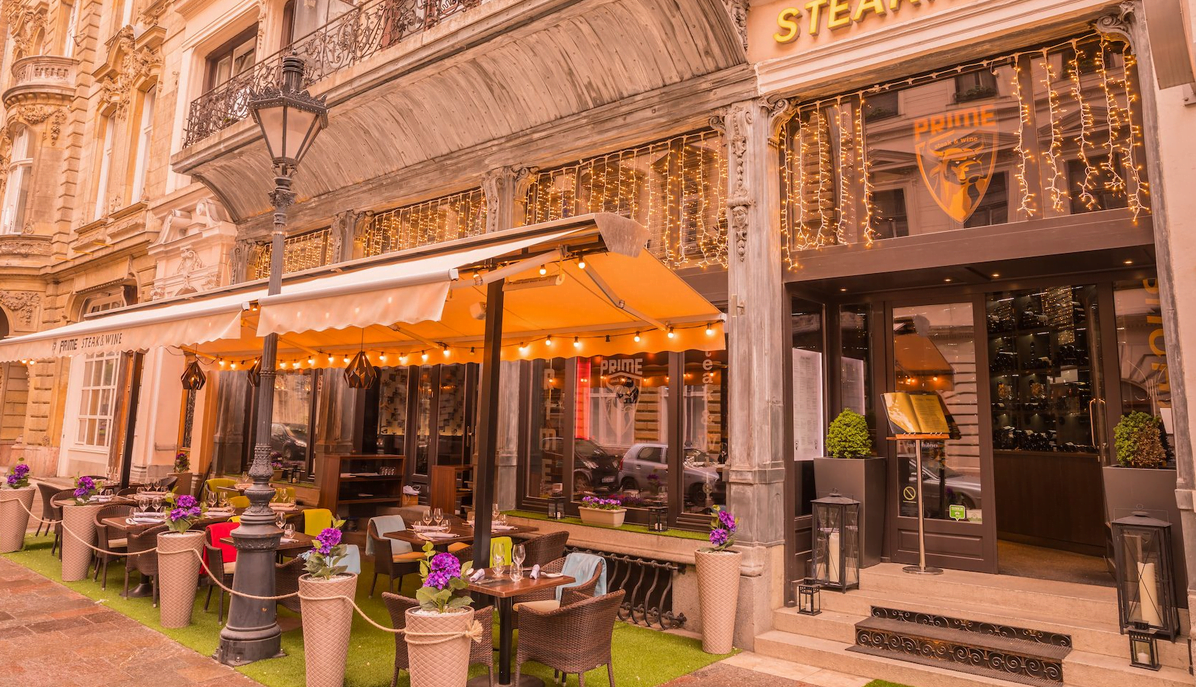
Would you like to eat something else than a Hungarian wiener schnitzel, or an Italian pizza? Do you feel the water in your mouth if you think about a juicy 300g steak? There are lots of steakhouses in Budapest, but few of them have outdoor seating. Prime Steakhouse in Sas utca is first of all an indoor steak restaurant, but they have 4-6 tables outdoors at which groups can sit down and eat. Of course, it is very important to book a table if you want to ensure that you get to sit and eat outside during a busy evening, but you might also be lucky if you are just walking by.

It is possible to eat delightful steaks outdoors at Prime Steakhouse in Budapest.

Prime Steakhouse isn’t only one of few steakhouses in Budapest with outdoor seating… it is a very good place for steaks. The restaurant also has a cool way of presenting their desserts, meaning that they have models of all the desserts available in the restaurants. As a result, you can decide what to eat for desert based on what they will look like on the plate. Isn’t that cool?


We have now given you basic information about dining outdoors in Budapest and suggestions for areas where you can find lots of great restaurants. If you have read through the entire article, you also know that there are lots of restaurants all across the city where you can eat outside, so there is no need to worry.

If you have any further questions, or maybe suggestions and input that you would like to share, use the comment field below. We look forward to hearing from you!

What is the price of a Big Mac Menu and a Whopper Menu in Budapest? [Updated in 2024]

I know this might be an offense to many tourists visiting Budapest. It is, however, a reality that many people eat fast food at Burger King and McDonald’s while in Budapest. Why is that? Because it is easy and cheaper than most other restaurants, you don’t have to wait for a long time, and you know what you get.

So, what should you expect if you visit a McDonalds’ or a Burger King in Budapest to buy a Big Mac menu, a Whopper Menu, or maybe a Happy Meal in McDonald’s’? After all, families with children often hate waiting 30 minutes for an order to be served in a restaurant that visits such places. Or maybe students who are on a budget want something quick and cheap.

Are you hungry for a Whopper menu in Burger King in Budapest?
Are you hungry for a Whopper menu at Burger King in Budapest?

The price of a Whopper Menu in Budapest (updated in 2024)

If you are a fan of Burger King and their Whopper sandwich, the price of a Whopper menu in Budapest is 2320 HUF. (appx 6 Euro). If you want two pieces of meat in your Whopper menu (making it a Dupla Whopper King Menu), the price is 2620.

Why should you eat a Whopper and not a Big Mac? It feels fresher due to the fresh vegetables, and the meat feels more like meat.

The price of the children’s meal (King Junior Meal) at Burger King is 1490 HUF.

The price of a Big Mac menu in Budapest

Would you rather go to McDonald’s? I know the taste of a Whopper feels fresher than a Big Mac, but there is something about the Big Mac taste that makes it so easy to eat that you just love eating it. I remember watching Super Size Me once, and do you know what I dreamt of as I left the cinema? A Big Mac! 🙂

If you would like to buy a Big Mac menu in Budapest, the price for a normal size menu is 2380 HUF (appx. 6 Euro). If you want a bigger menu with larger fries and a larger drink, the price is 2540 HUF.

big mac in budapest
Do you want to eat at McDonald’s while in Budapest?

The price of the happy meal at McDonald’s is 1660 HUF as of January 2024.

Do you find these prices expensive, or is it worth it? It is worth noticing that you can get much better hamburgers for the same price (or lower) in serious hamburger bars in Budapest, so it isn’t necessarily cheaper to eat at Burger King or McDonald’s, compared to other places. But, it is quicker, it often feels safer, and the kids love it.

Fun fact: There are more than 50 McDonald’s restaurants in Budapest. In addition, you can find lots of Burger King restaurants. Besides these giants, you can also find more and more KFC restaurants.

So, what kind of tourist are you? Would you ever eat at Mcdonald’s or Burger King during a trip to Budapest or some other big city worldwide? Or would you rather find something local no matter what?

Leo Rooftop Bar in Budapest – Pictures and information.

Hotel Clark is one of the most luxurious hotels in Budapest, and the rooftop bar (Leo Rooftop Bar) is a part of the success. On the hotel’s top floor, you can sit down and drink a glass of champagne, eat a delightful meal, or drink a cup of coffee while enjoying one of the nicest panoramas in Budapest. Leo Rooftop Bar is extremely popular, meaning you need a reservation to visit the place. There are guards by the elevator taking you to the top floor, so only with a valid reservation can you visit the bar itself.

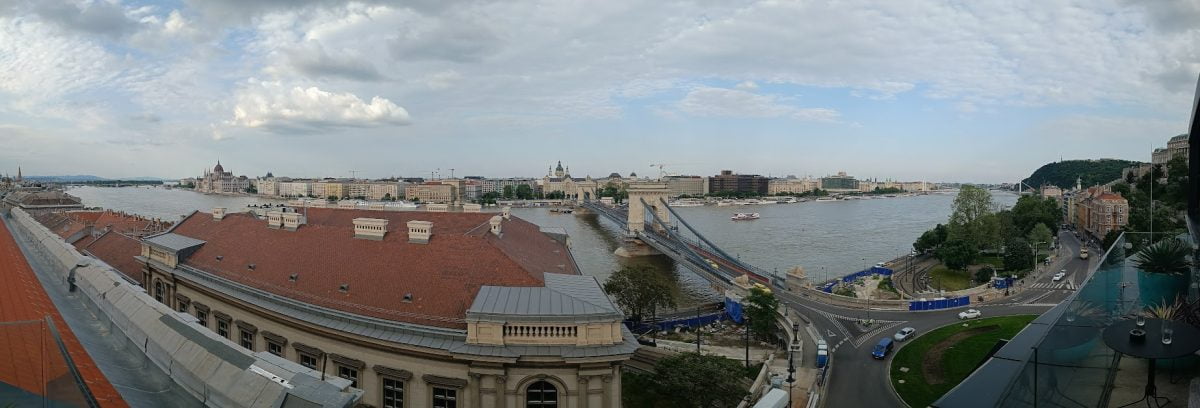
The bar (Leo Rooftop Bar) and the hotel (Hotel Clark) is at Clark Adam Square, on the Buda side of the Chain Bridge (the most famous bridge in Budapest). It gives a spectacular view of the Margaret Bridge, the Parliament, the Chain Bridge, the Castle, the Gellert Hill, the Elisabeth Bridge, and everything in between.

leo rooftop bar panorama

Leo Rooftop Bar – the menu.

One would expect food and drinks to be expensive at such a place, and compared to similar bars in Budapest, it is expensive. Here you can see a couple of price examples as of May 2023.

1dl of white wine (cheapest version)2200 HUF
1dl rose (cheapest version)2500 HUF
1dl sparkling wine (cheapest version)3000 HUF
Strongbow-Gold (0,33l)1400 HUF
Classic Lemonade1950 HUF
Cappuccino1650 HUF
Caesar Salad with Chicken5700 HUF
French Fries2700 HUF
Chocolate Brownie3200 HUF
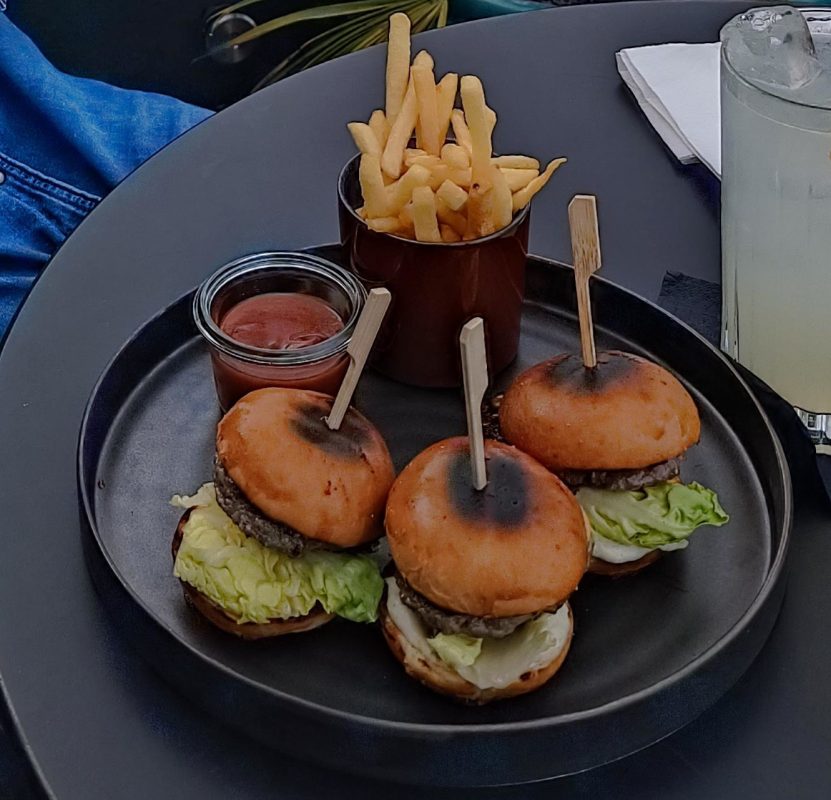
Angus Mini Burgers (3 pc)7200 HUF
Garlic and Chili Prawns (5pc)6200 HUF
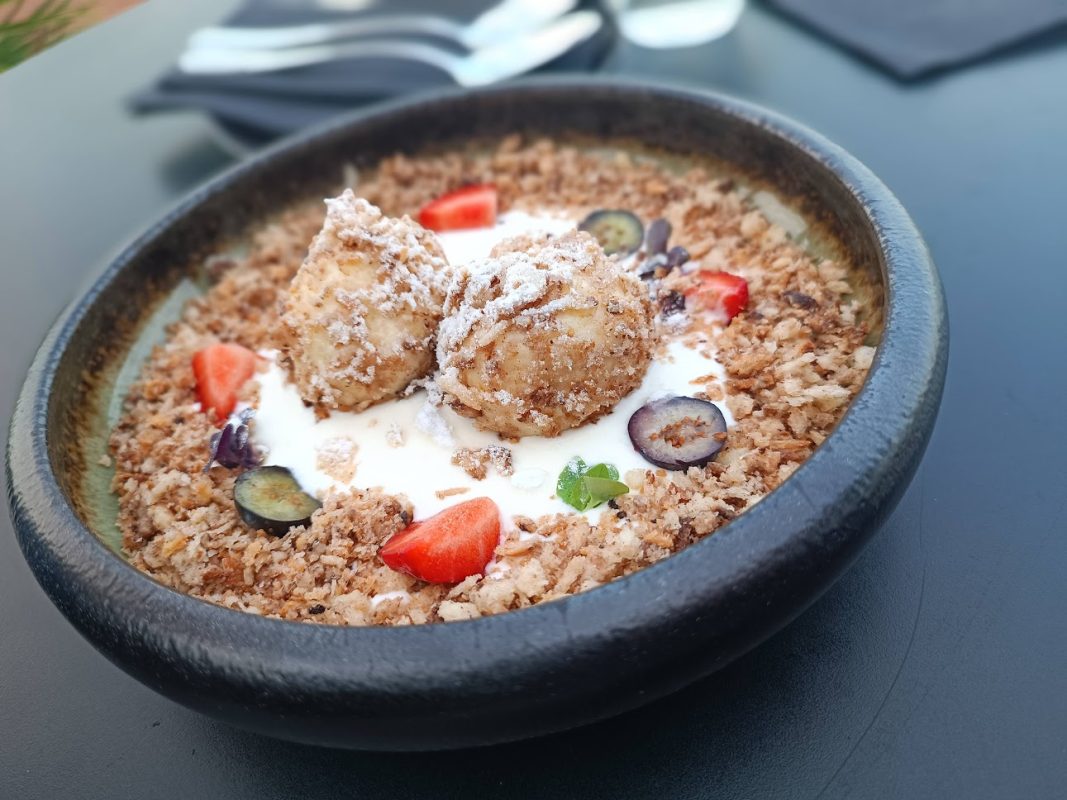
cottage cheese dumplings in leo rooftop bar
Cottage cheese dumplings for dessert in Leo Rooftop Bar.

Leo Rooftop Bar – the atmosphere.

The place has a fantastic atmosphere as you can see the beautiful city no matter where you look. The design is modern, and even though you sit inside, you can still enjoy the view from all the tables. This isn’t a place for the poor, meaning that you feel surrounded by wealthy people as you enjoy the view and drink your coffee. It is a perfect place for a vorspiel (if you have the money to pay for the drinks) and it is especially popular among tourists coming to enjoy everything Budapest offers.

One interesting effect of the bar is that you wash your hands in the actual bar. What do I mean? You go to the toilet, and you do your thing. Then you leave the toilet and wash your hand in the open space where everyone can see you. In other words, people will notice if you wash your hands, and maybe even worse, if you don’t wash your hands!

Leo Rooftop Bar has space for 80 people at most. It is important to know that the location is frequently used by companies who arrange a luxurious events for their employees. In other words, you shouldn’t be surprised if you cannot book a table here on a dedicated night, even though you try to book months in advance.

Leo Rooftop Bar – What more is there to say?

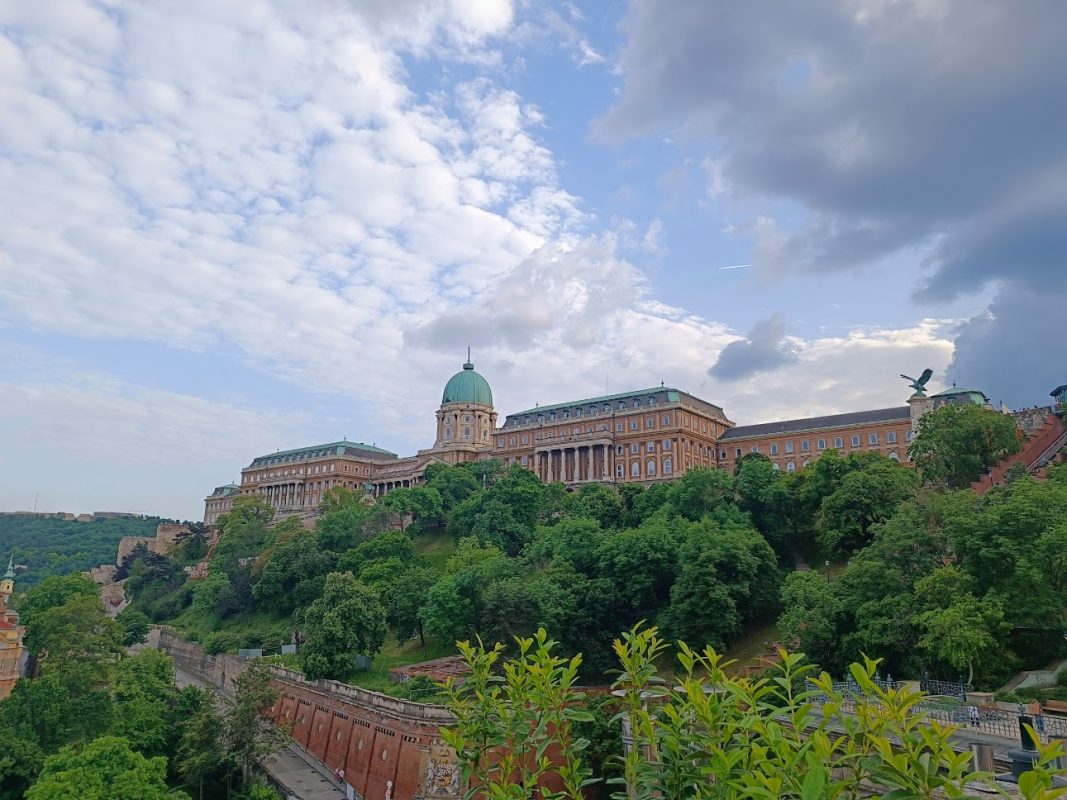
This is a perfect place for a drink and a good meal with a splendid view. The panorama is beautiful, and it will become even more beautiful as the construction work on the Chain Bridge is finished. Even though it is tempting to look towards the Danube and the bridges all the time, do not forget to look at the Buda Castle as it looks truly magnificent from the terrace of Leo Rooftop Bar.

the buda castle seen from leo rooftop bar

Have you been to Leo Rooftop Bar in Budapest? How did you like your stay? Write your thoughts below in the comment field.

In our Budapest Guide, you can read more about nightclubs, bars, and restaurants here.

Cat Café in Budapest – The ideal place for cat lovers?

Are you a person in love with all sorts of cats? Are you dreaming of eating and drinking surrounded by cats, and you don’t mind having a cat jumping onto your lap while sipping a Cappuccino? Cat Café is not worth visiting if you can’t stand the thought of cats, and if you are allergic to cats, you should probably head elsewhere as well. But, if you are a cat lover, is Cat Café in Budapest the ideal place to visit?

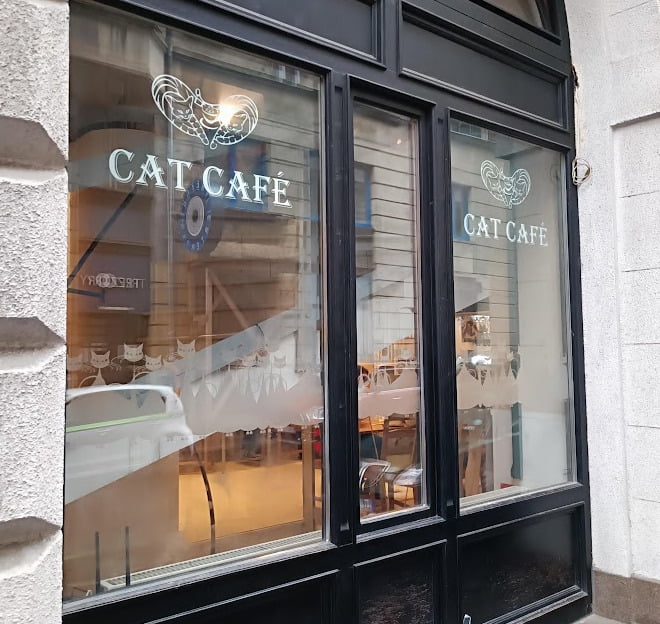
Cat Café is in Révay utca in Budapest, next to the famous Andrassy út, and close to the inner city and St. Stephen’s Basilica. On the menu, you can find hot and cold drinks and some snacks. The price level is similar to other cafés, so it is neither cheaper nor more expensive than what you will experience elsewhere. The question, therefore, remains – what’s up with the cats in Cat Café?

cat cafe in budapest

You don’t have to spend many seconds in the café before you see the cats. They are walking around like they would in a normal home. There is a basement, a ground floor, and a first floor in the café. The basement is mostly where the cats go to eat and use their toilets and where the rest of the guests also go to the toilet. Besides that, not much action takes place in the basement.

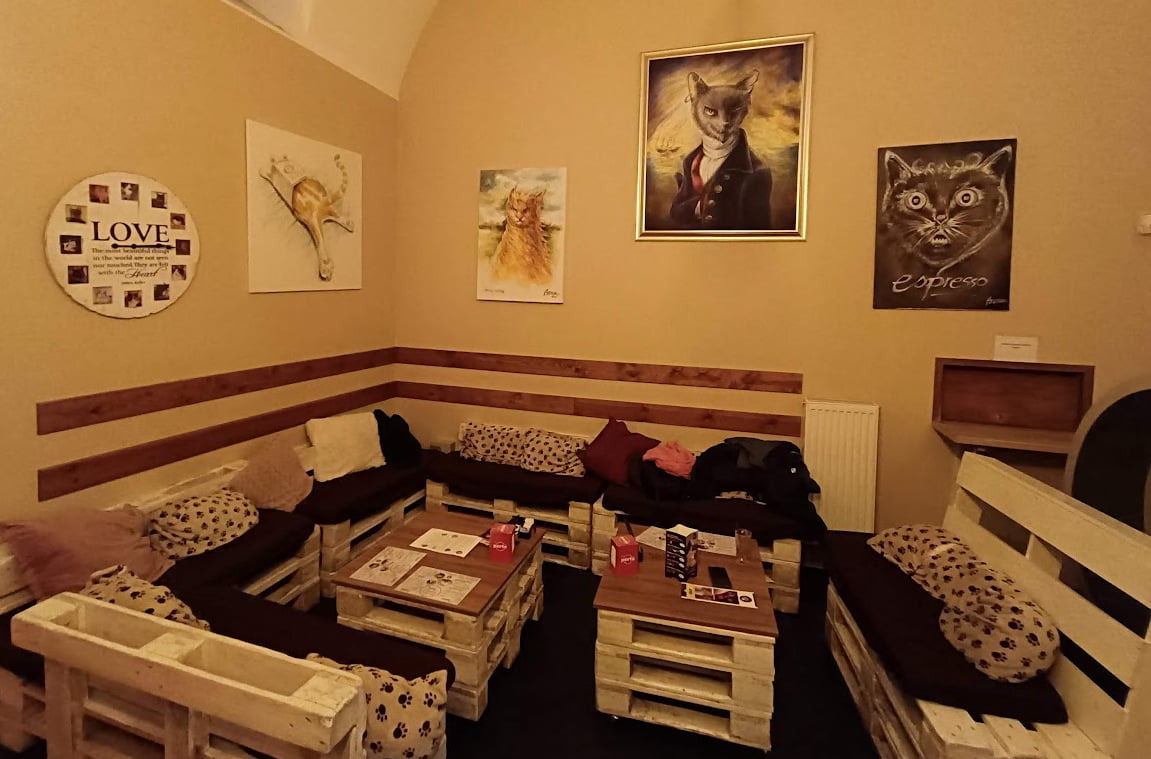
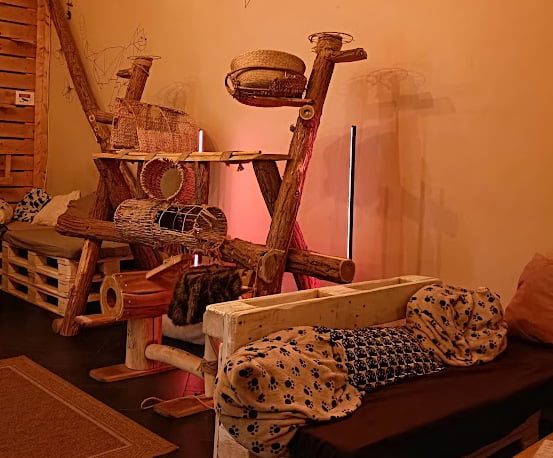
The ground floor has one special room in which there is quite a lot of toys available to the cats, and there are also benches where guests can sit and chat and drink and have a good time.

cat cafe playground

There are tables and chairs on the first floor, which has a more traditional café look and atmosphere. All in all, the cats are visible and you immediately see and notice that this is a cat café. But, is it worth visiting?

Is it worth visiting Cat Café in Budapest?

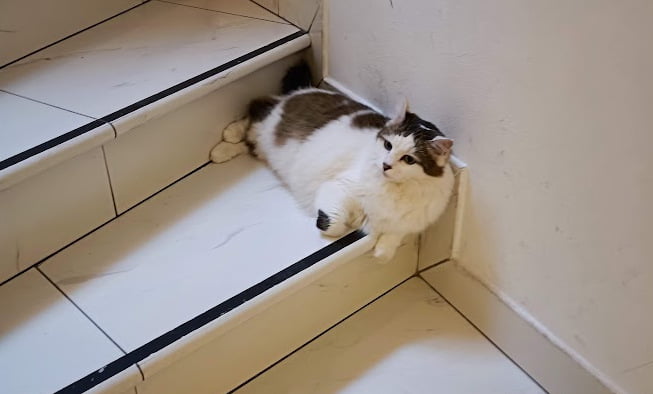
It is impossible to answer this 100%. It is, however, important to come to the café with the right expectations. The cats in the café are used to people, and some of them are probably quite tired of all the people coming around throughout the day. As a result, there is no guarantee that you will meet a cat that actually wants to be with you. What do I mean? You cannot be sure that a cat will jump into your lap and let you pet it. It is more likely that the cats will keep their distance, and if you approach them, they will go another way. A worst-case scenario is that a cat might try to bite you (if you are very annoying) or at least make some angry noises.

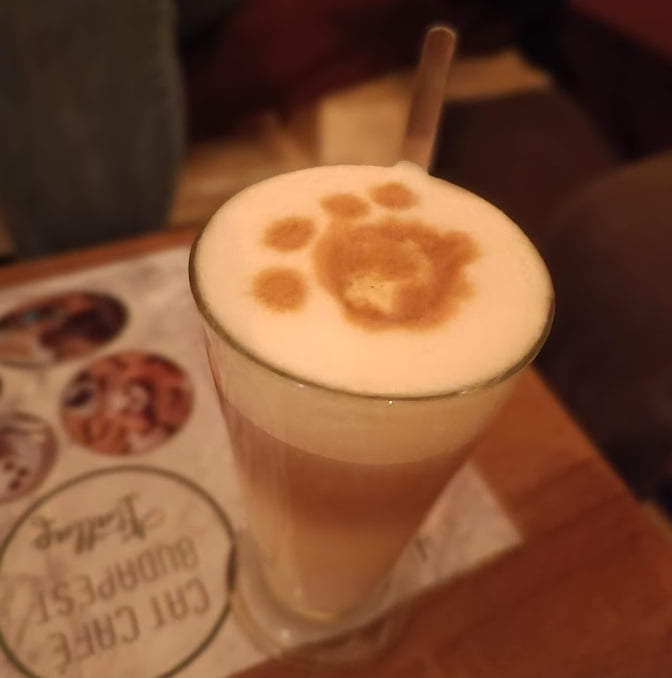
cappucino in cat cafe

What is your expectation? The cats are beautiful and they are a joy to look at. If that satisfies you, Cat Café is a place to visit in Budapest. If you come with higher expectations and long for more intimacy with the cats, you might end up disappointed.

What about the quality of the drinks? They are absolutely fine, and will satisfy you in the same way most other cafés in Budapest will.

Cat Café Budapest

Address: Révay utca 3., Budapest
Opening times: 10:00 – 21:00

a cat in cat café

Have you been to Cat Café in Budapest? How did you like it? Do you have any comments or questions? Use the comment field below!